
Passenger Jet Forced to Return to Departure Airport After Runway Overshoot Incident in 2026
A passenger aircraft was forced to execute an emergency return to its departure airport after an extended takeoff roll resulted in a runway overshoot, triggering safety inspections.

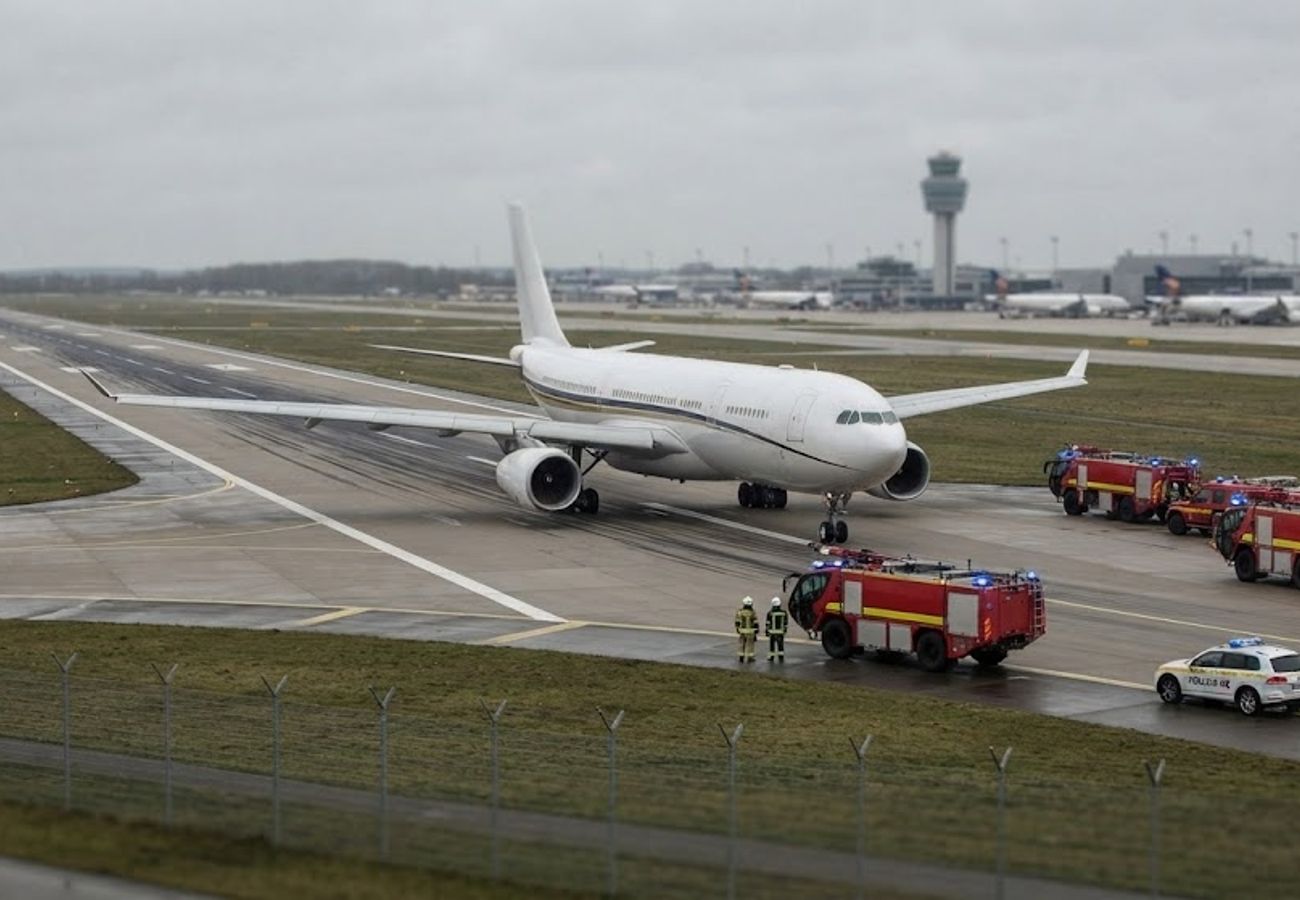
Image generated by AI
Flight tracking data and eyewitness reports confirm a passenger jet was forced to abort its journey and return to its departure airport after an extended takeoff roll led to a runway overshoot.
The incident occurred on August 17, 2026, during a routine departure. The aircraft failed to lift off within the expected distance markers for its specific weight and prevailing weather conditions, continuing toward the far end of the runway. Reports indicate the aircraft may have contacted or passed in extreme proximity to ground equipment positioned beyond the standard takeoff zone.
While the aircraft successfully became airborne, the cockpit crew identified that the takeoff roll had exceeded safety margins. This triggered an immediate safety assessment to determine if the landing gear or airframe had sustained structural damage during the overshoot.
Flight and Operational Impact Breakdown
Our analysis of the flight profile and available data indicates the following operational sequence:
- Low-Altitude Holding: Instead of proceeding to the destination, the aircraft entered a low-altitude holding pattern in the vicinity of the departure airport.
- Fuel Management: The crew remained in the holding pattern to burn off excess fuel. This is a standard safety procedure to reduce landing weight and minimize stress on the landing gear during the return approach.
- Precautionary Landing: The return approach was conducted using a conservative speed profile, with emergency response vehicles stationed along the runway as a standard precaution.
- Ground Recovery: The aircraft vacated the runway under its own power and was towed to a remote stand for a comprehensive technical inspection.
- Passenger Status: All passengers were disembarked and rebooked on alternative flights following the grounding of the aircraft.
Passenger Rights and Advisory
For the affected passengers, a mid-journey return due to a technical or safety incident creates specific legal and financial entitlements. Depending on the jurisdiction and the airline's headquarters, the following frameworks apply:
EU261/2004 and UK261 Regulations If the flight departed from an EU/UK airport or was operated by an EU/UK carrier, passengers may be entitled to:
- Duty of Care: Immediate provision of food, refreshments, and two phone calls/emails.
- Accommodation: If rebooking requires an overnight stay, the airline must provide hotel accommodation and transport between the airport and the hotel.
- Rebooking or Refund: The choice between a full refund or the earliest possible rerouting to the final destination.
- Compensation: While "extraordinary circumstances" (such as unforeseen technical failures) can sometimes be used to avoid payouts, a runway overshoot caused by calculation errors or pilot performance is typically not considered an extraordinary circumstance. Passengers may be eligible for compensation ranging from €250 to €600.
US Department of Transportation (DOT) Guidelines For flights operating under US jurisdiction, the focus is primarily on the "Contract of Carriage":
- Rebooking: Airlines are generally required to rebook passengers on the next available flight.
- Refunds: If the passenger chooses not to travel due to the significant delay caused by the return, they are entitled to a refund of the unused portion of the ticket.
Our Analysis for the Affected Passenger: In this specific case, the disruption was caused by a safety-critical event (overshoot). Passengers should document all out-of-pocket expenses for meals and hotels, as these are recoverable regardless of whether the airline claims the event was an "unforeseen" safety necessity.
Industry Analyst View
This incident underscores the critical nature of takeoff performance calculations. Modern aviation relies on a precise balance of aircraft weight, runway length, surface friction (wet vs. dry), and temperature. When a "roll" extends beyond planned markers, it indicates a failure in one of these variables or a delay in the rotation (Vr) speed.
The decision to return to the airport rather than continue to the destination demonstrates a conservative safety culture. Continuing a long-haul sector with suspected landing gear damage is an unacceptable risk. The use of a holding pattern to reduce weight before landing is a textbook application of risk mitigation.
National accident investigators are currently reviewing flight data recorders (FDR) and cockpit voice recorders (CVR). The inquiry will focus on whether the takeoff performance calculations were accurate and if the crew adhered to the established "Decision Speed" (V1), beyond which a takeoff must be continued regardless of most malfunctions.
Safety protocols prioritize caution over punctuality, ensuring that potential structural failures are identified on the ground rather than mid-flight.
Related Travel Guides
Disclaimer
This article is for informational and educational purposes only. It does not constitute legal, financial, or professional advice. While we strive to provide accurate and up-to-date information, travel policies, regulations, and conditions change rapidly. Always verify information with official sources before making travel decisions. Nomad Lawyer makes no representations about the accuracy, reliability, completeness, or suitability of the information provided. Readers should consult qualified professionals for advice specific to their circumstances. The views expressed in this article are those of the author and do not necessarily reflect the views of Nomad Lawyer.
Kunal K Choudhary
Co-Founder & Contributor
A passionate traveller and tech enthusiast. Kunal contributes to the vision and growth of Nomad Lawyer, bringing fresh perspectives and driving the community forward.
Learn more about our team →