
Türkiye and Georgia Advance Strategic Tourism Ties to Unlock Black Sea and Caucasus Markets
Türkiye and Georgia hold second Joint Tourism Commission meeting to discuss regional packages, air connectivity, and high-speed rail. Analysis of Q1 2026 visito

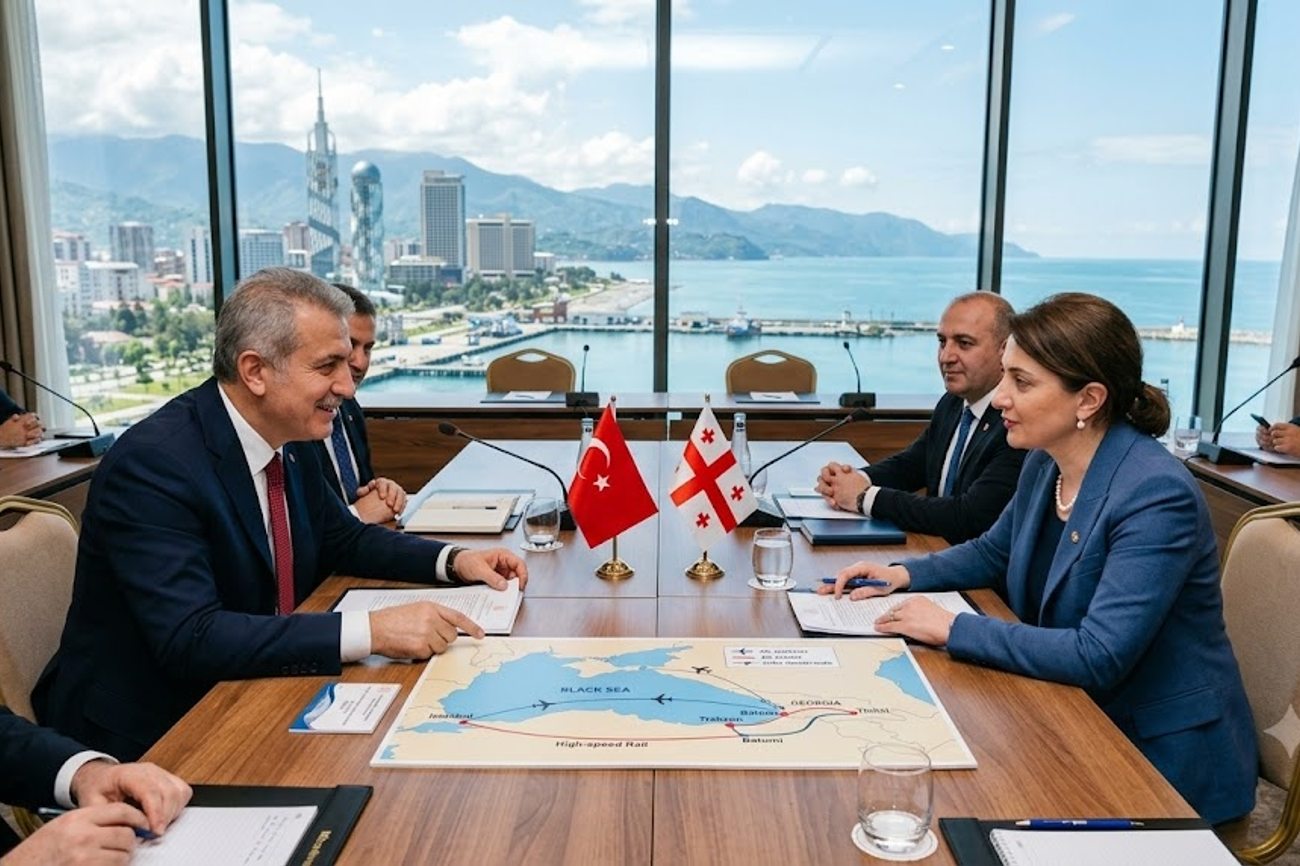
Image generated by AI
Türkiye and Georgia Advance Strategic Tourism Ties to Unlock Black Sea and Caucasus Markets
Türkiye and Georgia are formalizing a framework for joint destination marketing and combined regional travel packages to attract long-haul tourists. While strategic goals for rail and air connectivity were discussed, no immediate changes to entry policies or transport schedules have been implemented.
The Core Development
On 1 September 2026, the governments of Türkiye and Georgia convened the second Joint Tourism Commission meeting in Tbilisi. The session focused on institutionalizing cooperation to create seamless multi-country itineraries, specifically linking Istanbul and Türkiye’s Black Sea coast with Tbilisi, Batumi, and the Georgian highlands.
The meeting functioned as a strategic alignment session rather than a launch event. While officials discussed the potential for affordable air services and high-speed rail connectivity, these remain proposals. There are no new flight routes, funding programs, or implementation timelines currently in effect.
Key Facts Breakdown
- Meeting Date: 1 September 2026.
- Primary Goal: Establishing a formal platform for joint destination marketing and public-private cooperation.
- Target Market: Long-haul travelers seeking combined Türkiye–Georgia packages.
- Transport Status: High-speed rail and affordable air travel were discussed; no passenger projects were approved.
- Entry Policy: No changes. The 31 May 2011 protocol (effective 10 December 2011) allowing travel via national identity cards remains the standard.
- Visa Status: Georgian ordinary and official passport holders maintain visa-free entry to Türkiye for up to 90 days.
Tourism Impact Data
Editorial Assessment of Meeting Priorities
| News Component | Share of Story | Officially Verified Finding | Relevance to Travelers | Official Source |
|---|---|---|---|---|
| Bilateral tourism cooperation | 35% | Second joint commission meeting held 1 Sept 2026 | Framework for future cooperation | Türkiye’s Ministry of Culture and Tourism |
| Joint destination promotion | 20% | Shared international marketing discussed | Improved awareness of regional itineraries | Türkiye’s Ministry of Culture and Tourism |
| Combined regional packages | 15% | Multi-country products considered | Simplified long-term holidays (if introduced) | Official meeting announcement |
| Air connectivity | 10% | Affordable air travel discussed | No new routes or fares announced | Official meeting announcement |
| Railway connectivity | 10% | High-speed rail potential considered | No approved passenger project/date | Official meeting announcement |
| Visa and identity documents | 10% | Existing arrangements remain in effect | Simplified travel for eligible citizens | Türkiye’s Ministry of Foreign Affairs |
Georgia Inbound Statistics (Q1 2026)
- Total International Arrivals: 1.3 million (down 1.1% vs Q1 2025).
- International Visitor Visits: 1.2 million (down 0.2%).
- Individual International Visitors: 994,800 (up 2.5%).
- Tourist-type Visits (Overnight): 997,500 (up 4%).
- Turkish Market Share: 238,400 visits (Highest total by citizenship; 18.5% of total individual visitors).
- Average Stay: 5.87 nights.
- Visit Purpose: Leisure (46.5%), Friends/Relatives (28.4%), Transit (10.1%), Business (8%), Shopping (4.8%).
Why This Matters
From a logistical perspective, this meeting signals a shift toward "corridor tourism." By attempting to bundle the Black Sea region with the Caucasus, both nations are trying to increase the average length of stay for non-regional tourists.
Our analysis of the data indicates that while overall arrivals in Georgia dipped slightly in Q1 2026, "tourist-type" visits (those with overnight stays) actually rose by 4%. This suggests a transition from short-term transit or shopping trips to higher-value, longer-duration tourism. For the industry, the real impact is the potential for a unified "Black Sea-Caucasus" brand that reduces the friction of planning multi-country trips, even if the physical infrastructure (like high-speed rail) is still years away.
Industry Outlook
The immediate future will see a push for joint marketing campaigns rather than infrastructure breakthroughs. While the Baku–Tbilisi–Kars railway is a critical asset for the "Middle Corridor," it remains primarily a freight operation.
Market trends suggest that until a passenger-specific high-speed rail project is greenlit, air connectivity will remain the only viable lever for increasing volume. Travelers should expect new bundled tour packages from operators in the coming months, but should rely on existing identity-card and visa-free protocols for the foreseeable future.
Internal Link Suggestions:
- Explore our latest analysis on Middle Corridor logistics and transport.
- Guide to visa-free travel requirements for the Caucasus region.
- Trends in Black Sea destination marketing for 2026-2027.
Related Travel Guides
Disclaimer
This article is for informational and educational purposes only. It does not constitute legal, financial, or professional advice. While we strive to provide accurate and up-to-date information, travel policies, regulations, and conditions change rapidly. Always verify information with official sources before making travel decisions. Nomad Lawyer makes no representations about the accuracy, reliability, completeness, or suitability of the information provided. Readers should consult qualified professionals for advice specific to their circumstances. The views expressed in this article are those of the author and do not necessarily reflect the views of Nomad Lawyer.
Preeti Gunjan
Contributor & Community Manager
A passionate traveller and community builder. Preeti helps grow the Nomad Lawyer community, fostering engagement and bringing the reader experience to life.
Learn more about our team →