
Costa Rica Tourism Surges in 2026 as Air Arrivals Drive Sustainable Growth
Costa Rica saw 1.73 million international arrivals in H1 2026. Explore the data on air travel trends, North American market dominance, and sustainable managemen

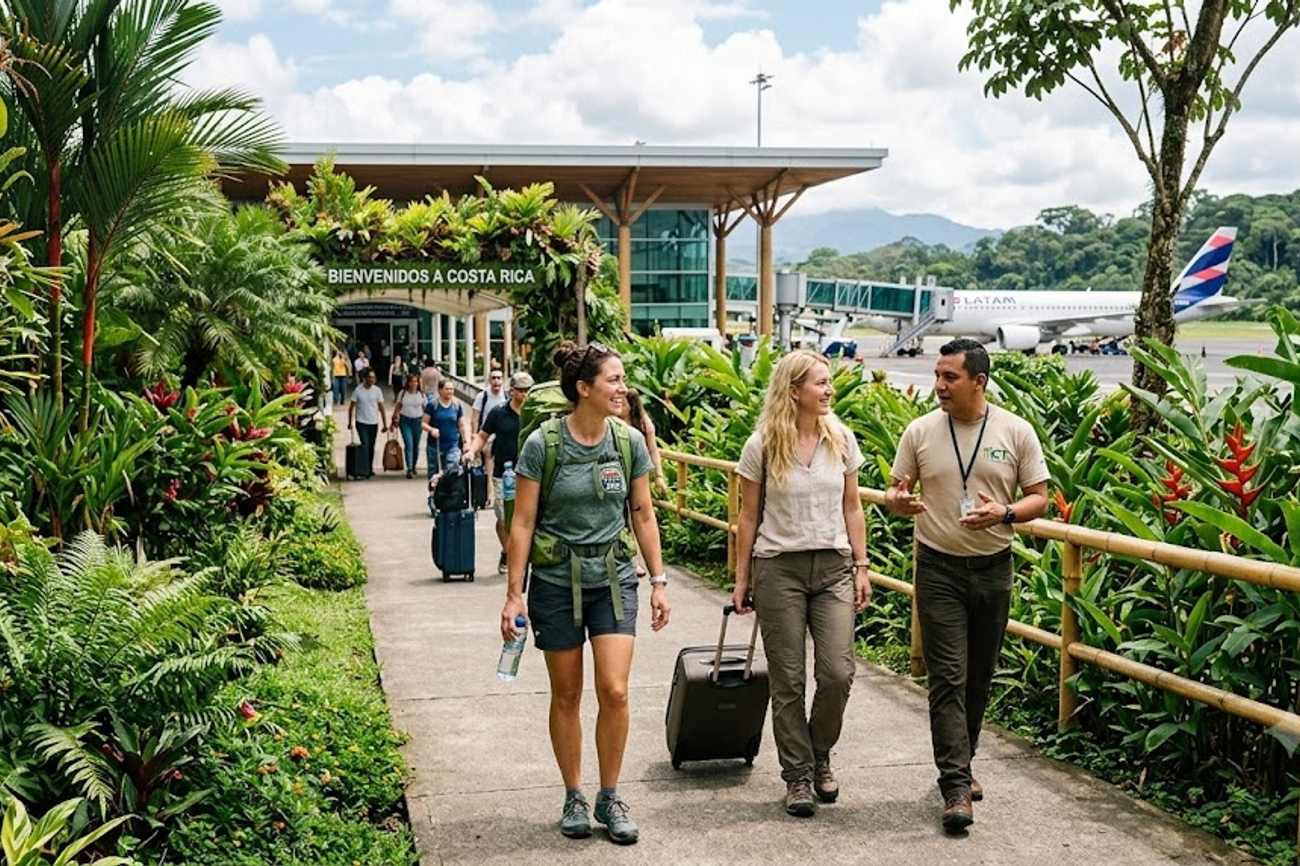
Image generated by AI
Aviation Gateways Fuel Visitor Recovery
Costa Rica has seen a marked rebound in tourism momentum during the first six months of 2026. Total international arrivals reached 1,733,596, representing a 7% increase over the 1,619,976 visitors recorded during the same period in 2025.
The growth was most pronounced in the first quarter, with March leading as the busiest month with 379,818 arrivals, followed by February (331,967) and January (321,992).
Air travel remains the primary engine for this growth. In the first half of 2026, 1,605,360 travelers arrived via aircraft, a 7.8% increase from the 1,489,008 air arrivals in H1 2025. This is a critical pivot for the industry, as air arrivals had previously seen a 2.8% decline in the first half of 2025 compared to 2024.
Strategic Distribution of Air Traffic
The flow of international tourists is concentrated across two primary aviation hubs, which serve as the gateways to different ecological and cultural zones:
- San José Airport: Handled 996,656 tourists (62.1% of air arrivals), providing the main link to the Central Valley, the Caribbean coast, and the northern regions.
- Guanacaste Airport: Handled 608,132 tourists (37.9% of air arrivals), offering direct access to the northwestern beaches and resort corridors.
North American Market Dominance and Risk
The data reveals a heavy concentration of visitors from North America, who accounted for 1,240,043 total arrivals, or 71.5% of the market.
The United States remains the largest source market with 984,939 visitors, while Canada contributed 207,110. While this provides a stable revenue stream, the high concentration creates a strategic vulnerability. Any economic downturn or reduction in flight capacity within North America could disproportionately impact Costa Rica's tourism economy.
Balancing Biodiversity with High Volume
Costa Rica’s tourism model is built on its biological wealth, with approximately 25% of its land protected across 145 wild areas and 11 conservation regions. Hosting roughly 5% of the world's known species, the country leverages this biodiversity to attract ecotourists and nature photographers.
However, the increase in visitor volume brings significant environmental pressure. To prevent trail erosion, wildlife disturbance, and excessive water consumption, the government is emphasizing responsible destination management. This includes:
- Strict visitor limits and controlled access to sensitive zones.
- Rigorous environmental assessments for new infrastructure.
- Enhanced enforcement of park regulations to protect mangroves and nesting areas.
Economic Impact and Visitor Behavior
Tourism spending remains robust, though it varies by entry method. In 2025, air travelers spent an average of US$1,848 per person with an average stay of 10.3 nights. Across all entry points, the average spend per visitor was US$1,728.20.
Visitor activity data from 2023–2025 highlights a diversified attraction profile, showing that most travelers engage in multiple experience types:
- Sun and Beach: 72.1%
- Ecotourism: 62.7%
- Adventure Experiences: 56.5%
- Cultural Activities: 56.1%
- Wellness Activities: 32.7%
Tourism Performance Data: H1 2026
| Tourism Indicator | January–June 2026 Result | Calculated Share or Change |
|---|---|---|
| Total Arrivals (All Routes) | 1,733,596 | $\approx$ 7% increase vs 2025 |
| Arrivals by Air | 1,605,360 | 92.6% of total arrivals |
| Arrivals via Other Routes | 128,236 | 7.4% of total arrivals |
| San José Airport Arrivals | 996,656 | 62.1% of air arrivals |
| Guanacaste Airport Arrivals | 608,132 | 37.9% of air arrivals |
| North American Arrivals | 1,240,043 | 71.5% of total arrivals |
| United States Arrivals | 984,939 | 56.8% of total arrivals |
| Canada Arrivals | 207,110 | 11.9% of total arrivals |
Key Takeaways
- Strong Recovery: Total arrivals grew by 113,620 visitors (7%) compared to H1 2025.
- Aviation Reliance: Over 92% of all tourists enter via air, making airport infrastructure vital to national GDP.
- Market Concentration: Over 71% of tourists originate from North America, highlighting a need for market diversification.
- Sustainability Challenge: With 25% of land protected, the government must balance high visitor volumes with the preservation of 5% of global biodiversity.
FAQ
Which month was the busiest for Costa Rican tourism in 2026? March was the peak month, recording 379,818 international arrivals.
How much does the average tourist spend in Costa Rica? Based on 2025 data, the average spend across all entry routes was US$1,728.20, while those arriving by air spent an average of US$1,848.
What are the primary activities tourists engage in? The most popular activities are sun-and-beach (72.1%) and ecotourism (62.7%).
Related Travel Guides
Disclaimer
This article is for informational and educational purposes only. It does not constitute legal, financial, or professional advice. While we strive to provide accurate and up-to-date information, travel policies, regulations, and conditions change rapidly. Always verify information with official sources before making travel decisions. Nomad Lawyer makes no representations about the accuracy, reliability, completeness, or suitability of the information provided. Readers should consult qualified professionals for advice specific to their circumstances. The views expressed in this article are those of the author and do not necessarily reflect the views of Nomad Lawyer.
Raushan Kumar
Founder & Lead Developer
Full-stack developer with 11+ years of experience and a passionate traveller. Raushan built Nomad Lawyer from the ground up with a vision to create the best travel and law experience on the web.
Learn more about our team →