
Italy’s Milan Bergamo Airport Expands Cargo Power With New BGY Logistic Park To Boost Global Freight Growth
Italy’s Milan Bergamo Airport Expands Cargo Power With New BGY Logistic Park To Boost Global Freight Growth

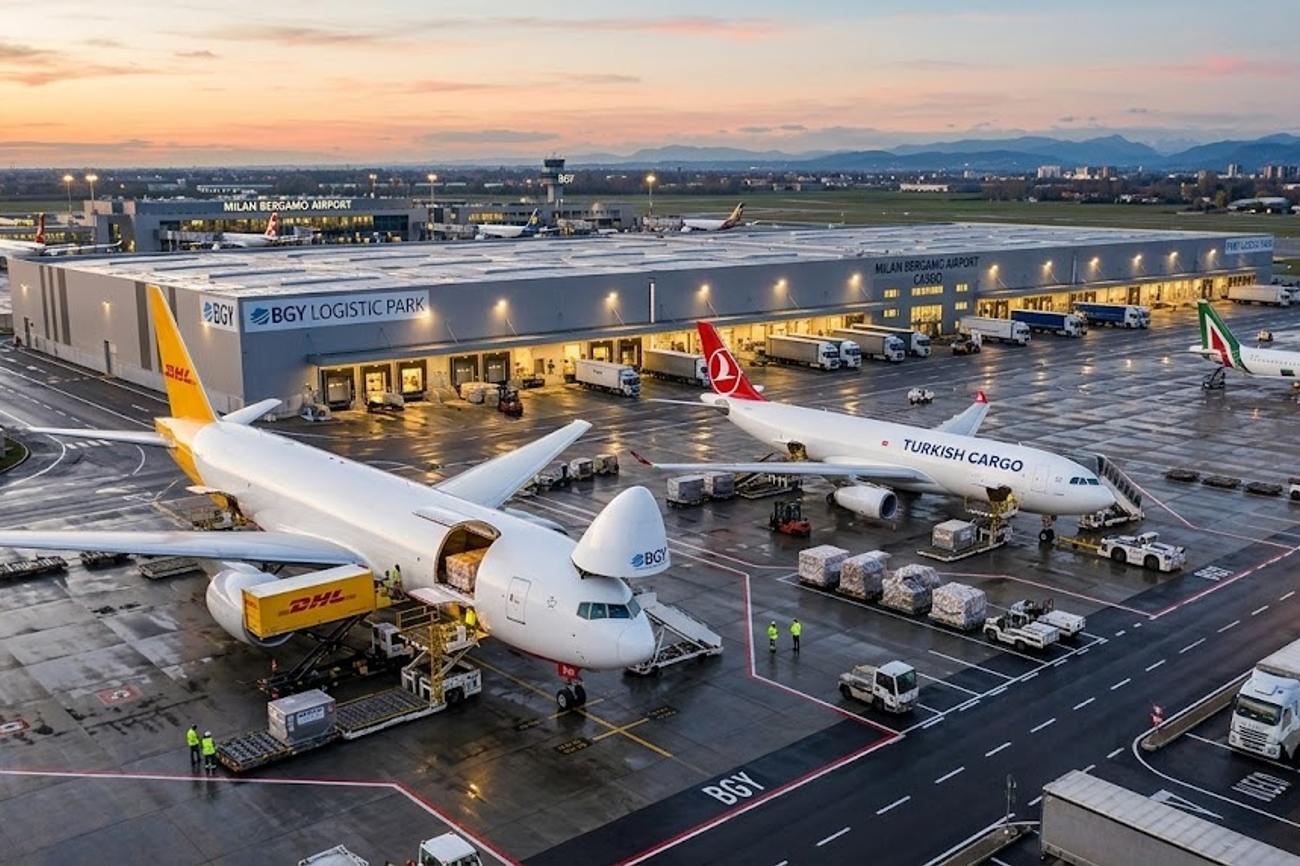
Image generated by AI
title: Navigating the Milan Bergamo Cargo Expansion: A Logistics Guide date: 2026-08-20 category: Transit Logistics tags: [BGY Logistic Park, Milan Bergamo Airport, SACBO Cargo, Lombardy Freight 2026]
Are you managing supply chains or coordinating high-value shipments through Northern Italy? If your logistics rely on the Lombardy industrial corridor, the recent expansion of the BGY Logistic Park at Milan Bergamo Airport fundamentally changes how you should route your freight and time your customs clearances starting in 2026.
The Expansion of BGY Logistic Park
Milan Bergamo Airport (BGY) has shifted its operational focus to aggressively scale its freight capabilities. The center of this growth is the BGY Logistic Park, a specialized freight zone situated on the northern perimeter of the airfield. This is not a mere extension of existing terminals but a dedicated infrastructure project designed to decouple cargo movements from passenger traffic.
The expansion introduces two specialized warehouses. One is under the direct management of UPS, while the second is operated by SACBO via BGY International Services. Combined, these two facilities offer over 11,000 square metres of dedicated cargo handling space. For the logistics professional, the most significant detail is the infrastructure's autonomy: the park features its own independent road connections and a dedicated customs access point. This means freight does not compete with passenger vehicle traffic, reducing the risk of road-side delays during peak travel seasons.
This growth is backed by a massive surge in activity. Between January and August 2026, the airport recorded 1,142 cargo aircraft movements. When compared to the 877 movements recorded during the same period in 2025, this represents a 30% increase in flight frequency.
Route and Schedule Details
The current cargo ecosystem at BGY is dominated by a few key players, with a heavy emphasis on e-commerce pipelines from Asia and the Americas. The airport utilizes a 3,000-metre runway, which allows for the operation of heavy-lift aircraft and ensures faster turnaround times for long-haul freight.
| Route Focus | Primary Operator | Frequency | Aircraft Capability | Status |
|---|---|---|---|---|
| Global Express / Hub | UPS | >75% of movements | Heavy Freight | Active/Expanding |
| Asia-Europe (China) | CAMEX | High Volume | High-Load Cargo | Active |
| Eastern Europe/Caucasus | Georgian Airlines | Scheduled | High-Load Cargo | Active |
| Regional Distribution | BGY International | 24/7 Operations | Various | Active |
Traveler Logistics Guide
While the BGY Logistic Park is primarily for freight, the operational changes impact any professional traveling to Bergamo for business or managing shipments. Here is the step-by-step approach to navigating this updated hub.
1. Coordinating Customs and Clearances Because the BGY Logistic Park has its own customs access point, you should ensure your customs broker is specifically coordinating with the northern side of the airport. Do not route your transport vehicles through the main passenger terminal entrances. Use the dedicated freight road connections to avoid the congestion typical of the passenger zones. For official customs regulations and digital filings, refer to the Agenzia delle Dogane e dei Monopoli.
2. Timing Your Shipments The airport now operates 24 hours a day. This removes the traditional "night-stop" bottleneck. If you are coordinating "just-in-time" delivery for the Lombardy manufacturing sector, schedule your arrivals for the early morning window (02:00 to 05:00) to take advantage of the independent road access before the regional commuter traffic peaks.
3. Leveraging the UPS Hub UPS is the dominant force here, contributing approximately 60% of the total tonnage handled at the airport. If your logistics chain involves UPS, you have the highest probability of seamless integration. For those using other carriers like CAMEX or Georgian Airlines, be aware that while they handle higher average loads per flight, their frequency is lower than the UPS shuttle system.
4. Ground Transport Connections The BGY Logistic Park is strategically positioned to feed into the Lombardy industrial heartland. When arranging ground transport, specify "North Side Freight Access." Using standard ride-share or passenger taxis to reach the logistics zone is inefficient and often restricted. Use specialized freight forwarders who are familiar with the BGY International Services gates. For broader regional transit and airport access information, check the Milan Bergamo Airport official site.
Regional Connectivity Impact
The expansion of BGY transforms the logistics map of Northern Italy. Lombardy is the leading industrial region of Italy and a primary economic center for Europe. By increasing the capacity of the BGY Logistic Park, the airport is effectively shortening the "last mile" for e-commerce and industrial components.
Previously, much of the high-volume freight was routed through larger hubs that suffered from extreme congestion. The 30% increase in cargo movements at BGY suggests a migration of freight traffic away from saturated hubs toward Bergamo. This is particularly evident in the e-commerce sector, where shipments from China via CAMEX are being processed and distributed within hours.
The ability to move goods from the aircraft, through a dedicated customs point, and into the regional distribution network without entering the passenger terminal environment significantly reduces the risk of transit delays. This makes BGY a more attractive alternative for companies that cannot afford the multi-day processing times often found in larger, more congested European gateways.
FAQ: Milan Bergamo Cargo 2026
Do I need a special permit to access the BGY Logistic Park? Yes, the logistics zone is separated from the passenger terminal. Access is restricted to authorized freight carriers and personnel. Ensure your transport provider has the necessary credentials for the northern access point.
How has the cargo volume changed in 2026? The airport has seen a 30% increase in cargo aircraft movements. Specifically, movements rose from 877 in the first eight months of 2025 to 1,142 in the same period of 2026.
Which carrier handles the most volume at BGY? UPS is the primary operator, managing over 75% of all cargo aircraft movements and approximately 60% of the total tonnage handled at the airport.
Can I use the passenger terminal for cargo pickups? No. The BGY Logistic Park operates with independent road connections and its own customs access point to ensure freight flows remain separate from passenger services.
Optimize your Northern Italy routing now to avoid the passenger bottlenecks of the main terminal.
Related Travel Guides
- Emirates Brings Premium Economy to France With Retrofitted A380 From October 25, 2026
- Turkey Stuns Global Aviation With Istanbul Airport’s New Runway Set to Reshape Flights, Cut Travel Times and Boost Its Global Hub Power
- Etihad Airways Launches Beyond Borders Experience To Redefine Premium Travel With New A330 Cabins
Disclaimer
This article is for informational and educational purposes only. It does not constitute legal, financial, or professional advice. While we strive to provide accurate and up-to-date information, travel policies, regulations, and conditions change rapidly. Always verify information with official sources before making travel decisions. Nomad Lawyer makes no representations about the accuracy, reliability, completeness, or suitability of the information provided. Readers should consult qualified professionals for advice specific to their circumstances. The views expressed in this article are those of the author and do not necessarily reflect the views of Nomad Lawyer.
Kunal K Choudhary
Co-Founder & Contributor
A passionate traveller and tech enthusiast. Kunal contributes to the vision and growth of Nomad Lawyer, bringing fresh perspectives and driving the community forward.
Learn more about our team →