
UK and Global City Centre Road Closures 2026: Major Disruptions to Airport Access and Transport Hubs
Major urban road closures for resurfacing and utility works are causing severe disruptions to airport access and public transport hubs across the UK and Australia.

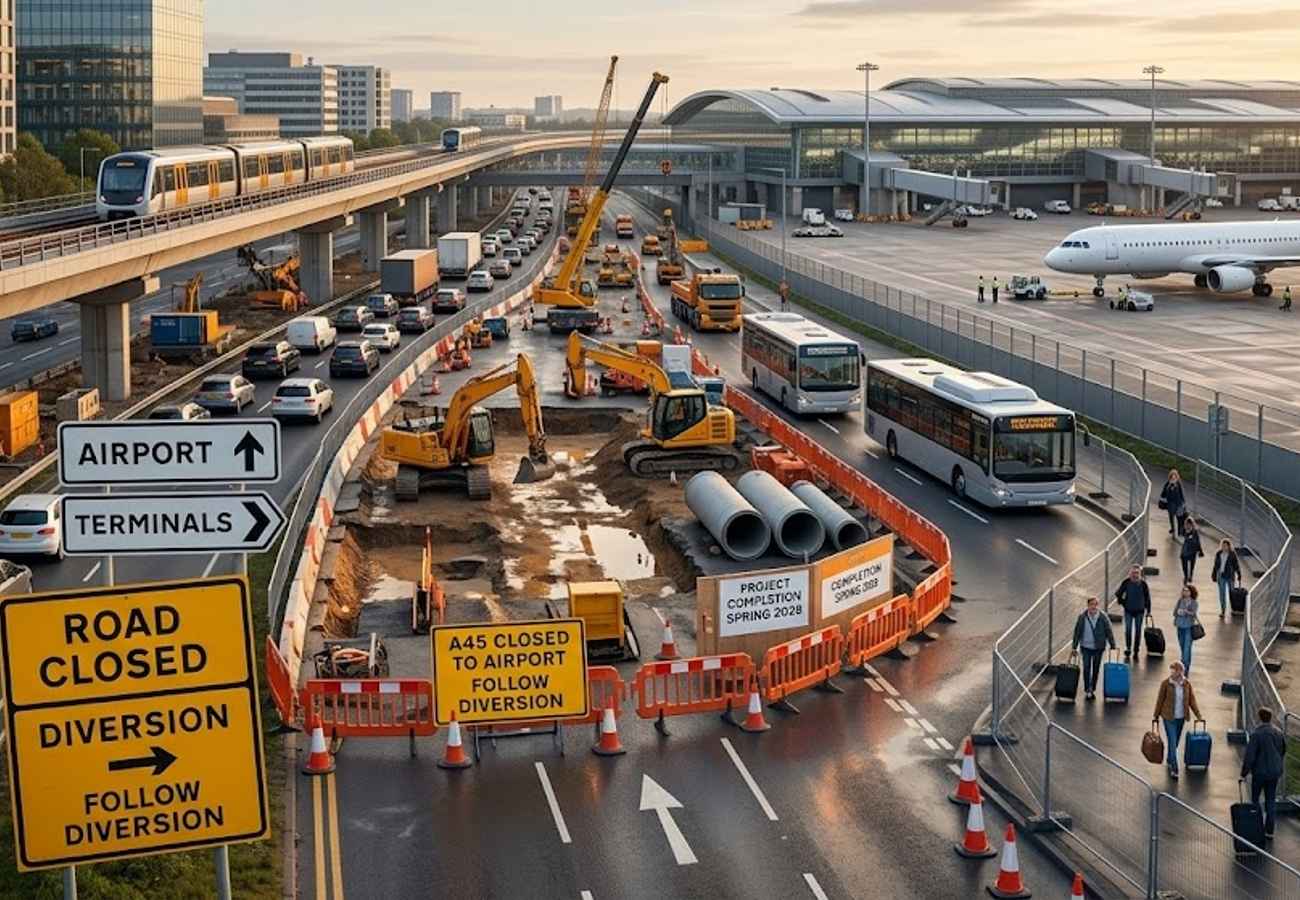
Image generated by AI
Severe urban infrastructure projects and full road closures are currently disrupting transit to major airports and city centres. Travellers face significant delays due to a shift toward total road shut-downs over traditional lane restrictions.
Urban Infrastructure Shift and Immediate Disruptions
Municipal authorities are increasingly implementing complete road closures on intensive, short-term schedules to accelerate complex utility and resurfacing works. While this strategy aims to reduce the total duration of construction, it creates acute short-term volatility for drivers, cyclists, and pedestrians.
In St Helens, North West England, a town-centre transformation has resulted in the full closure of Bickerstaffe Street between Haydock Street and Hall Street. This closure is in effect from 24 August to 16 October 2026. The project involves installing high-capacity drainage to replace Victorian-era infrastructure and preparing the site for a modern transport interchange.
Additional phased closures and lane changes are currently affecting Hall Street and surrounding links. While access to the Theatre Royal and the North West Museum of Road Transport remains open, bus and coach operators are facing constrained junction layouts.
Critical Airport and Transport Hub Impact
Our analysis of current traffic management data indicates that disruption extends beyond city centres to key aviation gateways and transit nodes.
Birmingham Airport (West Midlands)
Major improvement works are underway at the junction of A45 Coventry Road, Damson Parkway, and Terminal Road. This project is scheduled to run from August 2026 until spring 2028.
- Affected Areas: Damson Parkway (linking Solihull to airport facilities) and Terminal Road (primary access for public car parks).
- Impact: Intermittent road and lane closures causing significant congestion during peak periods and shift changes.
Adelaide Metro (Australia)
The Tea Tree Plaza Interchange bus roadway is subject to a full closure from the evening of Friday 14 August until the first service on Friday 4 September 2026.
- Affected Services: All bus services utilizing the interchange for suburb and shopping centre access.
- Impact: Redirection to temporary stops and alternative stands, requiring passengers to verify updated timetables.
Regional UK Arterials
Surface-dressing and resurfacing projects are currently clustered around Manchester and other regional centres. These schemes specifically target arterial routes feeding city cores, increasing the risk of missed connections for those relying on outdated satellite navigation data.
Passenger Rights and Transit Advisory
For the affected passenger, these closures mean that traditional "buffer times" for airport arrivals are no longer sufficient. Our analysis of current transit policies suggests the following actionable steps:
- Airport Transfers: For those travelling via Birmingham Airport, add a minimum of 60–90 minutes to your journey if arriving during peak morning or evening windows.
- Ride-Share and Taxis: Verify current drop-off points with your provider. In St Helens and Adelaide, standard drop-off zones have been relocated; failing to do so may result in significant delays or additional fares.
- Public Transport Claims: If road closures lead to missed flights or trains, passengers should first determine if the delay was caused by a "foreseeable" event. Most transport providers do not offer compensation for delays caused by scheduled municipal works, as these are typically published in advance.
- Navigation Tools: Avoid relying on static GPS data. Use real-time traffic applications (such as Google Maps or Waze) that integrate local authority temporary traffic orders (TTOs).
The trend toward "bundled" infrastructure projects—where drainage, paving, and utility works are completed simultaneously—represents a strategic move by urban planners to minimize long-term decay. However, by concentrating disruption into peak summer and early autumn windows, authorities are creating a "bottleneck effect" that coincides with high visitor volumes.
The Birmingham Airport project, spanning nearly two years, highlights a systemic risk for regional logistics. When primary access roads like Terminal Road are compromised, the ripple effect extends to hotel occupancy and airport operational efficiency.
Urban transit stability remains volatile through Q4 2026.
Related Travel Guides
Disclaimer
This article is for informational and educational purposes only. It does not constitute legal, financial, or professional advice. While we strive to provide accurate and up-to-date information, travel policies, regulations, and conditions change rapidly. Always verify information with official sources before making travel decisions. Nomad Lawyer makes no representations about the accuracy, reliability, completeness, or suitability of the information provided. Readers should consult qualified professionals for advice specific to their circumstances. The views expressed in this article are those of the author and do not necessarily reflect the views of Nomad Lawyer.
Preeti Gunjan
Contributor & Community Manager
A passionate traveller and community builder. Preeti helps grow the Nomad Lawyer community, fostering engagement and bringing the reader experience to life.
Learn more about our team →