
Ho Chi Minh City Beyond District 1: 10 Distinct Ways to Navigate Vietnam's Expanding Megacity

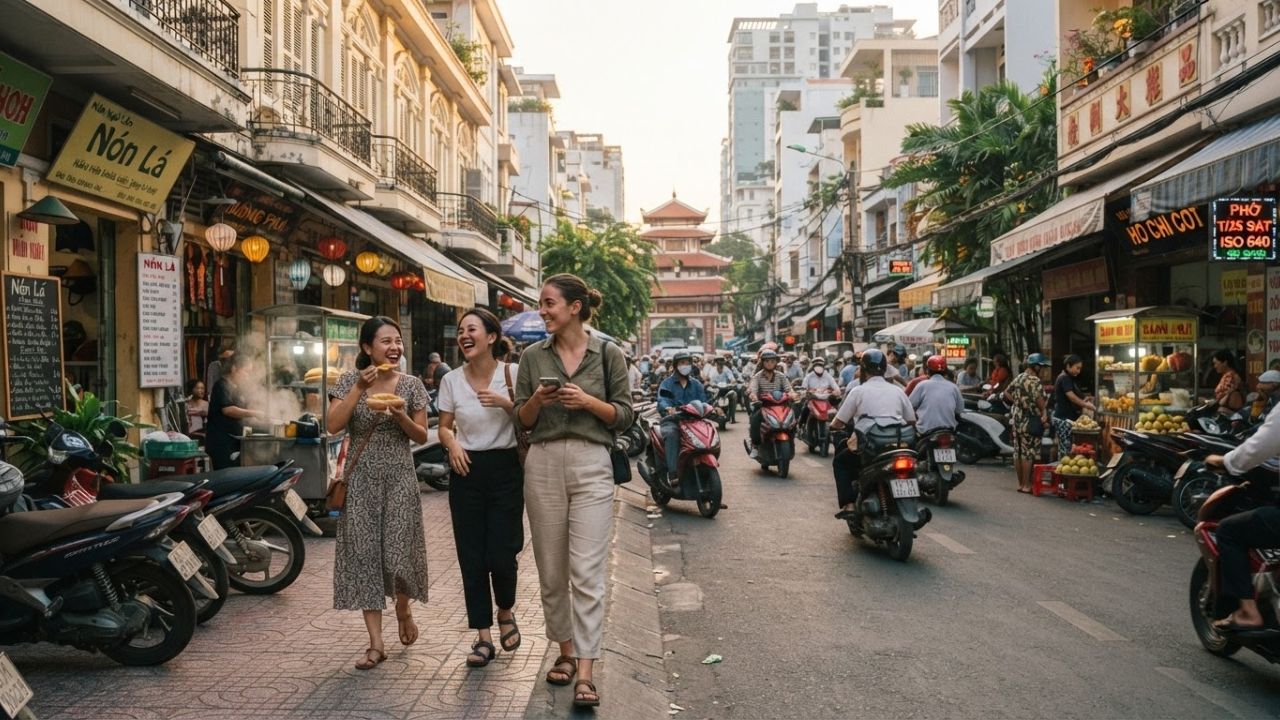
Following Vietnam's historic 2025 administrative restructuring that consolidated a 6,773-square-kilometer megacity of 14 million residents, Ho Chi Minh City has outgrown single-neighborhood itineraries in favor of ten sharply differentiated urban districts.
As the southern metropolis welcomed 8.56 million international arrivals and 45.6 million domestic tourists in 2025—generating VND 278.566 trillion in tourism receipts—the city’s Department of Tourism is actively directing visitors beyond conventional colonial-era landmarks. With city planners targeting 61 million total arrivals (including 11 million international fliers) and VND 330 trillion in revenue for 2026, where a traveler chooses to stay and eat defines which version of Saigon they truly experience.
Administrative Realignment Meets Travel Geography
On July 1, 2025, Vietnam formally restructured Ho Chi Minh City’s civic map, abolishing its legacy 22 district-level units (previously comprising 16 urban districts, Thủ Đức City, and five rural districts) in favor of 168 commune-level divisions, including 113 wards, 54 communes, and one special administrative zone.
Yet for travelers, traditional numbered identifiers remain the essential shorthand for navigation, ride-hailing, and dining. Understanding how these quarters function transforms an overwhelming urban expanse into manageable cultural micro-destinations:
- District 1 (The Heritage Core): The epicenter of neoclassical French civic architecture, luxury hotels, rooftop lounges, and the central Ben Thanh market quarter.
- District 3 (Canopied Residential Calm): Shaded avenues, French-era residential villas, quiet monasteries, and independent third-wave coffee shops.
- District 4 (The Street Food Bastion): A densely packed river peninsula legendary for evening seafood markets, sizzling snails, and vibrant alleyway life.
- District 5 & District 6 (Chợ Lớn): Vietnam’s historic Chinese-Vietnamese commercial heartland, filled with centuries-old clan association halls, incense-filled pagodas, and medicinal herb dispensaries.
- District 7 (Phú Mỹ Hưng): A master-planned modern enclave of wide boulevards, family-friendly green parks, and the Saigon Exhibition and Convention Centre (SECC).
- Bình Thạnh (Canal Corridors & Local Culture): A creative bridge between old Saigon and modern riverfront developments, brimming with canalside street stalls and hidden art studios.
- Thảo Điền (Riverside Lifestyle Hub): Formerly part of District 2 and now anchoring Thủ Đức City, famous for expatriate bistros, microbreweries, and wellness studios.
- Thủ Đức City (Innovation Frontier): The focus of an approved master plan through 2040, housing major technology institutes, university campuses, and emerging transit-oriented developments.
- Tân Bình (Transit Convenience): The practical zone surrounding Tan Son Nhat International Airport, filled with authentic northern-style noodle eateries.
Cultural Preservation and Decentralized Tourism Value
The diversification of visitor foot traffic addresses an urgent tourism balance. For decades, tourist expenditures concentrated within a two-square-kilometer zone in District 1. By dispersing travelers into neighborhood circuits, visitor capital directly benefits family-owned food stalls, neighborhood craftspeople, and community conservation projects.
In Chợ Lớn (Districts 5 and 6), walking tours through Hà Tôn Quyền street or the historic Bình Tây Market sustain multigenerational Cantonese and Teochew culinary heritage. Meanwhile, across the river in District 4, dining along Vĩnh Khánh Street directly supports small seafood vendors who have grilled shellfish over charcoal for generations.
Practical Neighborhood Pairing Itineraries
Rather than confining visits to a single zone, smart travelers link complementary districts to experience contrasting rhythms of urban life:
| Neighborhood Pair | The Combined Travel Experience | Recommended Focus |
|---|---|---|
| District 1 + District 3 | Central sights meet quiet cafe culture | Morning landmark walks followed by quiet villa afternoons |
| District 1 + District 4 | Historic sightseeing meets evening street food | French colonial monuments transitioning to Vĩnh Khánh seafood |
| District 3 + District 5 | Architectural evolution and heritage immersion | Modern modernist villas leading to Chợ Lớn ancestral pagodas |
| Bình Thạnh + Thảo Điền | Local canal life contrasted with riverside bistros | Morning street markets followed by artisan craft beer along the river |
| District 7 + Thủ Đức | Contemporary urban planning and exhibition travel | Convention visits paired with emerging tech and green spaces |
Local Visitor Insider Tips for Navigating Ho Chi Minh City
- Navigating Pedestrian Crossings: Crossing multi-lane avenues filled with motorbikes requires steady, predictable movement; step off the curb with confidence, maintain a consistent walking pace, and never make sudden backwards dashes—riders anticipate your forward trajectory.
- Culinary Specialties by District:
- In District 1, seek out morning cơm tấm sườn bì chả (broken rice with grilled pork chop).
- In District 4, order ốc len xào dừa (mud creepers in coconut milk) along Vĩnh Khánh.
- In District 5, dine on mì vịt tiềm (braised herbal duck egg noodle soup) at heritage noodle houses.
- Metro Line 1 Integration: Utilize the Ben Thanh–Suoi Tien urban rail route to bypass highway bottlenecks when traveling from downtown District 1 to the cafes of Thảo Điền.
- Pagoda Etiquette in Chợ Lớn: When visiting Bà Thiên Hậu Pagoda or Quan Âm Pagoda, dress respectfully with covered shoulders and knees; purchase spiral incense coils from on-site caretakers to support temple preservation funds.
- Off-Peak Travel Window: Explore outdoor open-air markets between 6:30 AM and 8:30 AM to catch the freshest market produce before the midday tropical heat peaks.
Long-Term Tourism Outlook for the Southern Megacity
The transformation of Ho Chi Minh City reflects Vietnam’s wider economic rise. With the metropolis expanding over 6,773 square kilometers following regional infrastructure links with Bình Dương and Bà Rịa–Vũng Tàu, urban tourism is shedding its historical confines.
By encouraging travelers to view the metropolis as a constellation of ten distinct cultural zones, Ho Chi Minh City ensures that its rapid modernization preserves the grassroots street vitality, ethnic traditions, and architectural layers that make it Southeast Asia’s most dynamic metropolitan destination.
Related Travel Guides
Disclaimer
This article is for informational and educational purposes only. It does not constitute legal, financial, or professional advice. While we strive to provide accurate and up-to-date information, travel policies, regulations, and conditions change rapidly. Always verify information with official sources before making travel decisions. Nomad Lawyer makes no representations about the accuracy, reliability, completeness, or suitability of the information provided. Readers should consult qualified professionals for advice specific to their circumstances. The views expressed in this article are those of the author and do not necessarily reflect the views of Nomad Lawyer.
Raushan Kumar
Founder & Lead Developer
Full-stack developer with 11+ years of experience and a passionate traveller. Raushan built Nomad Lawyer from the ground up with a vision to create the best travel and law experience on the web.
Learn more about our team →