
Delhi IGI Airport Chaos 2026: Heavy Rain and 76kmph Squalls Divert Flights and Delay 400+ Services
Severe thunderstorms and waterlogging at Indira Gandhi International Airport led to over 400 flight delays and multiple diversions to Jaipur, Lucknow, and Ahmedabad.

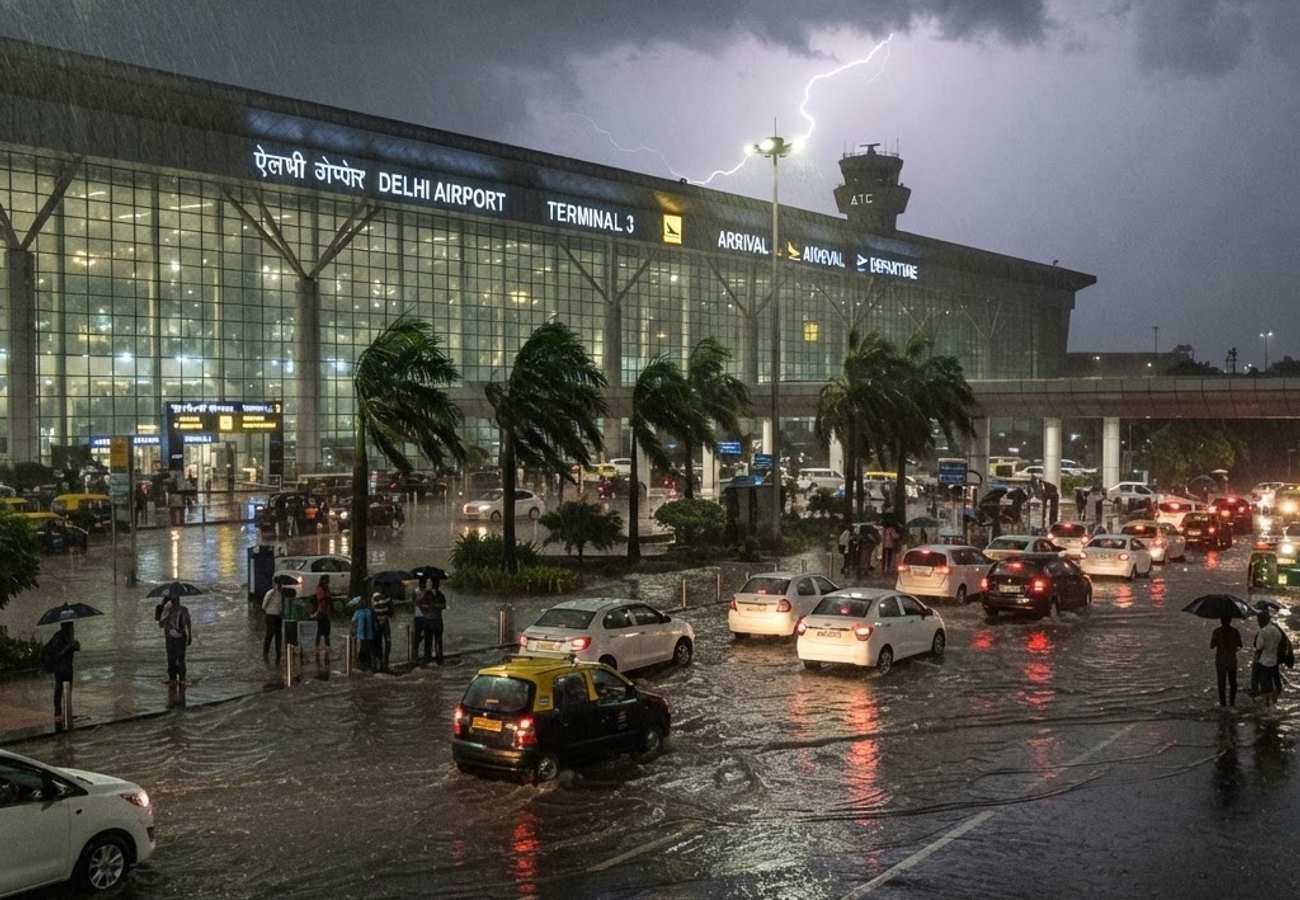
Image generated by AI
Severe thunderstorms and a rare squall have crippled operations at Indira Gandhi International Airport (IGIA), resulting in over 400 flight disruptions and multiple emergency diversions.
Operational Breakdown: Weather-Induced Gridlock at IGIA
On September 4, 2026, a rapid escalation of weather conditions over Delhi-NCR triggered significant operational failures at India's primary aviation hub. A sudden squall produced wind speeds of approximately 76 kmph, coinciding with heavy rainfall that severely reduced visibility and compromised surface conditions.
Flight tracking data confirms that the disruption peaked between mid-afternoon and early evening. The intensity of the storm forced a cluster of arriving aircraft to abort landing attempts.
Impact on Flight Movements and Infrastructure
- Diversions: Between 9 and 11 flights were diverted within a single hour to alternative hubs, specifically Jaipur, Lucknow, and Ahmedabad.
- Total Disruptions: Over 400 flights experienced delays, creating a cascading effect that impacted the evening wave of arrivals and departures.
- Ground Conditions: Significant waterlogging was reported at Terminal 3, with ankle-deep water flooding approach roads and forecourt areas.
- Traffic Impact: Severe congestion on access roads hindered passenger arrival times, compounding the delays caused by aircraft grounding.
Airline Response and Travel Advisories
Major carriers activated disruption protocols via social media and official apps to manage passenger flow and prevent terminal overcrowding.
IndiGo, India's market leader, issued a formal advisory urging passengers to verify flight status in real-time before departing for the airport, citing slow road traffic due to flooding. Air India released a parallel warning, directing customers to official digital channels to avoid unnecessary congestion at check-in counters.
Other operators, including Akasa Air and Air India Express, reported systemic impacts across their domestic networks, confirming that the disruption was hub-wide rather than limited to a specific airline.
Passenger Rights & Advisory: Navigating the Disruption
For passengers affected by the September 4-6 weather event, the following analysis applies to compensation and rebooking:
1. Compensation Eligibility Our analysis of aviation policy indicates that "adverse weather" is generally classified as an "extraordinary circumstance." For the affected passenger, this typically means the airline is not required to pay monetary compensation for the delay itself. However, the duty of care remains.
2. Duty of Care and Rebooking If you were stranded at IGIA or a diversion airport (Jaipur, Lucknow, Ahmedabad), the carrier is responsible for:
- Providing timely updates on the new flight schedule.
- Offering meals and refreshments during long delays.
- Providing hotel accommodation and transport if the delay extends overnight.
3. Practical Mitigation for Delhi Flyers To navigate current instability, our analysis suggests:
- Digital Pre-clearance: Complete web check-in to bypass potential queues at flooded terminals.
- Buffer Time: Allow an additional 2-3 hours for road transit to IGIA due to persistent waterlogging in low-lying underpasses.
- Documentation: Keep digital copies of itineraries and a log of all communication with the airline to support future claims for out-of-pocket expenses.
Meteorological Outlook and Industry Analysis
The India Meteorological Department (IMD) issued a red alert for heavy rainfall across the region. While bulletins suggest the heaviest phase of the system may ease after September 6, the risk of short-notice disruptions remains high due to saturated ground and lingering thunderstorms.
From an analyst perspective, this event highlights a recurring vulnerability in Delhi's aviation infrastructure. Despite previous drainage upgrades, the inability of Terminal 3's forecourts to handle sudden, high-volume rainfall suggests a gap between current infrastructure capacity and the evolving monsoon patterns of 2026.
In a high-density environment where over 1,000 movements occur daily, even minor apron drainage failures or short runway pauses create massive ripples across the national network.
Flight operations are currently being adjusted based on real-time visibility and wind data to clear the accumulated backlog.
Related Travel Guides
Disclaimer
This article is for informational and educational purposes only. It does not constitute legal, financial, or professional advice. While we strive to provide accurate and up-to-date information, travel policies, regulations, and conditions change rapidly. Always verify information with official sources before making travel decisions. Nomad Lawyer makes no representations about the accuracy, reliability, completeness, or suitability of the information provided. Readers should consult qualified professionals for advice specific to their circumstances. The views expressed in this article are those of the author and do not necessarily reflect the views of Nomad Lawyer.
Raushan Kumar
Founder & Lead Developer
Full-stack developer with 11+ years of experience and a passionate traveller. Raushan built Nomad Lawyer from the ground up with a vision to create the best travel and law experience on the web.
Learn more about our team →