
Travel Chaos Sweeps Europe: 79 Delays, 9 Cancellations Hit Major Hubs
Travel chaos sweeps across Europe as SAS, easyJet, and Lufthansa report 79 delays and 9 cancellations in April 2026. Major airports in Spain, Greece, Germany, and Denmark face significant disruption affecting thousands of passengers.

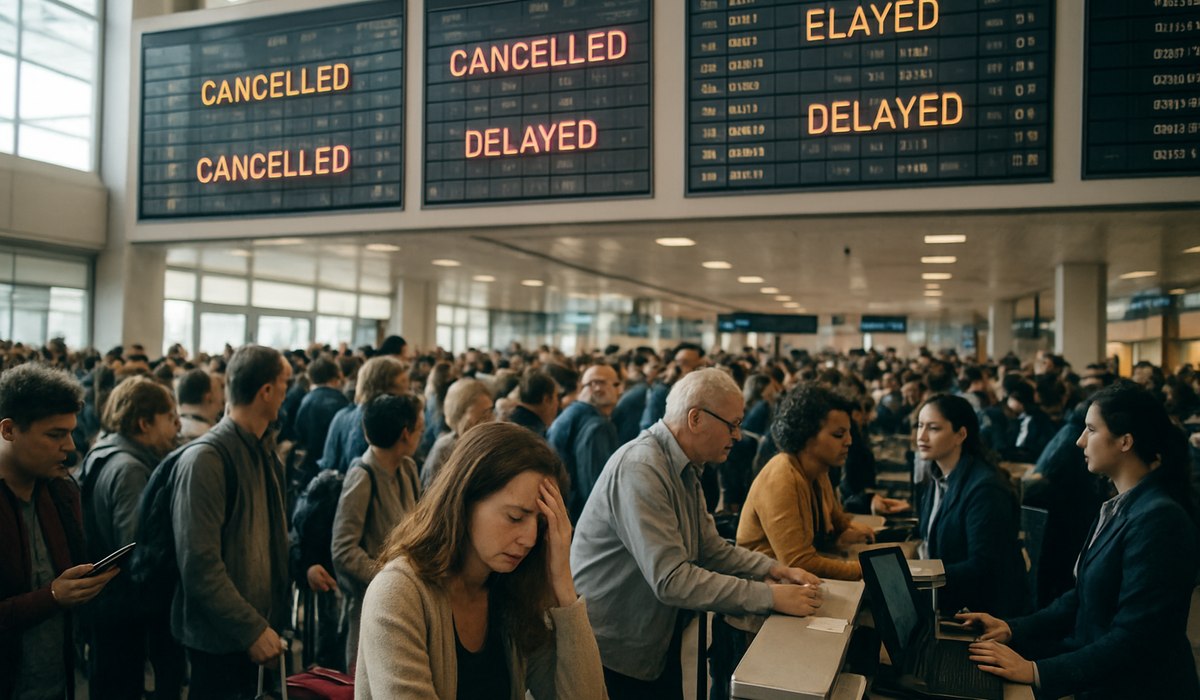
Image generated by AI
Travel Chaos Sweeps European Skies in Mid-April Disruption Wave
European air travel descended into significant disruption on April 13, 2026, as major carriers including SAS, easyJet, and Lufthansa grappled with operational challenges affecting multiple continents. The chaos unfolded across Spain, Greece, Germany, and Denmark, with 79 flight delays and 9 cancellations hampering journeys for thousands of leisure and business travelers. This mid-spring disruption highlights the fragile operating environment facing Europe's aviation sector, where cascading delays at hub airports can trigger network-wide disruptions lasting hours.
Disruption Concentrated at Popular Leisure and Hub Airports
The April 2026 travel chaos sweeps concentrated its impact on airports serving dual purposes: leisure tourism gateways and critical continental connecting hubs. Spanish coastal and island resorts experienced elevated late departures, while Greek Aegean gateways reported scheduling conflicts. German hub airports and Copenhagen's SAS operations center faced disproportionate strain, though individual airport cancellation counts remained modest compared to historical storm events.
The pattern proved particularly telling among transfer hubs. When aircraft and crews rotate through multiple sectors daily, a single late arrival cascades into downstream schedule disruptions affecting dozens of connecting flights. Passengers attempting tight connections in Frankfurt, Munich, or Copenhagen faced extended waits at rebooking desks. For spring break travelers returning northbound from Mediterranean beaches, unexpected overnight stays became common occurrences.
Data compiled from operational monitoring platforms showed that while outright cancellations numbered only nine, the 79 delays created bottleneck effects at ground operations and crew scheduling. This asymmetry between cancellations and delays often proves more disruptive than larger-scale disruptions, as passengers remain in the system longer, consuming airport services and overwhelmed airline rebooking capacity.
Spring Schedule Pressures and Capacity Constraints
European aviation enters spring 2026 under considerable operational strain. Traffic volumes have climbed year-over-year, with Eurocontrol reports documenting increased activity across major carriers. Airlines continue managing overlapping challenges: residual impacts from earlier industrial actions (particularly Lufthansa's strike-related disruptions), infrastructure constraints at capacity-limited airports, and tight crew scheduling during peak travel seasons.
EasyJet, operating hundreds of daily short-haul rotations across Europe, faces particular pressure. High aircraft utilization and compressed turnaround windows at slot-constrained airports like London Gatwick, Paris Charles de Gaulle, and Barcelona-El Prat create minimal recovery time when delays occur. SAS serves as the critical connector linking Scandinavia to Mediterranean destinations, making Copenhagen a vulnerability point when wider European disruption emerges.
The April 2026 travel chaos sweeps should be understood against this structural backdrop. The 79 delays and 9 cancellations, while modest compared to full-day strike disruptions or severe weather events, reflect an operating environment where limited disturbances translate into material passenger inconvenience. Industry analysts emphasize that European aviation operates with diminished buffer capacity, making even minor operational hiccups consequential.
How Single Delays Cascade Across Networks
Network effects amplify individual flight delays exponentially. A 45-minute delay on a Copenhagen-Barcelona flight doesn't simply shift one aircraft's schedule. That late arrival prevents the aircraft from operating its next scheduled rotation to Rome. The Rome flight departs late, affecting onward connections to Athens. By afternoon, a single morning delay has disrupted six flights and impacted passengers at four airports.
This cascading pattern explains why 79 delays potentially affected far more than 79 flights. Industry sources report that each one-hour delay on a major hub route typically creates two to three downstream disruptions. The April 13 disruptions suggest potential secondary impacts affecting several hundred flights when accounting for network amplification.
Crew scheduling compounds the problem. Regulations limit crew flight duty periods, and lengthy delays can place flight crews beyond maximum duty limits. Ground operations must source replacement crews, further delaying affected flights. At busy hub airports, finding spare crew members creates logistical nightmares, sometimes forcing cancellations of subsequent flights that crews were scheduled to operate.
Passengers booking tight connections face particular vulnerability. A passenger connecting from Barcelona to Copenhagen to Stockholm might discover that a 30-minute delay on the Barcelona-Copenhagen flight means missing the Copenhagen-Stockholm connection. The rebooking process, constrained by aircraft availability and crew scheduling, may leave them stranded overnight. During school holidays, when family travel clusters at specific times, such disruptions affect hundreds of passengers simultaneously.
Regional Impact Analysis: Spain, Greece, Germany, and Denmark
Spain
Spanish airports, particularly Barcelona-El Prat and Málaga-Costa del Sol, serve as crucial gateways for northern European tourists. The April disruptions added to existing patterns of seasonal congestion, affecting flights from both legacy carriers and low-cost operators. Easter holiday travel overlaps with spring break schedules, concentrating passenger volumes precisely when airline capacity sits fully utilized.
Greece
Greek island airports experience bottleneck effects as demand ramps toward summer. Small regional airports serving Crete, Rhodes, and other Aegean destinations depend on aircraft rotation from northern Europe. Late-arriving aircraft miss final departure slots, creating overnight cancellations and stranding passengers during peak leisure travel periods.
Germany
Germany's major hubs—Frankfurt, Munich, and Berlin—experienced the disruption's most acute impacts. Lufthansa operations, combined with earlier industrial action recovery, left German airports managing heavy rebooking volumes. Business travelers on time-sensitive connections faced particular disruption.
Denmark
Copenhagen's role as a SAS hub made it vulnerable to cascading disruptions. As the primary Scandinavian gateway to Mediterranean destinations, Copenhagen absorbs network disruption disproportionately.
Real-Time Flight Tracking and Passenger Resources
Travelers navigating the April 2026 disruptions can access real-time operational data through multiple sources. FlightAware provides live tracking of affected flights, delay reasons, and estimated departure times. The FAA and US DOT offer comprehensive passenger rights information, while European carriers maintain individual customer service channels.
Major airports publish real-time departure and arrival information through official airport websites. SAS, easyJet, and Lufthansa all offer digital customer service platforms allowing passengers to monitor bookings and access rebooking options independently.
Understanding Your Passenger Rights During Travel Chaos
European Regulation 261/2004 establishes passenger compensation rights for significant delays and cancellations. Flights delayed by three or more hours, absent extraordinary circumstances, qualify passengers for compensation ranging from €250 to €600 depending on flight distance. Airlines must provide refreshments, meals, and accommodation for overnight disruptions.
However, proving airline liability can prove complex when disruptions stem from weather, air traffic control constraints, or security issues—circumstances potentially classified as "extraordinary." Consulting airline customer service immediately upon recognizing delay likelihood helps ensure compliance with rebooking obligations.
Travel insurance offering disruption coverage provides additional protection. Policies covering flight delays typically reimburse accommodation, meals, and transportation costs when delays exceed specified thresholds (commonly 12 or 24 hours).
Traveler Action Checklist
When encountering delays or cancellations during travel chaos like the April 2026 disruptions:
-
Document everything immediately: Photograph boarding passes, delay notices, and airport signage showing delay times and reasons.
-
Contact airline customer service before rebooking independently: Verify what accommodations and rebooking options airlines must provide under passenger rights regulations.
-
Request written confirmation of delays: Email or obtain written delay acknowledgment from airline representatives; screenshot all digital communications.
-
Check flight status through independent platforms: Monitor Fl
Disclaimer
This article is for informational and educational purposes only. It does not constitute legal, financial, or professional advice. While we strive to provide accurate and up-to-date information, travel policies, regulations, and conditions change rapidly. Always verify information with official sources before making travel decisions. Nomad Lawyer makes no representations about the accuracy, reliability, completeness, or suitability of the information provided. Readers should consult qualified professionals for advice specific to their circumstances. The views expressed in this article are those of the author and do not necessarily reflect the views of Nomad Lawyer.
Kunal K Choudhary
Co-Founder & Contributor
A passionate traveller and tech enthusiast. Kunal contributes to the vision and growth of Nomad Lawyer, bringing fresh perspectives and driving the community forward.
Learn more about our team →