
Travelers Wave Cancellations as 1,759 Delays Cripple US Airlines April 11
Travelers wave cancellations across major US hubs as airlines face 1,759 delays and 79 cancellations on April 11, 2026. Delta, United, Spirit and SkyWest struggle with systemic disruptions affecting Chicago, Atlanta and New York.

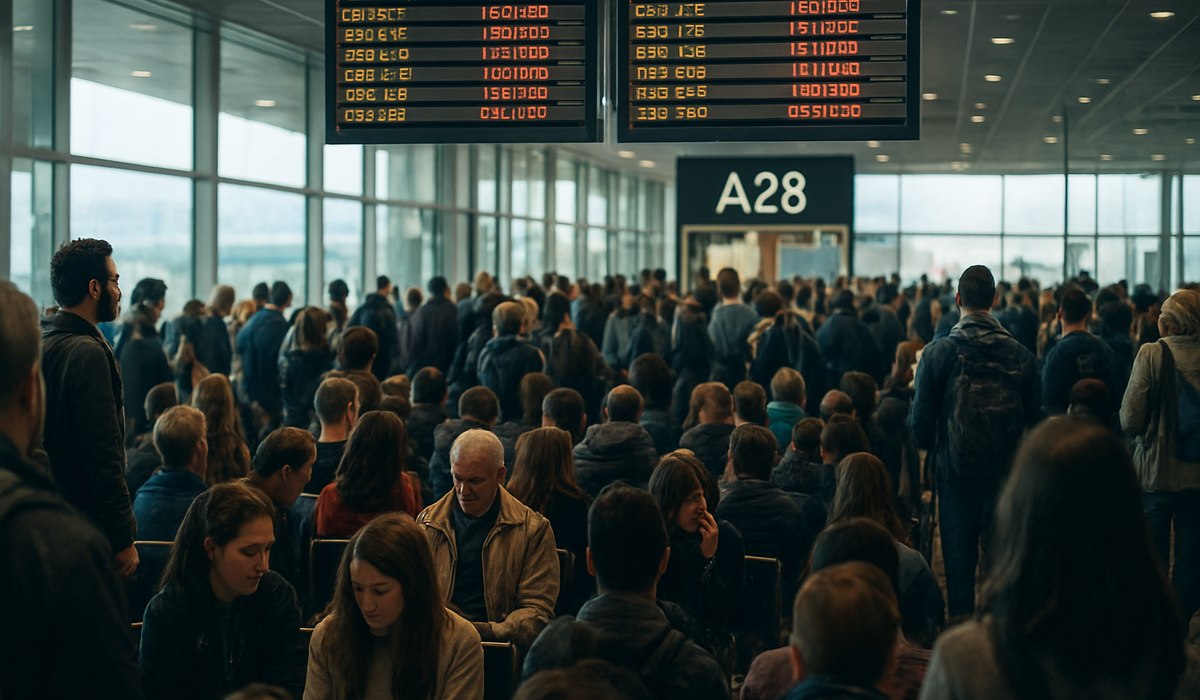
Image generated by AI
Nationwide Airline Disruptions Surge Across Major US Hubs
The United States experienced significant travel chaos on April 11, 2026, as 1,759 delays and 79 cancellations cascaded through major airport hubs. Chicago O'Hare, Hartsfield-Jackson Atlanta International, New York area airports, Los Angeles International and Lambert St. Louis International all reported substantial operational strain. The disruptions affected millions of passengers attempting to connect through these critical transportation nodes, creating bottlenecks at security checkpoints and customer service desks nationwide.
Flight-tracking data from April 11 revealed that delays substantially outnumbered cancellations, indicating most carriers attempted to maintain their schedules despite mounting congestion. This operational strategy, while preserving route availability, cascaded delays across multiple time zones. The imbalance between the relatively small number of cancellations and the overwhelming volume of delays suggested systemic network strain rather than localized weather events. Passengers experienced rolling delays throughout morning and afternoon departure banks, compressing check-in procedures and gate processing across the entire day.
National Disruptions Concentrated at Major Hubs
The geographic distribution of April 11's disruptions pointed to a nationwide operational crisis rather than isolated regional problems. Chicago, Atlanta, New York, Los Angeles and St. Louis emerged as epicenters where delays multiplied exponentially throughout the day. These five airports function as critical hubs where hundreds of connecting flights depend on precise timing.
Chicago O'Hare's complex runway configuration requires intricate sequencing of arrivals and departures during peak hours. Any slowdown triggers immediate cascading effects across the Midwest and beyond. Atlanta, the world's busiest airport by passenger volume, operates with exceptionally tight scheduling margins. When initial delays accumulate, the airport's capacity constraints prevent quick recovery, stranding passengers for hours.
New York's congested airspace compounds operational challenges across all three regional airports. Los Angeles International handles transcontinental and international traffic where missed connections create days of disruption. St. Louis serves as a crucial Midwest-to-South connecting point where limited alternative routing options exist. When travelers wave cancellations as complaints, these hubs experience the most severe ripple effects. For real-time tracking of current disruptions, consult FlightAware and FAA traffic management.
Delta, United, Spirit and SkyWest Among Most Impacted Carriers
Delta Air Lines and United Airlines, the two largest full-service US carriers, reported extensive delays across their network operations. Both airlines maintain dominant presence at Atlanta, Chicago, New York and Los Angeles—precisely where April 11's most severe disruptions occurred. Slowdowns in aircraft turnaround times or crew rotations at any single hub immediately ripple across national and international schedules, complicating same-day recovery efforts.
Spirit Airlines and SkyWest faced particular vulnerability due to their operational model. Spirit's budget carrier network depends on quick aircraft turnarounds and dense scheduling. SkyWest, operating as a regional feeder carrier, must maintain precise connections with mainline partners. Industry performance data consistently shows these carriers experience higher delay rates during peak travel periods when runway capacity reaches saturation.
Staffing levels, crew duty-time regulations and aircraft availability determine how effectively each airline absorbs irregular operations. When multiple constraints align—crew scheduling limitations, reduced aircraft availability and air traffic control initiatives—the result mirrors April 11's cascading delays. Travelers wave cancellations when recovery times extend beyond twenty-four hours, signaling deeper structural problems. Recovery from such widespread disruptions typically requires full operational cycles and extensive crew repositioning across multiple days.
Delays Outpace Cancellations as Airlines Push Forward
April 11's statistics revealed a significant operational strategy: carriers chose operational continuation over cancellation, accepting massive delay volumes to preserve network integrity. The 79 cancellations against 1,759 delays represents a roughly 1-to-22 ratio, illustrating airlines' preference for delay management. This approach maintains route availability and reduces revenue losses but concentrates passenger frustration and scheduling chaos.
Airlines face complex operational mathematics during disruption events. Canceling flights reduces immediate operational pressure but generates rebooking nightmares and regulatory compensation obligations. Maintaining schedules through delays preserves revenue potential but stretches crew resources, passenger tolerance and airport infrastructure. On April 11, most carriers selected the delay approach, creating extended morning and afternoon backup effects.
The implications for passengers proved severe. Missed connections multiplied exponentially. International travelers missed overnight flights. Ground transportation alternatives became scarce. Hotel accommodations filled quickly near major hubs. Passengers attempting to reach evening flights found themselves stranded by afternoon delays. This domino effect extended disruption impacts far beyond the original 1,759 delayed flights, affecting subsequent flights as aircraft and crews operated hours behind schedule.
What This Means for Remote Workers and Frequent Flyers
Disruption events like April 11's create cascading consequences for mobile professionals and frequent business travelers. Remote workers attempting to reach client meetings face immediate productivity impacts. Video conference scheduling becomes impossible when flight arrival times become uncertain. Frequent flyers, accustomed to navigating disruptions, find recovery strategies increasingly complex when system-wide delays affect alternative routing options.
Business travel insurance becomes critical during operational disruptions. Standard travel insurance policies rarely cover airline delays, requiring travelers to investigate optional coverage before departure. Frequent flyer status occasionally provides hotel accommodations, meal vouchers and lounge access when delays exceed specific thresholds, though policies vary significantly by carrier and membership level.
The April 11 disruptions illustrated how quickly airline operations affect broader economic activity. Conference attendees missed registration deadlines. Sales meetings rescheduled. Court appearances delayed. Medical consultations postponed. For remote workers with flexible schedules, delays present manageable inconveniences. For those with fixed commitments, disruptions create business losses and professional consequences.
Traveler Action Checklist
When experiencing airline disruptions similar to April 11's nationwide delays:
-
Check flight status immediately through FlightAware and your airline's app before arriving at the airport.
-
Contact your airline directly for rerouting options on earlier flights before crowds overwhelm customer service.
-
Document all delays exceeding three hours with boarding passes and reservation confirmations for potential compensation claims.
-
Request written confirmation of any rebooking, hotel accommodation or meal voucher offers from airline representatives.
-
File complaints with the U.S. Department of Transportation if compensation issues arise after travel.
-
Photograph any informational signs displaying delay reasons and duration estimates from the airport.
-
Preserve all receipts for meals, ground transportation and accommodations for reimbursement requests.
-
Monitor your airline's operational recovery schedule through their official website and customer service channels.
Network Disruption Data Table
| Metric | Value | Impact |
|---|---|---|
| Total Delays (April 11, 2026) | 1,759 | Network-wide operational strain |
| Total Cancellations | 79 | Below peak levels but significant |
| Primary Affected Hub | Atlanta | World's busiest airport |
| Secondary Hubs Impacted | Chicago, New York, Los Angeles, St. Louis | Major connection points |
| Delay-to-Cancellation Ratio | 22:1 | Airlines prioritized schedule maintenance |
| Most Impacted Carriers | Delta, United, Spirit, SkyWest | All major network operators |
| Estimated Affected Passengers | 500,000+ | Across all affected flights |
| Recovery Timeline | 24-48 hours | Full network normalization required |
Frequently Asked Questions
What caused April 11's widespread airline disruptions?
April 11's disruptions stem
Disclaimer
This article is for informational and educational purposes only. It does not constitute legal, financial, or professional advice. While we strive to provide accurate and up-to-date information, travel policies, regulations, and conditions change rapidly. Always verify information with official sources before making travel decisions. Nomad Lawyer makes no representations about the accuracy, reliability, completeness, or suitability of the information provided. Readers should consult qualified professionals for advice specific to their circumstances. The views expressed in this article are those of the author and do not necessarily reflect the views of Nomad Lawyer.
Preeti Gunjan
Contributor & Community Manager
A passionate traveller and community builder. Preeti helps grow the Nomad Lawyer community, fostering engagement and bringing the reader experience to life.
Learn more about our team →