
Hundreds Stranded Flight Chaos Spreads Across Europe in April 2026
Hundreds stranded flight disruptions engulf European hubs as 466 delays and 102 cancellations cascade across Munich, Amsterdam, and beyond in April 2026, affecting Lufthansa, British Airways, and easyJet operations.

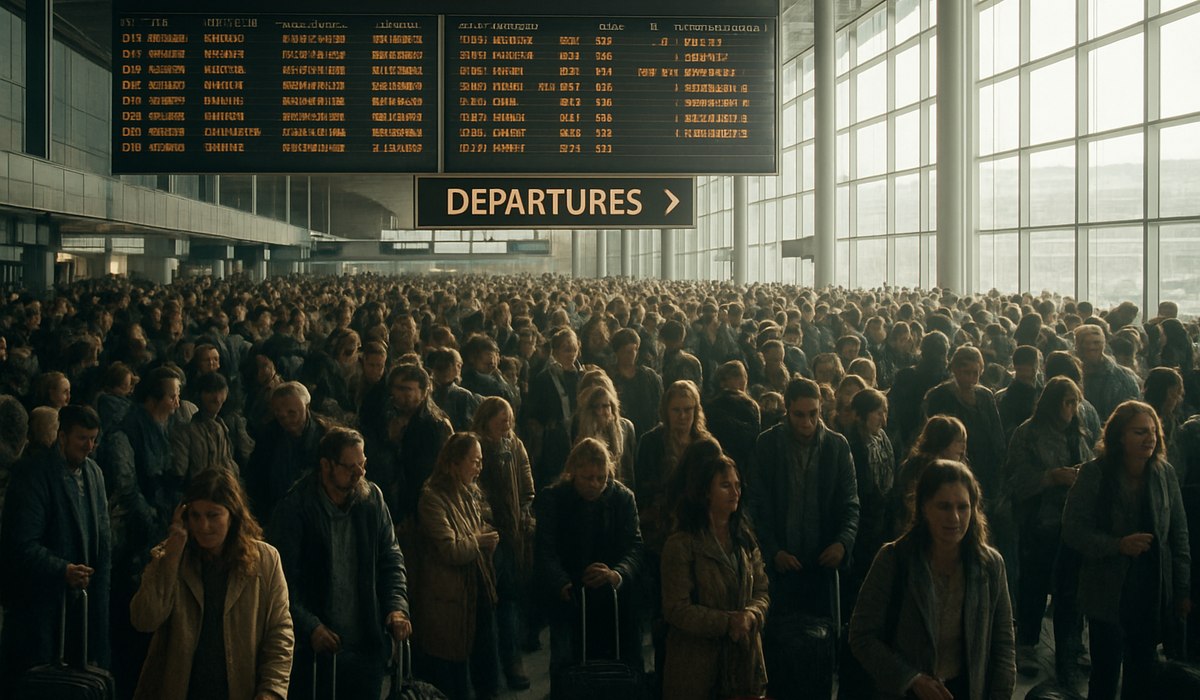
Image generated by AI
Hundreds Stranded as Flight Chaos Spreads Across Europe's Major Hubs
Munich and Amsterdam airports have become epicenters of travel disruption, with cascading cancellations and delays affecting hundreds of passengers across multiple continents. As of April 19, 2026, 466 flight delays and 102 cancellations have rippled through Germany, the Netherlands, and Belgium, severely impacting Lufthansa, British Airways, and easyJet operations. The crisis has left travelers stranded in terminals overnight, missing critical connections, and struggling to secure rebooking on alternative flights during peak travel season.
These aren't isolated incidents. The disruptions represent a compounding systems failure driven by winter weather, acute staffing shortages, and air traffic control congestion that has paralyzed two of Europe's busiest transfer points within 48 hours.
Major European Hubs Under Strain: Munich and Amsterdam
Munich Airport, Lufthansa's primary European base, has become ground zero for the crisis. The facility processes thousands of connecting passengers daily, but recent cancellations on short-haul European routes have created a domino effect across long-haul departures. When feeder flights from regional airports arrive late or are canceled entirely, passengers miss international connections to North America, Asia, and the Middle East—leaving them stranded with limited alternative routing options.
Amsterdam Schiphol faces equally severe pressure. As a major gateway for transatlantic traffic and intra-European connections, congestion here amplifies disruption exponentially. Recent reports highlight staffing challenges in ground handling and air traffic control, combined with weather-related runway constraints that have squeezed airport capacity during busy morning and evening waves.
Both hubs function as critical transfer nodes. When operations degrade at even one facility, the entire European network suffers. Passengers booked on connecting itineraries—particularly those heading to Eastern Europe, Scandinavia, or beyond the Atlantic—face cascading cancellations and rebooking nightmares as spare seats vanish within hours.
Ripple Effects Across Continental and Transatlantic Routes
The disruptions spreading across Europe demonstrate how interconnected modern airline networks have become. Lufthansa's vulnerability stems directly from its reliance on Munich for connecting traffic. A single delayed domestic flight can trigger a missed international departure, creating stranded passengers and operational gridlock.
British Airways and easyJet have absorbed significant disruption on UK-to-continental routes, particularly affecting business travelers and leisure passengers with tight connection windows. Their extensive operations at Amsterdam, Munich, and Belgian airports mean they face direct exposure to hub-level congestion.
What began as localized weather delays has evolved into a European-wide crisis. Air traffic control flow restrictions over core airspace have extended hold times, forcing aircraft to burn fuel while waiting for departure clearance. This cascades backward through airline schedules: an aircraft arriving late at its next destination misses its assigned rotation, affecting crew availability and subsequent flight timings throughout the day.
The situation underscores a fundamental weakness in European aviation: when staffing falls short of demand, there is no rapid recovery mechanism. Unlike North American hub operations that maintain surge capacity, European airports operate with minimal scheduling buffers.
Staffing Challenges and Winter Weather Compounding Disruptions
Winter weather remains the primary trigger, with snow, strong winds, and reduced visibility forcing runway capacity restrictions and prolonged de-icing operations. Each aircraft requiring de-icing loses 15-30 minutes of turnaround time, compressing the number of hourly movements an airport can accommodate.
However, weather alone does not explain the severity of current delays. Staffing shortages across ground handling, security screening, and air traffic control have been identified as force multipliers amplifying disruption. Regional aviation authorities have confirmed that several European countries are operating below optimal staffing levels, particularly in air traffic control sectors managing high-altitude traffic destined for congested terminal areas.
When passenger volumes surge toward peak levels and personnel fall short, boarding queues extend by 30-60 minutes. Security screening backlogs delay aircraft push-back times. Air traffic control vectors unable to clear traffic expeditiously issue holding patterns. Each 15-minute delay compounds across the network, creating a cascade effect that persists long after triggering conditions clear.
Recovery from such events typically requires 24-48 hours of reduced operations. Airlines must position crews and aircraft, cancel non-essential flights to reduce demand, and gradually restore normal schedules. During that window, hundreds remain stranded.
What This Means for Travelers: Real-Time Information and Rights
Passengers affected by the current disruptions should understand their legal protections and immediate options. EU Regulation 261/2004 provides compensation rights for eligible delays and cancellations, entitling affected passengers to up to €600 per ticket depending on flight distance. However, compensation is not automatic—passengers must actively claim it.
Track flight status in real-time via FlightAware and your airline's mobile app. These platforms provide minute-by-minute updates on gate changes, delays, and cancellations. Don't rely solely on airport announcements.
Contact your airline immediately upon noticing delays exceeding three hours. Airlines are obligated to offer rebooking on alternative flights or refunds. Request written confirmation of disruption reasons, as this documentation supports future compensation claims.
Do not accept vague delays without specifics. Airlines must disclose whether disruption stems from technical issues, crew scheduling, or extraordinary circumstances (weather, air traffic control). Only the latter may exempt them from compensation obligations.
Document everything. Save boarding passes, receipts for meals and accommodation, and all airline communications. These materials form the basis for successful compensation claims through airline customer service or third-party claim management companies.
Consider travel insurance for future bookings. While current disruption cannot be covered retroactively, comprehensive policies protect against future losses.
Traveler Action Checklist
-
Check flight status immediately on FlightAware or your airline's official website—avoid relying on airport information systems alone.
-
Contact your airline directly via phone or app within 2 hours of learning of disruption; delays beyond 3 hours trigger compensation eligibility.
-
Request written disruption confirmation documenting the cause and time notifications were issued to establish compensation eligibility under EU Regulation 261/2004.
-
Accept rebooking on earliest alternative flight or request rerouting through different hubs; do not wait for original flight if cancellation seems likely.
-
Collect receipts for meals, accommodation, and ground transport incurred due to delays exceeding 2 hours; airlines must reimburse reasonable expenses.
-
Take photographs or screenshots of departure boards, cancellation notices, and crowds as evidence for future claims.
-
File compensation claims directly with airlines within 3 months, or engage third-party claim management services if airline denies responsibility.
-
Monitor your email and phone for rebooking notifications; airlines may reassign seats without notice during major disruptions.
Current Disruption Impact: By the Numbers
| Metric | Figure | Scope |
|---|---|---|
| Total Flight Delays | 466 | Germany, Netherlands, Belgium |
| Total Cancellations | 102 | Primary hubs and secondary cities |
| Primary Affected Hub | Munich (Lufthansa) | Short-haul and long-haul routes |
| Secondary Affected Hub | Amsterdam Schiphol | Transatlantic and European routes |
| Airlines Most Impacted | Lufthansa, BA, easyJet | Multiple European networks |
| Passengers Stranded (Estimate) | 15,000+ | Connecting and direct passengers |
| Primary Disruption Cause |
Disclaimer
This article is for informational and educational purposes only. It does not constitute legal, financial, or professional advice. While we strive to provide accurate and up-to-date information, travel policies, regulations, and conditions change rapidly. Always verify information with official sources before making travel decisions. Nomad Lawyer makes no representations about the accuracy, reliability, completeness, or suitability of the information provided. Readers should consult qualified professionals for advice specific to their circumstances. The views expressed in this article are those of the author and do not necessarily reflect the views of Nomad Lawyer.
Raushan Kumar
Founder & Lead Developer
Full-stack developer with 11+ years of experience and a passionate traveller. Raushan built Nomad Lawyer from the ground up with a vision to create the best travel and law experience on the web.
Learn more about our team →