
Tokyo Aligns With Seoul and More as Zero Buffer Holidays Expose a Hidden Asia Travel Risk
Tokyo Aligns With Seoul and More as Zero Buffer Holidays Expose a Hidden Asia Travel Risk

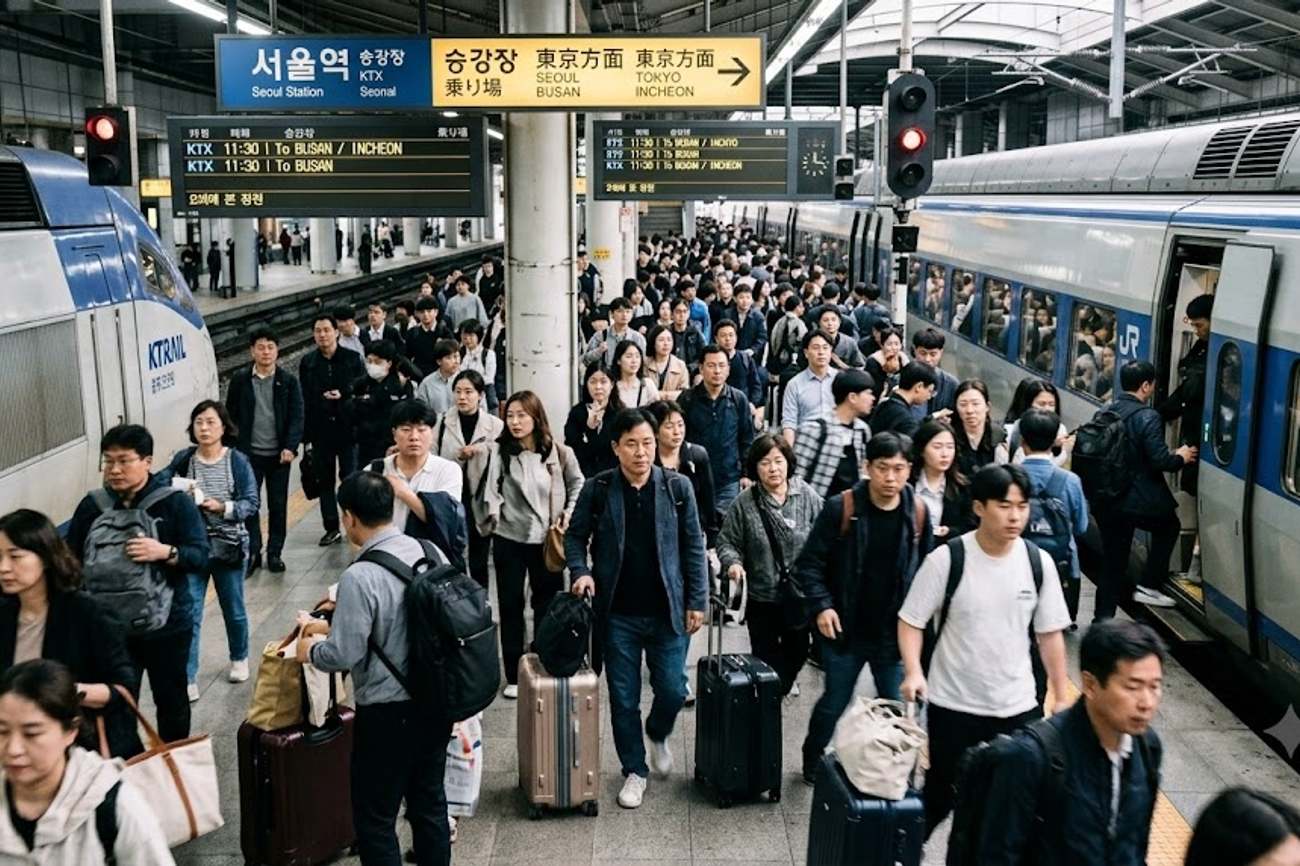
Image generated by AI
[Tokyo, August 2026] — International traveler arrivals in Japan reached 3,098,900 in August 2026 alone, fueling a volatile trend toward "zero buffer holidays" where meticulous, tight-schedule itineraries leave passengers exposed to total trip failure from a single delay.
This surge in ultra-short-term city breaks is most concentrated in Tokyo, Seoul, and Hong Kong. Travelers are increasingly booking trips with no spare arrival or departure days and zero flexible hotel nights between reservations. While these cities offer the high-speed transit and air connectivity necessary to support such efficiency, the lack of a temporal safety net means that any flight cancellation or rail disruption results in immediate financial loss and the forfeiture of prepaid activities.
The Rise of the Zero Buffer Model
The "zero buffer" phenomenon is an editorial description of a travel pattern where efficiency is prioritized over security. Travelers arrive in a city, drop luggage, sightsee, and depart immediately after checkout the following day. This model is sustainable only in hubs with world-class infrastructure, such as those managed by the Japan National Tourism Organization or the transit networks of South Korea and Hong Kong.
However, this efficiency creates a paradox of exposure. Because these trips are often designed to maximize limited annual leave, every hour carries extreme value. A four-hour delay on a week-long vacation is a nuisance; a four-hour delay on a 48-hour city break can eliminate a primary attraction or a non-refundable tour.
Markets and Data Impact
Recent hotel data highlights the prevalence of these compressed stays across Asia and beyond. Analysis of more than 140 million reservations across 20 travel markets reveals a significant lean toward single-night stays.
| Metric | 2025/2026 Data Point | Significance |
|---|---|---|
| Total Reservations Analyzed | 140 Million+ | Establishes a massive global sample size |
| Stays of 2+ Nights | 27% | Indicates 73% of bookings are ultra-short |
| Malaysian Next-Day Checkouts | 84% | Highest rate of one-night stays in the study |
| Global Average Room Rate | US$194 | High costs incentivize cutting unnecessary nights |
| Average Booking Lead Time | 32.15 Days | Travelers commit long before disruptions occur |
| Japan August 2026 Arrivals | 3,098,900 | Demonstrates massive volume of potential "zero buffer" trips |
The data suggests that the financial incentive to avoid an extra hotel night—averaging US$194 globally—is outweighing the perceived risk of disruption.
Practical Traveler Advisory and Strategic Insights
For the modern nomad or short-term tourist, the shift to zero-buffer travel transforms the nature of travel risk. The financial and emotional burden of disruption has shifted entirely from the service provider to the passenger.
Immediate Passenger Impacts:
- Financial Exposure: A cancelled flight does not just mean a missed trip; it means paying for a hotel room that cannot be used and potentially paying for a replacement emergency stay.
- Rigid Itineraries: Prepaid excursions and timed entry tickets to museums or landmarks become "high-risk" assets. If a flight is delayed by six hours, the entire sequence of the trip collapses.
- Increased Pressure on Services: Travelers are now demanding immediate rebooking and baggage support from airlines because they do not have the luxury of "waiting it out" for 24 hours.
- False Confidence: The reliability of the Federal Aviation Administration (FAA) or regional equivalents cannot account for local rail interruptions, immigration queues, or severe weather that can derail a tight schedule.
The Operational Strain on Aviation and Hospitality
The trend is creating a friction point between passenger expectations and operational reality. Airlines are facing increased pressure to provide instantaneous rebooking options, as passengers no longer have "buffer days" to absorb delays.
For airports, the demand has shifted toward real-time, hyper-accurate alerts and late-night transport solutions. When a passenger is on a one-night stay, a midnight arrival due to a delay requires immediate, visible ground-transport assistance to avoid the loss of the following day's itinerary.
Hotels are experiencing a dual-edged sword. While high turnover increases occupancy rates, it creates an operational nightmare. The "one-night" guest requires the same check-in/check-out administrative effort as a week-long guest but generates significantly less ancillary revenue. Hotels lose the opportunity to sell spa services, multi-course meals, and local experiences because the guest is effectively "in and out."
As the concept of Zero Buffer Holidays gains popularity, travelers to Asia are exposed to a hidden risk of last-minute flight changes and cancellations, particularly in major hubs like Tokyo and Seoul. For the most up-to-date information on flight schedules and travel advisories, passengers can visit the Japan National Tourism Organization website, which provides official guidance on navigating Japan's airports and transportation systems. By staying informed, travelers can better plan their trips and minimize disruptions.
To mitigate this, hotels are increasingly offering paid early check-ins and late check-outs to provide the very buffer that travelers are stripping from their itineraries.
Economic Value vs. Visitor Volume
There is a growing disconnect between "arrival numbers" and "economic value." While governments celebrate millions of arrivals, the local economy may not be seeing a proportional increase in wealth.
When visitors stay for only one night and follow a rigid, pre-planned list of "must-see" sites, they fail to penetrate the deeper local economy. Neighbourhood shops, boutique guides, and off-the-beaten-path restaurants suffer when tourists are too rushed to explore beyond the primary tourist hubs.
Tourism authorities are now being urged to track "average stay" and "geographic spread" rather than just total arrival counts. A city that handles 3 million visitors who stay one night each is less economically resilient than a city that handles 1 million visitors who stay for four nights each.
FAQ: Zero Buffer Travel 2026
What is a "zero buffer" holiday? It is a trip planned with no extra days or flexible hotel nights. If a flight is delayed or a hotel booking is missed, there is no "spare" time to recover the itinerary, often leading to total trip failure.
Which cities are most susceptible to this trend? Tokyo, Seoul, and Hong Kong are the primary hubs due to their extreme transit efficiency, dense attractions, and high air connectivity, which give travelers a false sense of security regarding timing.
How does this affect my hotel booking? With only 27% of global bookings lasting two nights or more, hotels are seeing higher turnover. Travelers should prioritize hotels offering flexible date changes or secure luggage storage to manage tight transitions.
What is the biggest risk of a one-night city break? The primary risk is the loss of non-refundable prepaid activities. Because the stay is so short, a delay of even a few hours can eliminate the majority of the trip's planned value.
Efficiency is a tool for the traveler, but without a buffer, it becomes a liability.
Related Travel Guides
- Nepal Landslides Block Major Highways Disrupting Access to Popular Tourist and Trekking Routes
- Water Shortages Hit Barbados and the Rest of the Caribbean Countries During Peak Tourism Demand Prompting Visitor Caution
- Oshima Joins Chiba and More as Typhoon Dujuan Unleashes a Powerful Rain and Travel Crisis Across Japan
Disclaimer
This article is for informational and educational purposes only. It does not constitute legal, financial, or professional advice. While we strive to provide accurate and up-to-date information, travel policies, regulations, and conditions change rapidly. Always verify information with official sources before making travel decisions. Nomad Lawyer makes no representations about the accuracy, reliability, completeness, or suitability of the information provided. Readers should consult qualified professionals for advice specific to their circumstances. The views expressed in this article are those of the author and do not necessarily reflect the views of Nomad Lawyer.
Raushan Kumar
Founder & Lead Developer
Full-stack developer with 11+ years of experience and a passionate traveller. Raushan built Nomad Lawyer from the ground up with a vision to create the best travel and law experience on the web.
Learn more about our team →