
Switzerland Joins Global Travel Advisory Shift as Emirates, Etihad, Gulf Air Combat Middle East Demand Crisis With Insurance-Backed Passenger Protection
Multiple nations including Switzerland, Germany, and the US are tightening travel advisories for Gulf destinations, forcing airlines to introduce comprehensive travel insurance products to restore passenger confidence.

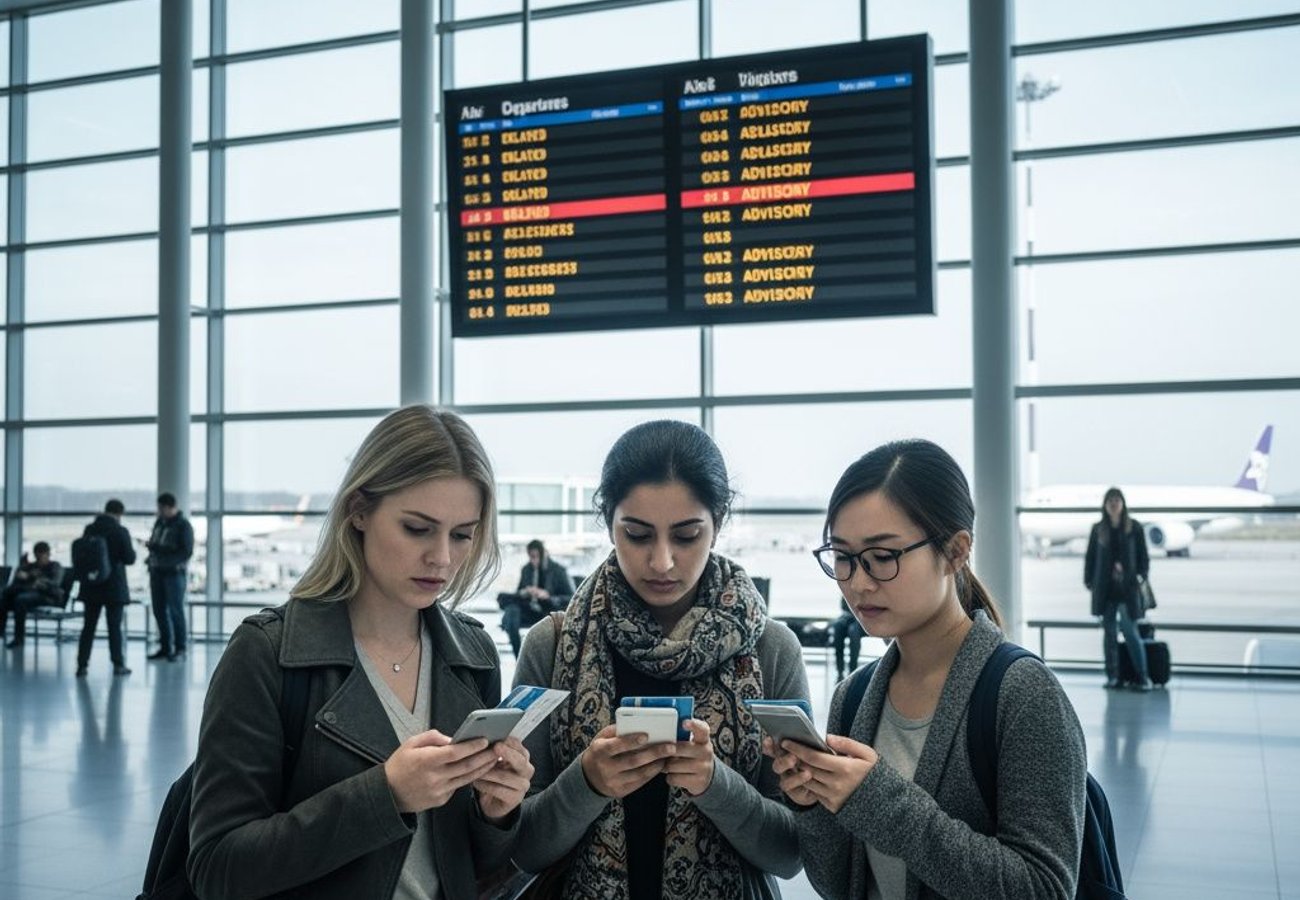
Image generated by AI
Global Travel Advisory Tightening Reshapes Gulf Tourism Landscape
A seismic shift is underway in international travel confidence. Switzerland, along with Denmark, Germany, the United States, United Kingdom, France, Russia, and multiple other nations, are tightening travel advisories for the UAE, Qatar, Bahrain, Kuwait, and Saudi Arabia—not through outright bans, but through coordinated risk-based warnings that are reshaping how millions of international travellers plan trips to major Gulf hubs.
The distinction matters. No formal global travel ban exists. Airports remain fully operational. Yet something equally powerful is happening: a progressive erosion of traveller confidence driven by layered geopolitical concerns, intermittent airspace disruptions, and increasingly restrictive travel insurance policies.
Reddit: "I had a trip to Dubai booked for September, but my travel insurance just excluded conflict-related incidents. Now I'm nervous about going at all." — r/travel
The Advisory Shift Isn't a Ban—It's Something More Subtle
What governments like Switzerland and Germany are doing is far more nuanced than a travel prohibition. They're issuing what we might call "risk-based hesitation advisories"—guidance that keeps borders technically open while flagging elevated caution for specific destinations.
The UAE, Qatar, Bahrain, Kuwait, and Saudi Arabia aren't being closed to tourists. Rather, they're being classified under advisory categories like "Reconsider non-essential travel," "Heightened caution advisory zones," and "Regionally sensitive travel corridors." This creates a psychological barrier even when physical access remains unrestricted.
The impact is real and measurable. Travellers are shifting toward refundable bookings, demanding flexible fare structures, and abandoning long-term advance reservations in favour of short-notice planning. Corporate travel planners are rerouting itineraries. Leisure tourists are postponing trips.
Why Gulf Destinations Face Pressure Despite Being Stable
Here's the paradox: Dubai, Doha, Abu Dhabi, Manama, and Riyadh remain highly developed, secure tourism and business hubs. Infrastructure is world-class. Security on the ground is robust. Yet these destinations are indirectly damaged by external regional instability.
The pressure points are clear:
Airspace rerouting during regional conflicts — Flight corridors change unexpectedly, adding hours to journeys and creating operational uncertainty.
Insurance exclusions on war-adjacent zones — International travel insurers are applying stricter exclusions and higher premiums for destinations perceived as conflict-adjacent, directly amplifying passenger hesitation.
Perception of proximity to instability — Geography creates unfair association between stable Gulf states and broader regional tensions in neighbouring areas.
Rapid advisory changes — Security updates can shift within days, destroying booking confidence and forcing last-minute cancellations.
According to official UK FCDO advisories, Gulf destinations are now subject to "reviewed risk levels" that update frequently based on geopolitical developments—a pattern replicated across US State Department guidance and European advisory frameworks.
Airlines Fight Back: The Insurance Gambit
Rather than concede to declining demand, leading Gulf carriers are executing an aggressive counteroffensive. Emirates, Etihad Airways, and Gulf Air are no longer competing on fares alone. They're repositioning themselves as end-to-end travel assurance providers.
The strategy is bold: integrate insurance-like features directly into airline offerings.
Emirates has become the first airline globally to offer Comprehensive Travel Cover—a product bundling medical coverage for conflict-related incidents, airline-managed hotel accommodation, extended-stay support, and rebooking flexibility across partner networks. This is insurance wrapped in an airline package.
Etihad Airways and Gulf Air are deploying parallel strategies, focusing on:
- Enhanced disruption protection mechanisms
- Rapid rebooking flexibility across global partner airlines
- Strengthened passenger support systems addressing cancellations and delays
- Direct financial protection against unexpected itinerary changes
The message is unmistakable: we understand your hesitation, and we're absorbing the risk on your behalf.
Country-by-Country: How Travel Advisories Are Evolving
Switzerland applies strict risk-based warnings during geopolitical tensions, keeping UAE and Qatar technically open but flagged for caution. Germany maintains one of Europe's most cautious frameworks, particularly concerning Middle East airspace volatility and insurance coverage gaps.
France focuses on civil aviation safety with periodic warnings during regional escalation cycles. The UK FCDO system places Gulf destinations under continuous "reviewed risk levels." The US State Department uses tiered advisories frequently flagging Middle East zones for elevated caution due to security unpredictability.
Denmark aligns with EU-wide aviation risk coordination. Russia's advisory system reflects geopolitical alignment but still categorizes Middle East travel based on security stability assessments.
The Real Impact: Demand Volatility and Recovery Uncertainty
What this coordinated advisory tightening reveals is a fundamental shift in how international travellers evaluate risk. The days of automatic, advance bookings to Gulf destinations are fading. Travel industry analysts are tracking measurable declines in forward bookings for Q3 and Q4 2026.
Yet airports like Dubai International and Abu Dhabi International continue to operate at high capacity. The disconnect is important: this isn't a demand collapse. It's a demand restructuring toward shorter booking windows, greater flexibility, and heightened risk mitigation—precisely the conditions that favour airlines offering built-in insurance and disruption protection.
Emirates, Etihad, and Gulf Air are betting that by removing travel insurance friction and assuming more risk themselves, they can capture demand that competitors leave stranded.
Whether this strategy succeeds depends on whether traveller confidence stabilizes or continues eroding through 2026. For now, the Gulf's biggest carriers are playing an aggressive hand: making travel there demonstrably less risky, one comprehensive travel cover product at a time.
The real travel war isn't about destinations closing—it's about who wins back the confidence to book them.
Related Travel Guides
Disclaimer
This article is for informational and educational purposes only. It does not constitute legal, financial, or professional advice. While we strive to provide accurate and up-to-date information, travel policies, regulations, and conditions change rapidly. Always verify information with official sources before making travel decisions. Nomad Lawyer makes no representations about the accuracy, reliability, completeness, or suitability of the information provided. Readers should consult qualified professionals for advice specific to their circumstances. The views expressed in this article are those of the author and do not necessarily reflect the views of Nomad Lawyer.
Preeti Gunjan
Contributor & Community Manager
A passionate traveller and community builder. Preeti helps grow the Nomad Lawyer community, fostering engagement and bringing the reader experience to life.
Learn more about our team →