
US-Iran Crisis 2026: How India, UK, and South Korea are Rerouting Global Travel Amid Middle East Security Threats
As tensions between the US and Iran escalate in 2026, major nations are issuing urgent travel advisories to protect citizens from airline disruptions and maritime instability across the Middle East.

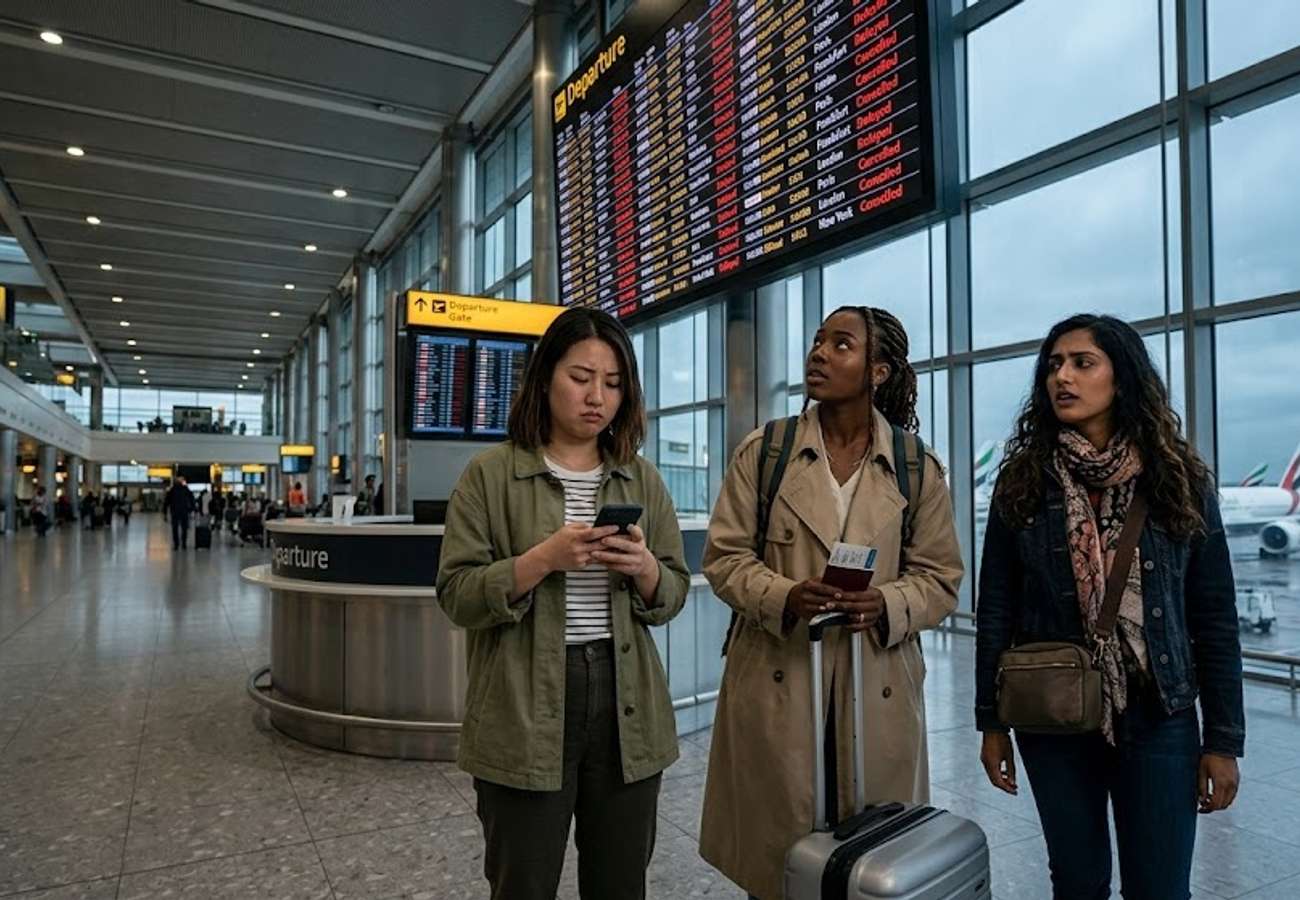
Image generated by AI
The escalating confrontation between the United States and Iran has plunged Middle East travel into a state of high volatility, forcing nations like India, South Korea, Switzerland, and the United Kingdom to implement urgent safety protocols for their citizens.
The Local Trend Revealed: A Shift Toward Preemptive Departure
In 2026, the nature of diplomatic travel warnings has shifted from "cautionary" to "preemptive." Rather than waiting for a total shutdown of airspace or port closures, governments are now urging voluntary departures while commercial aviation remains operational. This trend is driven by the Middle East's role as a critical global transit hub connecting Asia, Europe, and Africa.
The current crisis is not merely a bilateral dispute but a systemic risk to international mobility. The instability surrounding the Strait of Hormuz and the Red Sea has created a ripple effect, where a security spike in one corridor leads to immediate rerouting of flights and shipping across three continents. For the modern traveler, this means that even if a destination is not in a conflict zone, the transit path—often involving major Gulf hubs—is subject to sudden change.
Regional Impact Analysis
The current security climate has created specific stressors across different sectors of the travel and logistics industry.
| Travel Area | Primary 2026 Concern | Operational Impact |
|---|---|---|
| Commercial Aviation | Airspace closures | Massive rerouting, increased flight times, and delays |
| Regional Airports | Operational restrictions | Potential sudden closures or limited slot availability |
| Maritime Routes | Corridor insecurity | Heightened risk in the Red Sea and Strait of Hormuz |
| Tourism Sector | Confidence collapse | Rapid cancellations and itinerary modifications |
| Corporate Travel | Mobility risks | Comprehensive review of regional business footprints |
National Responses and Diplomatic Directives
India: Protecting a Massive Diaspora
India faces the highest stakes due to the millions of citizens residing and working in the Gulf. The Indian Embassy in Tehran has issued an urgent advisory for nationals to postpone travel to Iran and encouraged those currently on the ground to seek temporary departure via commercial transport. Because the Middle East serves as a primary aviation gateway for Indians traveling to North America and Europe, any disruption here creates a logistical bottleneck for millions.
South Korea: Strategic Energy and Trade Security
Seoul has shifted into high-alert monitoring, with the Foreign Ministry holding emergency sessions with diplomatic missions in Iran and Israel. South Korean authorities are urging short-term visitors to leave unless their presence is essential, recognizing that energy supply chains and overseas business operations are inextricably linked to regional stability.
Switzerland and the United Kingdom: Diplomatic Caution
Switzerland continues to maintain a strict "do not travel" stance regarding Iran. Given its historical role as a diplomatic intermediary between Washington and Tehran, the Swiss position serves as a bellwether for international security assessments. Similarly, the UK is warning travelers of longer flight routes and intensified airport security procedures as the region's stability wavers.
Cultural & Environmental Value (Information Gain)
Beyond the security alerts, this crisis highlights the fragility of "Transit Tourism." The Middle East is home to some of the world's most significant UNESCO World Heritage sites and cultural landmarks. When geopolitical tension spikes, the first casualty is often the local guides, boutique heritage hotels, and artisanal markets that rely on international footfall.
To support local economies during these volatile periods, travel experts suggest a shift toward "Micro-Tourism"—supporting local community-led initiatives that operate independently of large-scale corporate tour operators. By diversifying travel patterns, the regional economy can become less dependent on the volatile peaks of high-season international tourism.
Visitor Insider Tips
For those who must travel through or near the region during this period, standard travel insurance is often insufficient. Follow these local insider protocols:
- The "Flex-Ticket" Rule: Only book fully refundable fares or those with "open-jaw" flexibility. In 2026, airline schedules in the Gulf can change within a 6-hour window.
- Embassy Digital Sync: Do not rely on website updates. Register with your embassy's SMS alert system for real-time security pings.
- Maritime Awareness: For those using cruise lines or shipping, check the latest notices from the International Maritime Organization (IMO) regarding the Red Sea corridors.
- Alternative Hubs: Consider rerouting through non-Gulf hubs (such as those in East Africa or Central Asia) to avoid potential airspace closures over Iran.
- Document Redundancy: Carry physical copies of all visas and passports; digital copies may be inaccessible if regional cellular networks are throttled during security events.
Tourism Outlook
The long-term impact of the 2026 US-Iran crisis is likely to be a permanent diversification of global flight paths. We are seeing a move away from total reliance on a few "super-hubs" in the Middle East toward a more fragmented, multi-polar aviation network. While this may increase travel time and costs in the short term, it creates a more resilient global system that is less susceptible to a single regional flashpoint.
The intersection of geopolitics and tourism has never been more volatile, making agility the most valuable asset for the 2026 traveler.
Related Travel Guides
Disclaimer
This article is for informational and educational purposes only. It does not constitute legal, financial, or professional advice. While we strive to provide accurate and up-to-date information, travel policies, regulations, and conditions change rapidly. Always verify information with official sources before making travel decisions. Nomad Lawyer makes no representations about the accuracy, reliability, completeness, or suitability of the information provided. Readers should consult qualified professionals for advice specific to their circumstances. The views expressed in this article are those of the author and do not necessarily reflect the views of Nomad Lawyer.
Raushan Kumar
Founder & Lead Developer
Full-stack developer with 11+ years of experience and a passionate traveller. Raushan built Nomad Lawyer from the ground up with a vision to create the best travel and law experience on the web.
Learn more about our team →