
Strait of Hormuz Blockade Triggers Global Oil Shock as Saudi Arabia, UAE and Qatar Energy Crisis Destabilizes Asia Aviation; Singapore Airlines Launches Priority Security at Changi Airport Amid US-Iran Conflict and Global Trade Security Threat in May 2026
A strategic blockade of the Strait of Hormuz has ignited a global energy crisis, sending oil prices to record highs. As Saudi Arabia, the UAE, and Qatar face export disruptions, Singapore Airlines launches a priority security trial at Changi Airport to streamline the travel of high-yield passengers during the 2026 oil shock.

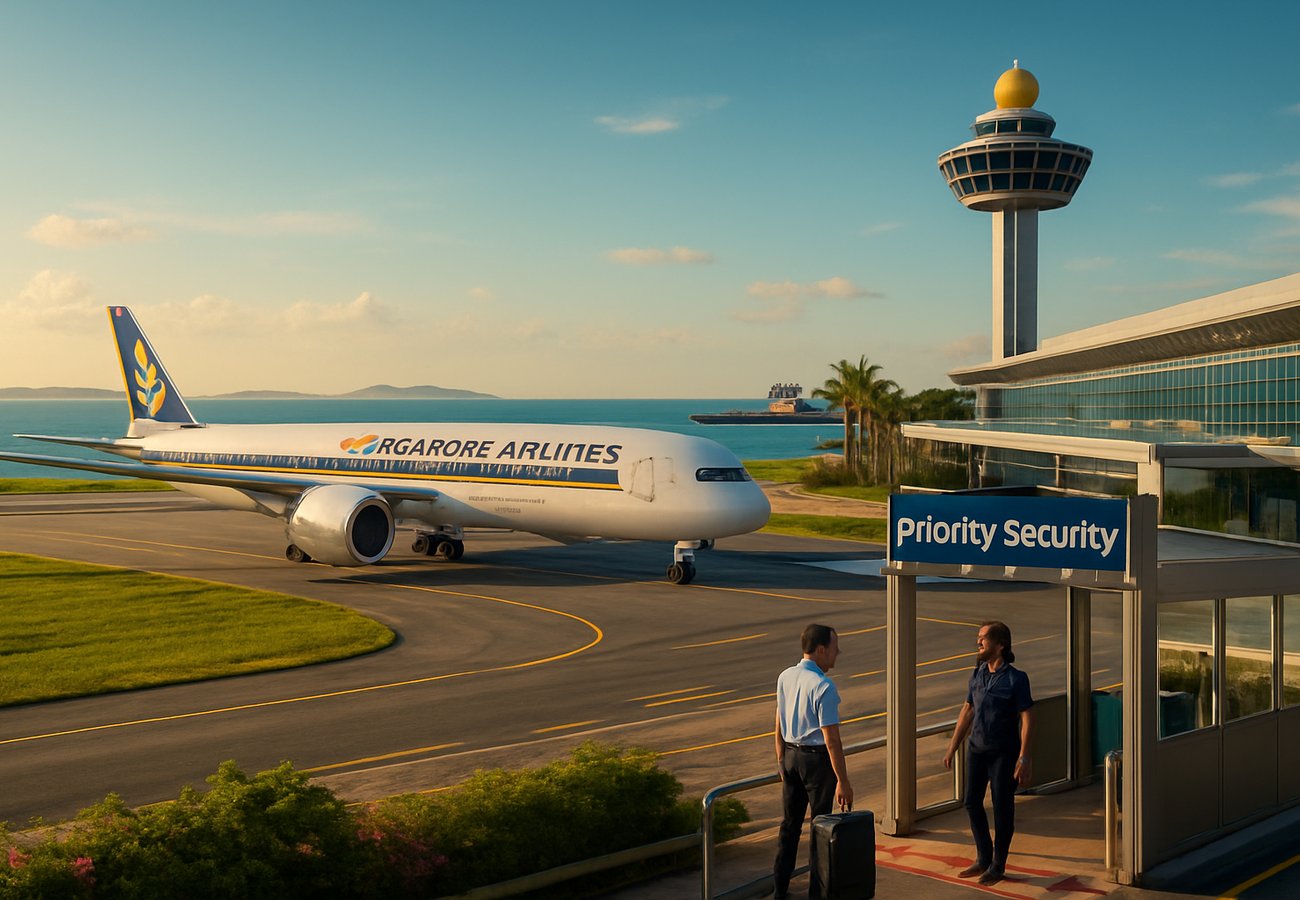
Image generated by AI
A global energy crisis of historic magnitude has erupted following the strategic blockade of the Strait of Hormuz, triggering an immediate oil price shock that is now forcing the world’s most elite airlines to redefine the concept of "operational efficiency." As the United States, Iran, and Gulf Cooperation Council (GCC) nations including Saudi Arabia, the UAE, and Qatar move to the brink of military conflict, Singapore Airlines (SIA) has launched a groundbreaking priority security screening trial at Singapore Changi Airport (SIN). Today, May 10, 2026, the carrier introduced dedicated lanes at Terminal 3 for its Suites, First Class, and Solitaire PPS Club travelers, ensuring that high-yield passengers can bypass the "travel chaos" currently gripping global hubs as the energy crisis destabilizes international aviation supply chains.
The move by Singapore Airlines is a strategic response to the shifting economics of flight. With jet fuel prices reaching record levels, the profitability of the "premium cabin" has never been more critical. By reducing security wait times to under 10 minutes at the world’s 4th busiest airport, SIA is attempting to consolidate its dominance in the luxury travel market during the most volatile period of the 2026 oil shock.
Expanded Overview: The High Stakes of Premium Hub Efficiency
The blockade of the Strait of Hormuz — a narrow chokepoint through which 21 million barrels of oil per day (approximately 21% of global petroleum consumption) pass — represents a total collapse of international energy security. For major petroleum exporters like Kuwait, Iraq, and Bahrain, and the world’s leading LNG supplier, Qatar, the inability to access the sea has rendered their primary economic assets unreachable.
As the International Energy Agency (IEA) activates emergency protocols, major transit hubs like Changi are seeing a surge in congestion. The US-Iran conflict has disrupted traditional maritime and air corridors, forcing passengers to funnel through "stable" Asian hubs. To protect the experience of its most lucrative customers, Singapore Airlines is implementing "Heathrow and Dubai-style" VIP flow, ensuring that even on record-traffic days, the most valuable travelers remain unaffected by the broader regional instability.
Section-Wise Breakdown: The SIA Priority Security Trial
Terminal 3: The New Standard for High-Yield Travel
Singapore Airlines has introduced dedicated priority lanes at Terminal 3 specifically to expedite security procedures for top-tier travelers. This initiative allows Suites, First Class, and Solitaire PPS Club members to bypass the standard queues that have become increasingly common as Changi processes a record volume of passengers fleeing the energy-linked disruptions in other regional hubs. The goal is a "seamless" transition from the exclusive check-in counters to the aircraft gate.
Strategic Impact on Key Global Markets
The trial is expected to benefit premium travelers from major markets such as China, India, and Australia, which remain the primary drivers of traffic for Singapore Airlines. In an era of $200/bbl oil, the "business traveler" segment is the only one capable of absorbing the fuel-linked surcharges that are now standard across the industry. By streamlining the airport experience, SIA is ensuring that these high-net-worth individuals continue to choose Singapore as their primary transit point.
Alleviating Decentralized Screening Bottlenecks
Changi is unique for its decentralized security system, where screening occurs at the boarding gate. While efficient, this model can lead to bottlenecks during peak hours when multiple long-haul flights depart simultaneously. The new priority lanes are designed to alleviate this specific pressure point, ensuring that the 4th busiest airport in the world remains a symbol of efficiency even during a global energy shock.
Operational Details: Singapore Airlines Priority Flow
| Service Metric | Details for Eligible SIA Passengers |
|---|---|
| Location | Changi Airport (SIN) - Terminal 3 |
| Target Wait Time | Under 10 Minutes |
| Eligible Cabins | Suites, First Class |
| Eligible Tiers | Solitaire PPS Club |
| Daily Impact | Expedited flow for 500+ high-yield passengers |
Key Routes Benefiting from Priority Lanes
- Singapore to London (Heathrow): 5–10 minutes saved per departure.
- Singapore to Sydney: Expedited flow for long-haul premium segments.
- Singapore to Beijing: Enhanced service for the critical China business corridor.
- Singapore to Tokyo (Narita): Streamlined transit for trans-Pacific premium travelers.
Passenger Impact: Luxury as a Buffer Against Volatility
For passengers in the premium cabins, the priority security lanes offer more than just saved time; they offer a "psychological buffer" against the ongoing Strait of Hormuz crisis. As the rest of the airport grapples with the logistics of the global oil shock, SIA’s elite customers are treated to a frictionless environment. This move strengthens SIA's position as a global leader in luxury travel, a segment that is becoming increasingly isolated from the economic pressures affecting the average traveler in 2026.
The ripple effect of the US-Iran conflict means that time has become the ultimate luxury. For a Solitaire PPS Club member, the ability to arrive at the gate with spare time is a significant competitive advantage when compared to the delays currently plaguing European and Middle Eastern hubs.
Industry Analysis: The Economics of the Premium Sanctuary
Aviation analysts suggest that the SIA trial is part of a broader trend: the "premiumization" of hubs during energy shocks. "When fuel is $200/bbl, your First Class passenger is essentially subsidizing the rest of the plane," says one senior energy strategist. "The Strait of Hormuz blockade has forced airlines to treat their high-yield segment as a sanctuary. Singapore Airlines is simply codifying this by ensuring the airport infrastructure reflects the financial importance of these passengers."
According to the IEA, the Asia-Pacific region is the only one seeing a "rebound" in premium travel demand, making Changi’s efficiency a critical asset for Singapore’s national carrier.
Conclusion: Securing the Future of the Asian Hub
The launch of the priority security trial is a significant achievement for Singapore Airlines and Changi Airport. As Saudi Arabia, the UAE, and the United States monitor the military developments in the Persian Gulf, the Asian aviation sector is successfully building its own corridors of stability. Through strategic service enhancements and a focus on operational excellence, SIA is ensuring that Singapore remains the premier gateway for the world’s most elite travelers, even in the shadow of a global energy crisis.
Key Takeaways
- Strait of Hormuz blockade continues to drive a global energy crisis, making hub efficiency a critical competitive advantage.
- Singapore Airlines (SIA) launches priority security screening for Suites, First Class, and Solitaire PPS Club members.
- Under 10 Minutes: The trial aims to drastically reduce wait times at Changi Terminal 3 during record-traffic days.
- US-Iran Conflict: Regional instability is funneling premium traffic toward "stable" hubs like Singapore.
- High-Yield Focus: The move protects the experience of SIA's most lucrative customer segment during the 2026 oil shock.
- Changi SIN: As the world's 4th busiest airport, SIN is setting a new standard for premium passenger flow.
- Travelers are advised to confirm eligibility during booking to take full advantage of the new expedited security lanes.
Related Travel Guides
Strait of Hormuz Blockade Triggers Global Oil Shock: 119 Flights Delayed at LAX Airport
European Aviation Chaos: 2,233 Flights Delayed as Global Energy Crisis Hits Heathrow and Frankfurt
Luxury Travel in the 2026 Oil Shock: A Guide to the World’s Best Premium Hubs
Disclaimer: Priority security trial details for Singapore Airlines are based on official airline releases as of May 10, 2026. Geopolitical events and their impact on global energy markets are subject to rapid change. Travelers are advised to verify all eligibility directly with Singapore Airlines and monitor official government travel advisories.
Kunal K Choudhary
Co-Founder & Contributor
A passionate traveller and tech enthusiast. Kunal contributes to the vision and growth of Nomad Lawyer, bringing fresh perspectives and driving the community forward.
Learn more about our team →