
Strait of Hormuz Blockade Triggers Global Oil Shock as Saudi Arabia, UAE and Qatar Energy Crisis Destabilizes Thailand Aviation; Kuwait Airways Cancels Bangkok Flights Amid US-Iran Conflict and Global Trade Security Threat in May 2026
A strategic blockade of the Strait of Hormuz has ignited a global energy crisis, sending oil prices to record highs. As Saudi Arabia, the UAE, and Qatar face export disruptions, Kuwait Airways and other carriers cancel 8 flights at Bangkok's Suvarnabhumi and Don Mueang airports during the 2026 oil shock.

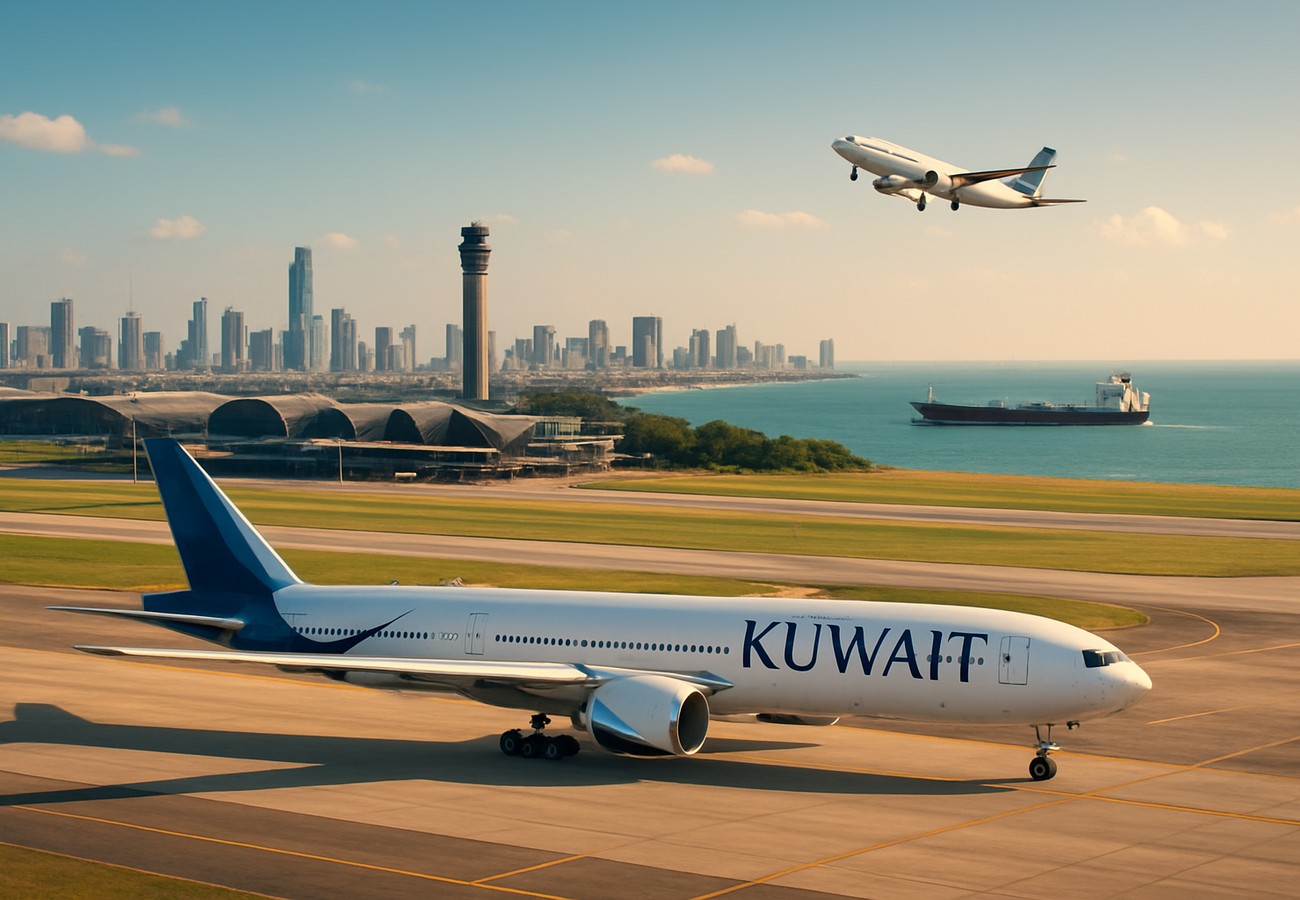
Image generated by AI
A global energy crisis of historic magnitude has erupted following the strategic blockade of the Strait of Hormuz, triggering an immediate oil price shock that has paralyzed the primary transcontinental corridors between Southeast Asia and the Middle East. As the United States, Iran, and Gulf Cooperation Council (GCC) nations including Saudi Arabia, the UAE, and Qatar move to the brink of military conflict, Thailand’s aviation sector has entered a state of operational high-alert. Today, May 10, 2026, a total of 8 flight cancellations have been recorded across Bangkok’s primary hubs, Suvarnabhumi (BKK) and Don Mueang (DMK). The collapse in global maritime security and skyrocketing jet fuel prices have forced carriers like Kuwait Airways (KAC) to ground aircraft as the 2026 energy crisis destabilizes international fuel supply chains at their very source.
The disruption is particularly severe on the Bangkok-Kuwait corridor, where the national carrier of Kuwait has been forced to suspend multiple long-haul services. With $200/bbl oil and "war-premium" insurance spikes affecting any aircraft entering or exiting the Persian Gulf, the connectivity between Thailand and the Middle Eastern energy epicenter is now experiencing a systemic failure.
Expanded Overview: The Fuel Shock and the Bangkok Hub Instability
The blockade of the Strait of Hormuz — a narrow chokepoint through which 21 million barrels of oil per day (approximately 21% of global petroleum consumption) pass — represents a total collapse of international energy security. For major petroleum exporters like Kuwait, Iraq, and Bahrain, and the world’s leading LNG supplier, Qatar, the inability to access the sea has rendered their primary economic assets unreachable.
As the International Energy Agency (IEA) activates emergency protocols, Thailand—a major regional transit point—is facing a severe disruption in long-haul scheduling. The US-Iran conflict has not only driven jet fuel prices to record highs but has also forced Middle Eastern carriers to prioritize "essential" repatriation and diplomatic flights over commercial passenger services. The resulting 8 cancellations in Bangkok are a direct consequence of this energy-security threat, as airlines ground high-consumption Boeing 777-300ER (B77W) aircraft to preserve dwindling fuel supplies.
Section-Wise Breakdown: Hub-Specific Disruption Analysis
Suvarnabhumi Airport (BKK): The International Sector Paralysis
Suvarnabhumi recorded the majority of disruptions today, with repeated cancellations on routes to Kuwait City and Techo International. Kuwait Airways (KAC) grounded both the KAC412 and KAC414 services multiple times over the three-day period. Additionally, the regional carrier SWM repeatedly cancelled the SWM675 service to Techo International, highlighting that even regional Southeast Asian connectivity is being sacrificed as airlines prioritize fuel for higher-margin operations during the 2026 oil shock.
Don Mueang Airport (DMK): Regional Network Contraction
At Don Mueang International, the focus remained on regional low-cost connectivity. The cancellation of the MXD521 service to Kuala Lumpur marks a notable disruption in the "high-frequency" regional corridor. As the cost of operations skyrockets, low-cost carriers are beginning to consolidate their regional networks, leaving passengers on the Bangkok-Malaysia route with fewer rebooking options.
The Kuwait Corridor: Epicenter of the Disruption
The Bangkok–Kuwait corridor has become the most unstable sector in the Thai network. The repeated grounding of the B77W aircraft—the workhorse of the Kuwait Airways fleet—reflects the extreme risk and cost associated with flying into the Persian Gulf while the US-Iran military standoff continues. Passengers on this route are facing multi-day delays as carriers struggle with both fuel scarcity and the logistical challenges of the Hormuz blockade.
Flight Cancellation Summary Table: Bangkok Hubs (May 10, 2026)
| Airline | Flight | Aircraft | Destination | Airport | Date/Time |
|---|---|---|---|---|---|
| SWM | 675 | A320 | Techo International Airport | Suvarnabhumi | Fri 02:40 PM |
| SWM | 675 | A320 | Techo International Airport | Suvarnabhumi | Sat 02:40 PM |
| SWM | 675 | A320 | Techo International Airport | Suvarnabhumi | Sun 02:40 PM |
| KAC | 412 | B77W | Kuwait International Airport | Suvarnabhumi | Sat 11:55 AM |
| KAC | 412 | B77W | Kuwait International Airport | Suvarnabhumi | Sun 11:55 AM |
| KAC | 414 | B77W | Kuwait International Airport | Suvarnabhumi | Fri 02:20 AM |
| KAC | 414 | B77W | Kuwait International Airport | Suvarnabhumi | Sun 02:20 AM |
| MXD | 521 | B38M | Kuala Lumpur International Airport | Don Mueang | Sun 09:15 AM |
Note: A total of 8 cancellations were recorded across three consecutive days. Data is based on official airport monitoring at Suvarnabhumi and Don Mueang.
Passenger Impact: Stranded in a Post-Fuel Reality
For passengers, the 8 cancellations represent a total collapse of reliability on critical international routes. With the Kuwait City and Techo International routes repeatedly grounded, business and leisure travel has come to a standstill. The US-Iran conflict means that rebooking is becoming increasingly difficult as airlines prioritize "essential" fuel allocation over commercial passengers. Travelers caught in the Kuwait Airways cancellations are facing multi-day delays as the entire Middle Eastern network operates at reduced capacity.
Industry Analysis: The Fragility of the "Silk Road" Corridors
Aviation analysts suggest that the Strait of Hormuz blockade is a "stress test" for Thailand’s connectivity with the Middle East. "The global oil shock has proved that the trans-Asian 'Silk Road' corridors are only as strong as the chokepoints that feed them," says one senior energy strategist. "When the Strait is blocked, carriers like Kuwait Airways simply cannot sustain their long-haul B777 operations. 8 cancellations in a single weekend is a systemic warning of a broader contraction that could last throughout the 2026 energy crisis."
According to the IEA, Southeast Asian hubs are particularly vulnerable to the Persian Gulf energy-security threat due to their heavy reliance on Middle Eastern carriers for long-haul connectivity.
Conclusion: A Hub Held Hostage by Chokepoint Geopolitics
The widespread flight cancellations across Bangkok are a devastating reminder that international connectivity is tied to global maritime security. As Saudi Arabia, the UAE, and the United States monitor the military developments in the Persian Gulf, Thailand’s aviation sector remains in a state of high-alert. For travelers, the message is clear: the 21-mile-wide Strait of Hormuz is currently the most significant barrier to travel between Bangkok and the rest of the world.
Key Takeaways
- Strait of Hormuz blockade continues to drive a global energy crisis, grounding 8 flights across Bangkok’s major hubs.
- Kuwait Airways (KAC): The hardest-hit carrier, with repeated cancellations on B77W long-haul services.
- US-Iran Conflict: Geopolitical instability is forcing Middle Eastern carriers to implement strategic fuel rationing.
- Suvarnabhumi Airport (BKK): Epicenter of the long-haul disruption to Kuwait City and Techo International.
- Don Mueang Airport (DMK): Experiencing regional network contraction on the Kuala Lumpur corridor.
- Fuel Shock: Skyrocketing jet fuel prices are making high-consumption B777 operations economically unviable.
- Travelers are advised to confirm flight status 48 hours prior to departure and avoid all non-essential travel to the Middle East.
Related Travel Guides
Strait of Hormuz Blockade Triggers Global Oil Shock: 119 Flights Delayed at LAX Airport
European Aviation Chaos: 2,233 Flights Delayed as Global Energy Crisis Hits Heathrow and Frankfurt
Bangkok Transit Survival Guide: Navigating Hub Disruptions During the 2026 Energy Crisis
Disclaimer: Flight cancellation data is based on real-time reports as of May 10, 2026. Geopolitical events and their impact on global energy markets are subject to rapid change. Travelers are advised to verify all flight details directly with Kuwait Airways, SWM, or MXD and monitor official government travel advisories.
Kunal K Choudhary
Co-Founder & Contributor
A passionate traveller and tech enthusiast. Kunal contributes to the vision and growth of Nomad Lawyer, bringing fresh perspectives and driving the community forward.
Learn more about our team →