
Strait of Hormuz Blockade Triggers Global Oil Shock as Saudi Arabia, UAE and Qatar Energy Crisis Destabilizes Asia Aviation; Singapore Airlines Unveils Exclusive Priority Screening at Changi Terminal 3 Amid US-Iran Conflict in May 2026
A strategic blockade of the Strait of Hormuz has ignited a global energy crisis, sending oil prices to record highs. As Saudi Arabia, the UAE, and Qatar face export disruptions, Singapore Airlines launches a groundbreaking priority security trial at Changi's A-gate cluster to insulate premium travelers from the 2026 oil shock chaos.

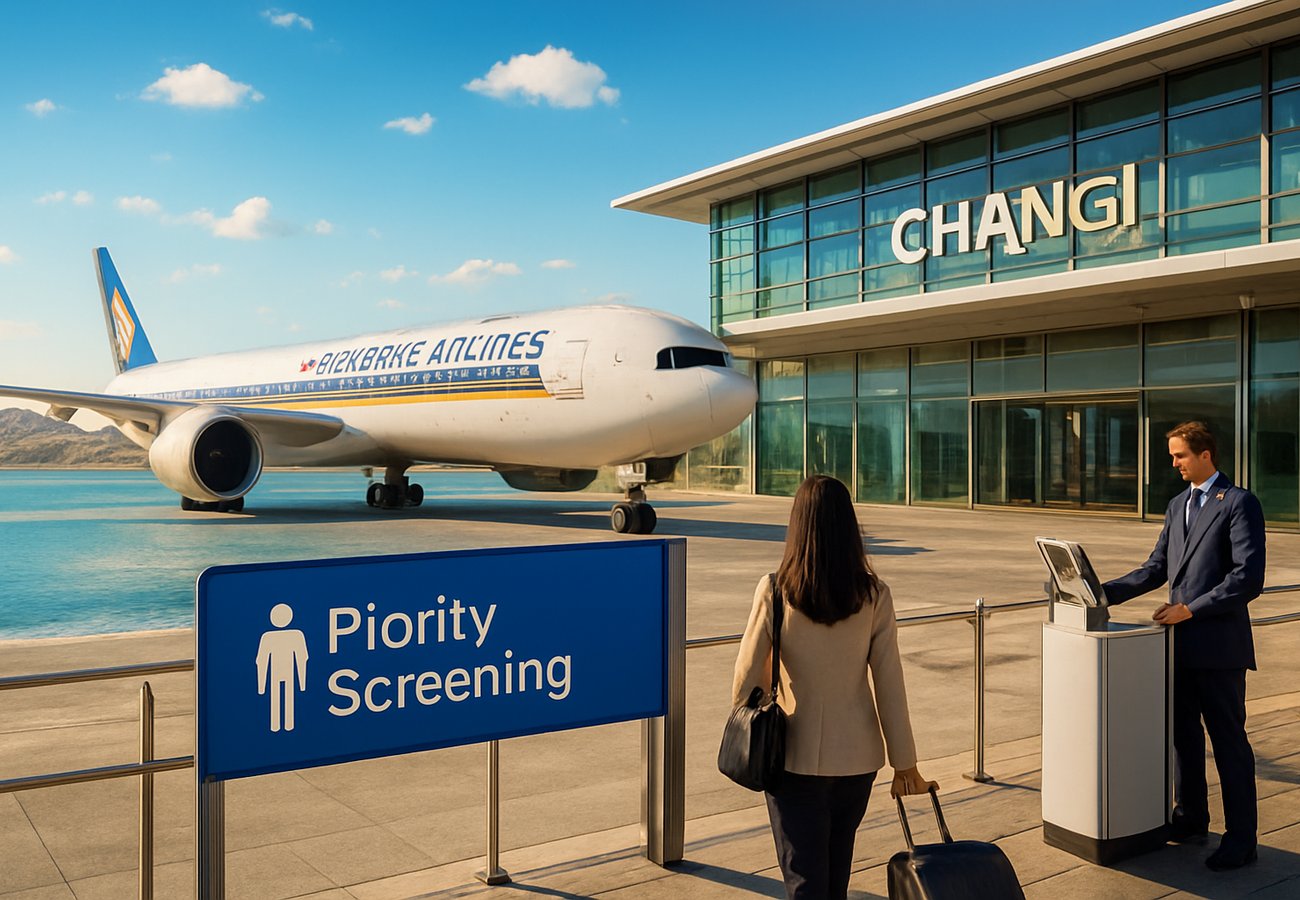
Image generated by AI
A global energy crisis of historic magnitude has erupted following the strategic blockade of the Strait of Hormuz, triggering an immediate oil price shock that is now forcing Asia’s most prestigious carriers to revolutionize the airport experience. As the United States, Iran, and Gulf Cooperation Council (GCC) nations including Saudi Arabia, the UAE, and Qatar move to the brink of military conflict, Singapore Airlines (SIA) has launched a localized priority security screening trial at Changi Airport’s Terminal 3. Today, May 10, 2026, the airline officially opened exclusive fast-track lanes for its Suites, First Class, and Solitaire PPS Club travelers, a move designed to shield high-value passengers from the growing travel chaos and operational bottlenecks caused by the $200/bbl oil reality.
The rollout of the priority trial at the A gate cluster (gates A1 to A8) marks a significant departure from Changi’s traditionally equal-access security model. As the blockade of the Strait of Hormuz disrupts 21% of the world’s petroleum flow, the resulting energy-security threat has made time and efficiency the ultimate luxuries for international business and luxury travelers.
Expanded Overview: The Hub-Efficiency War in 2026
The blockade of the Strait of Hormuz — a narrow chokepoint through which 21 million barrels of oil per day pass — represents a total collapse of international energy security. For major petroleum exporters like Kuwait, Iraq, and Bahrain, and the world’s leading LNG supplier, Qatar, the inability to access the sea has rendered their primary economic assets unreachable.
As the International Energy Agency (IEA) activates emergency protocols, Singapore Airlines is taking a defensive stance to protect its most lucrative revenue stream: the premium cabin. The US-Iran conflict has destabilized the traditional aviation hubs of the Persian Gulf, funneling a record volume of trans-Asian traffic through Singapore. To manage this surge and alleviate the congestion at gate clusters, SIA’s new priority screening initiative ensures that its "elite tier" travelers remain insulated from the systemic delays currently plaguing the 4th busiest airport in the world.
Section-Wise Breakdown: The Changi T3 Priority Trial
Terminal 3 A-Gate Cluster: The Focus Zone
The trial is currently focused on the A-gate cluster at Terminal 3, where signage now directs eligible travelers to dedicated security lanes. This localized approach allows SIA to monitor the flow and coordination of standard and premium lanes in real-time. If successful, the airline plans to expand the service to the B-gate cluster (B1 to B4), creating a comprehensive "premium sanctuary" within Changi’s decentralized security architecture.
Decoupling from the Decentralized Model
Changi has long been famous for its decentralized security model, where screening takes place at individual gates. While this avoids massive central checkpoints, it can lead to frustration during peak hours when multiple regional flights depart simultaneously. By introducing priority lanes, SIA is effectively "decoupling" its premium passengers from the general traffic flow, a necessary step in maintaining service quality during the current global energy crisis.
Global Competition and the Premium Standard
SIA is joining a growing list of elite carriers—including ANA, Lufthansa, STARLUX, Turkish Airlines, and United—that have already implemented similar priority systems at Changi. However, given SIA’s dominant market share at Terminal 3, the logistics of this trial are far more complex. The airline must coordinate hundreds of weekly departures to ensure that its "fast-track" promise holds true despite the record-high passenger volumes of 2026.
Operational Details: SIA Priority Screening Trial
| Operational Parameter | Trial Details (Effective May 10, 2026) |
|---|---|
| Location | Changi Airport (SIN) - Terminal 3 |
| Specific Gates | A-Gate Cluster (A1 to A8) |
| Eligible Travelers | Suites, First Class, Solitaire PPS Club |
| Objective | Minimize Wait Times During $200/bbl Oil Shock |
| Expansion Plan | B-Gate Cluster (Pending Trial Success) |
Note: The trial is part of SIA’s broader strategy to enhance service quality as the US-Iran military standoff creates systemic uncertainty in global aviation scheduling.
Passenger Impact: Speed as a Geopolitical Buffer
For travelers in SIA’s most exclusive cabins, the priority screening trial offers a critical "geopolitical buffer." As the Strait of Hormuz blockade drives up the cost of every operational minute, the ability to bypass queues is a significant value-add. Elite passengers can now proceed with unprecedented efficiency, a service that complements SIA’s existing private immigration and priority baggage handling.
The ripple effect of the US-Iran conflict means that travelers are increasingly looking for "frictionless" hubs. For a Suites passenger, the new T3 trial ensures that the airport experience matches the world-class service they receive at 35,000 feet, even as the global energy market remains in turmoil.
Industry Analysis: Preparing for Terminal 5 and Beyond
Aviation analysts suggest that SIA’s trial is a "bridge" to the future of Changi. "The current gate-based screening model is under immense pressure from the global oil shock," says one senior energy strategist. "This trial is a test case for the centralized security model planned for Changi’s Terminal 5 in the mid-2030s. Singapore Airlines is essentially training its most valuable customers for a more stratified airport experience where 'premium access' is the new standard."
According to the IEA, the shift toward centralized, high-efficiency security is essential for major hubs to maintain their competitiveness during periods of extreme energy volatility.
Conclusion: Redefining Luxury in a Volatile Era
The launch of the priority security trial at Changi Terminal 3 is a significant milestone for Singapore Airlines. As Saudi Arabia, the UAE, and the United States navigate the fallout of the Strait of Hormuz blockade, the Asian aviation sector is successfully engineering its own path to stability. By offering faster, more efficient airport access for its most valued customers, Singapore Airlines is ensuring that Singapore remains the premier gateway for the world’s elite, even in the shadow of a global energy crisis.
Key Takeaways
- Strait of Hormuz blockade continues to drive a global energy crisis, making airport efficiency a critical asset for elite carriers.
- Singapore Airlines (SIA) launches priority security trial at Changi Terminal 3 A-gate cluster.
- Elite Access: Suites, First Class, and Solitaire PPS Club members bypass standard gate queues.
- US-Iran Conflict: Regional instability is driving a record volume of premium traffic through Singapore.
- Operational Resilience: The trial aims to manage congestion caused by the 2026 oil shock hubs' destabilization.
- Future Ready: The move paves the way for the centralized security systems planned for the upcoming Terminal 5.
- Travelers are advised to look for priority signage at gates A1-A8 to take advantage of the new expedited flow.
Related Travel Guides
Strait of Hormuz Blockade Triggers Global Oil Shock: 119 Flights Delayed at LAX Airport
European Aviation Chaos: 2,233 Flights Delayed as Global Energy Crisis Hits Heathrow and Frankfurt
The Future of Changi: Navigating Terminal 3 and Terminal 5 During the 2026 Energy Shock
Disclaimer: Priority security trial details for Singapore Airlines are based on official airline releases as of May 10, 2026. Geopolitical events and their impact on global energy markets are subject to rapid change. Travelers are advised to verify all flight details directly with Singapore Airlines and monitor official government travel advisories.
Kunal K Choudhary
Co-Founder & Contributor
A passionate traveller and tech enthusiast. Kunal contributes to the vision and growth of Nomad Lawyer, bringing fresh perspectives and driving the community forward.
Learn more about our team →