
Widespread European Aviation Chaos as 2,233 Flights Are Delayed and 56 Cancelled Across England, Germany, France, Spain, Netherlands and Russia — Ryanair, Lufthansa, KLM and Air France Passengers Stranded in May 2026
European aviation networks faced massive operational strain on May 10, 2026, with 2,233 delays and 56 cancellations impacting hubs in Madrid, London, Frankfurt, and Amsterdam. Ryanair and Lufthansa recorded the highest disruption levels as thousands of passengers were grounded.

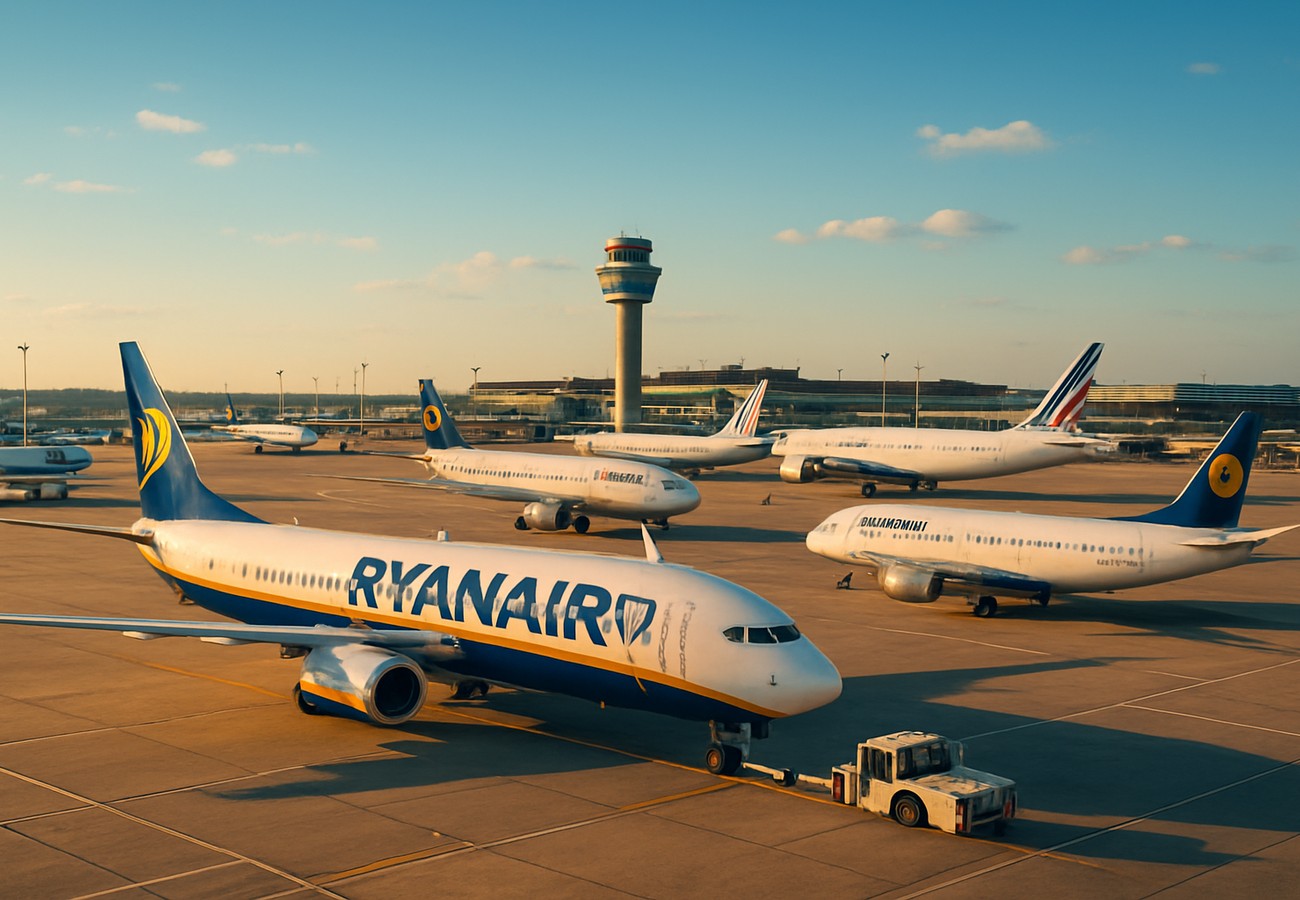
Image generated by AI
The European aviation network is facing a day of unprecedented operational strain as a cascade of disruptions across England, Germany, France, Spain, the Netherlands, Russia, Norway, and Sweden resulted in a staggering 2,233 flight delays and 56 cancellations today, May 10, 2026. Thousands of passengers have been left stranded at some of the continent's most critical hubs — including London Heathrow, Frankfurt International, Paris Charles de Gaulle, and Madrid-Barajas — as carriers including Ryanair, Lufthansa, KLM, and Air France struggle to maintain their schedules.
The sheer volume of delays, particularly at vacation hotspots like Palma de Mallorca, suggests a systemic failure in Europe's airspace management during what is already a high-volume travel season.
The Epicentre of Disruption: Spain and Germany Bear the Brunt
While the disruption is pan-European, the data highlights specific "chaos clusters" where operational reliability has collapsed.
Palma de Mallorca (PMI), Spain recorded the highest number of individual delays in Europe today, with 401 flights failing to meet their scheduled departure or arrival times. The airport, a primary gateway for European leisure travel, saw major impact across Ryanair, easyJet, Vueling, and Jet2 operations.
Adolfo Suárez Madrid-Barajas (MAD) followed closely with 330 delays, primarily affecting Iberia Express and Air Europa. In Germany, Frankfurt International (FRA) and Munich International (MUC) collectively recorded over 400 delays, with Frankfurt suffering five total cancellations as Lufthansa — Germany’s flag carrier — battled both technical and staffing bottlenecks.
The Hub Breakdown: Flights Delayed and Cancelled
The following major European airports reported the most significant operational failures today:
| Airport | Country | Delays | Cancellations |
|---|---|---|---|
| Palma de Mallorca (PMI) | Spain | 401 | 2 |
| Madrid-Barajas (MAD) | Spain | 330 | 1 |
| Frankfurt International (FRA) | Germany | 267 | 5 |
| Amsterdam Schiphol (AMS) | Netherlands | 247 | 3 |
| Paris Charles de Gaulle (CDG) | France | 186 | 2 |
| London Heathrow (LHR) | England | 135 | 8 |
| Sheremetyevo (SVO) | Russia | 93 | 9 |
The eight cancellations at London Heathrow and nine at Moscow Sheremetyevo represent the highest concentrated cancellation rates in the region, affecting long-haul services for British Airways, Virgin Atlantic, and Aeroflot.
Airline Operational Collapse: Ryanair and Lufthansa Under Pressure
The disruption has been distributed across both low-cost carriers and legacy flag carriers, indicating that the root cause likely lies in a combination of Eurocontrol airspace restrictions, regional weather patterns, and ground handling staffing shortages.
Ryanair emerged as the most disrupted airline in Europe today, recording 170 delays across its vast regional network. The low-cost giant, which operates a high-frequency "point-to-point" model, is particularly vulnerable to the "knock-on" effect, where a 20-minute delay in a morning flight from London propagates into a two-hour delay for a late-afternoon leg from Palma to Berlin.
Lufthansa followed with 169 delays and 5 cancellations, centered primarily around its Frankfurt and Munich hubs. The carrier has been navigating a period of intense operational pressure as it attempts to scale capacity while managing crew availability and aging regional aircraft maintenance cycles.
Other major airlines facing substantial disruptions include easyJet (106 delays), KLM (98 delays), and Air France (93 delays). The impact was also felt by North American carriers, with Delta Air Lines, American Airlines, and United Airlines experiencing delays on their inbound and outbound transatlantic services from Amsterdam, London, and Paris.
Why Europe’s Skies Are Grounded Today
According to Eurocontrol, the agency responsible for coordinating European air traffic management, several factors have converged to create today’s congestion:
Air Traffic Management (ATM) Capacity: Staffing shortages in regional ATC centers, particularly in France and Germany, have required the implementation of "flow control" measures. These measures deliberately slow the rate of aircraft entering certain sectors of airspace, resulting in ground holds at departure airports.
Technical and Ground Handling Bottlenecks: Major hubs like Amsterdam Schiphol and Paris Charles de Gaulle continue to report friction in ground operations, including baggage handling and aircraft refueling services, which have slowed turnaround times for KLM and Air France.
Geopolitical Airspace Constraints: The continued closure of Russian airspace to many Western carriers and vice-versa (impacting Aeroflot and British Airways specifically) has forced rerouting that increases flight times and adds congestion to the remaining available air corridors across Eastern and Northern Europe.
Actionable Advice for Travelers Affected by the Chaos
If you are currently transiting through or departing from a major European hub, the following steps are mandatory to minimize your exposure:
- Download and use your airline’s mobile app — this remains the fastest way to receive rebooking options and gate change notifications
- Verify your rights under EU261/2004 — for flights departing from an EU airport (or arriving on an EU carrier), you may be entitled to food, communication, and hotel accommodation if your delay exceeds 2–4 hours (depending on distance)
- Do not leave the secure area if your flight is delayed — gate changes can happen rapidly as airlines attempt to "slot in" to available ATC windows
- Arrive at least 3.5 hours early for departures from Palma de Mallorca, Madrid, and Frankfurt, where terminal congestion is at peak levels
- Keep all receipts for meals and refreshments, as these will be required for reimbursement claims if the airline does not provide vouchers on-site
FAQ: European Flight Disruption May 2026
Q: Which airline has the most delays in Europe today? Ryanair recorded the highest number of delays with 170 flights affected, followed closely by Lufthansa with 169 delays.
Q: Which European airport is experiencing the worst disruption? Palma de Mallorca (PMI) in Spain reported the highest delay count in Europe today with 401 flights impacted. Madrid-Barajas and Frankfurt also recorded over 260 delays each.
Q: Am I entitled to compensation for these European flight delays? Under Regulation (EC) No 261/2004, you are entitled to "Duty of Care" (meals/accommodation) for significant delays. Financial compensation depends on whether the delay was within the airline's control. ATC staffing and airspace management issues are often classified as "extraordinary circumstances," though this is frequently contested by legal experts.
The Bigger Picture: A Summer of Discontent?
The 2,233 delays recorded today serve as a warning for the remainder of the 2026 summer season. European aviation infrastructure is operating at its absolute capacity ceiling. Without significant improvements in ATC staffing levels and a resolution to regional ground handling friction, the "daily delay cascade" is likely to become a permanent feature of the European travel landscape.
For thousands of passengers currently waiting in terminals from Ibiza to Moscow, the message is one of patience and persistence. The skies are crowded, the ground is slow, and the path home — while still open — is increasingly behind schedule.
Key Takeaways
- 2,233 flight delays and 56 cancellations hit European aviation on May 10, 2026
- Spain and Germany are the hardest hit regions, with Palma de Mallorca (401 delays) and Madrid (330 delays) leading the disruption
- Ryanair and Lufthansa are the most affected airlines, each recording nearly 170 delays
- London Heathrow and Moscow Sheremetyevo recorded the highest cancellation rates
- Primary causes: ATC staffing shortages, ground handling bottlenecks, and geopolitical airspace constraints
- Travelers are urged to monitor EU261 rights and stay informed via official carrier apps
- The disruption highlights systemic infrastructure stress as Europe enters its peak travel season
Related Travel Guides
- LOT Polish Airlines Named Best Airline in Central Europe at 2026 Skytrax Awards as Warsaw and Chicago Lounges Earn Four-Star Rating
- Vietnam Airlines Expands India Network at Sales Kick Off 2026 in New Delhi, Signs MoUs with Ixigo and BelAir
- Nationwide Travel Chaos: Delta, Southwest, and Regional Carriers Disrupt 3,743 Flights Across the USA
Disclaimer
This article is for informational and educational purposes only. It does not constitute legal, financial, or professional advice. While we strive to provide accurate and up-to-date information, travel policies, regulations, and conditions change rapidly. Always verify information with official sources before making travel decisions. Nomad Lawyer makes no representations about the accuracy, reliability, completeness, or suitability of the information provided. Readers should consult qualified professionals for advice specific to their circumstances. The views expressed in this article are those of the author and do not necessarily reflect the views of Nomad Lawyer.
Kunal K Choudhary
Co-Founder & Contributor
A passionate traveller and tech enthusiast. Kunal contributes to the vision and growth of Nomad Lawyer, bringing fresh perspectives and driving the community forward.
Learn more about our team →