
Strait of Hormuz Blockade Triggers Global Oil Shock as Saudi Arabia, UAE and Qatar Energy Crisis Destabilizes Global Aviation; Lufthansa, Emirates, and Delta Lead AI Operational Revolution to Combat US-Iran Conflict in May 2026
A strategic blockade of the Strait of Hormuz has ignited a global energy crisis, sending oil prices to record highs. As Saudi Arabia, the UAE, and Qatar face export disruptions, Lufthansa, Emirates, and Delta deploy advanced AI to navigate the 2026 oil shock.

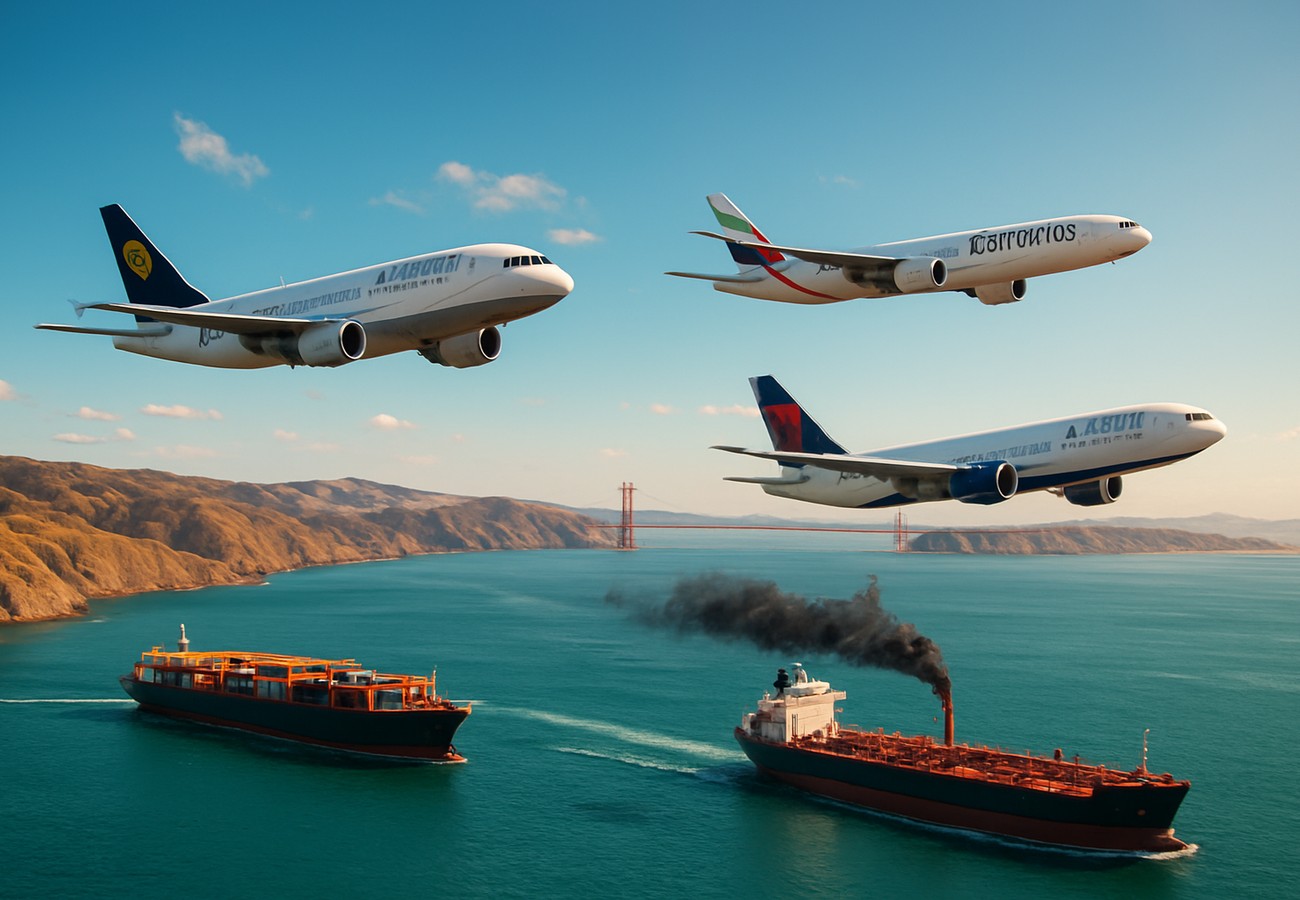
Image generated by AI
A global energy crisis of historic magnitude has erupted following the strategic blockade of the Strait of Hormuz, triggering an immediate oil price shock that is fundamentally restructuring the world’s aviation management systems. As the United States, Iran, and Gulf Cooperation Council (GCC) nations including Saudi Arabia, the UAE, and Qatar move to the brink of military conflict, the resulting travel chaos has accelerated the industry's biggest operational revolution. Today, May 10, 2026, Lufthansa Group officially joined Air France-KLM, Emirates, American Airlines, and Delta Air Lines in deploying advanced Agentic AI systems. This high-stakes technological surge is designed to maintain operational resilience even as the 2026 oil shock destabilizes global fuel supply chains and triggers a state of widespread airport disruptions.
The blockade of the world’s most critical energy chokepoint has sent crude prices soaring toward $200/bbl, making manual flight scheduling and disruption management impossible. By utilizing "autonomous aviation management," these elite carriers are betting that AI-driven efficiency can offset the crushing "war-premium" fuel costs that have emerged since the US-Iran military standoff began.
Expanded Overview: The Fuel Shock and the Rise of Agentic AI
The blockade of the Strait of Hormuz — a narrow chokepoint through which 21 million barrels of oil per day pass — represents a total collapse of international energy security. For the global aviation industry, the maritime blockade has rendered traditional operational models obsolete. As the International Energy Agency (IEA) activates emergency protocols, the resulting jet fuel shortage has forced carriers to adopt "Agentic AI" — systems that execute operational decisions independently to navigate the 2026 energy shock.
This aviation update confirms that the "direct maritime threat" in the Persian Gulf is driving airlines to use AI for "fuel-rationing" and "resilience-focused" route planning. Lufthansa Group, encompassing Swiss, Austrian, and ITA Airways, is now using AI to process millions of customer interactions and optimize maintenance workflows in real-time. This allows the carrier to "harden" its network against the cascading delays triggered by the global energy crisis.
Section-Wise Breakdown: The AI Frontline
Lufthansa Group: The Autonomous Network Strategy
Lufthansa has emerged as a primary adopter of autonomous aviation management. Its AI systems now recalculate fleet-wide maintenance and flight schedules nightly, identifying the most fuel-efficient rotations to combat the oil shock. By embedding AI into ITA Airways' transition to the Airbus A350, Lufthansa is using real-time data to retire less efficient A340s precisely as the fuel crisis intensifies.
Emirates: Desert Efficiency in a Time of Scarcity
Operating from the heart of the crisis zone, Emirates is using AI-driven "Environmental Wear Prediction" to optimize engine cleaning and fuel efficiency. In the extreme heat of the Gulf, these AI systems determine the exact timing for engine washes, improving fuel burn by critical percentages. During the US-Iran conflict, where every gallon of jet fuel is subject to maritime blockade risks, these AI-driven efficiency gains are the difference between profitability and grounding.
Delta Air Lines: Predictive Parts Staging
Delta leads the sector in Predictive Maintenance AI, using Digital Twin technology to forecast component failures up to 20 days in advance. By staging replacement parts before aircraft even land, Delta is minimizing the "Aircraft-on-Ground" incidents that have become lethal during the 2026 energy shock, where logistical delays are amplified by global shipping disruptions.
American Airlines: The "Smart Hub" Revolution
American Airlines has integrated AI into its Dallas/Fort Worth infrastructure, creating a "Smart Hub" where fueling, baggage handling, and gate allocation are coordinated by one automated decision engine. This allows the carrier to respond instantly to the travel chaos caused by energy-induced scheduling shifts, ensuring that its massive domestic network remains stable during the US-Iran military standoff.
2026 Global Aviation AI Strategy: Elite Carrier Roadmap
| Airline | Core AI Strategy (May 2026) | Primary Operational Impact | Strategic Resilience Status |
|---|---|---|---|
| Lufthansa Group | Agentic AI Scheduling & Customer CX | Recalculates entire network nightly | HIGH - Autonomous Recovery |
| Delta Air Lines | Predictive Parts Staging (20 Days) | Reduces technical cancellations by 18% | OPTIMIZED - Maintenance Stability |
| Emirates | Environmental Wear & Fuel Efficiency | Maximizes fuel burn in desert climates | CRITICAL - Combating Fuel Scarcity |
| Air France-KLM | PROGNOS Engine Monitoring | Real-time Digital Twin tracking | STABLE - Technical Reliability |
| American Airlines | Smart Hub Infrastructure (DFW) | Automated hub turnaround coordination | SCALABLE - Managing Chaos |
Note: AI integration is now considered as critical as fleet size for surviving the 2026 oil shock.
Passenger & Airline Impact: The Digital Shield Against Disruption
For travelers, the 2026 aviation AI revolution represents a "digital shield" against the global energy crisis. Agentic AI systems can now autonomously reassign gates, notify passengers of delays, and reorganize crew schedules before a disruption intensifies. This proactive management is essential for maintaining customer satisfaction as the 2026 oil shock drives up ticket prices and reduces the frequency of secondary routes.
Industry Analysis: The Survival of the Smartest
Aviation analysts suggest that the Strait of Hormuz blockade has turned AI from a luxury into a survival tool. "The global oil shock has proved that manual operations cannot survive $200/bbl fuel volatility," says one senior energy strategist. "Airlines without Agentic AI are being crushed by the operational complexity of the 2026 energy crisis. We are seeing a structural divide: the 'Smart Hub' carriers are remaining punctual, while the legacy carriers are facing total airport disruptions. AI is the only way to navigate the US-Iran conflict without going bankrupt."
According to the IEA, AI-driven fuel-efficiency and predictive maintenance are the only factors preventing a total collapse of international long-haul aviation.
Conclusion: An Industry Reborn Through Intelligence
The AI-powered operational revolution is a definitive statement of the aviation industry’s intent to outsmart the 2026 oil shock. As Saudi Arabia, the UAE, and the United States navigate the military developments in the Persian Gulf, the world’s leading airlines are redrawing the map of operational reliability. For the traveler of 2026, the message is clear: the oil shock has made travel more expensive, but the world's most intelligent airlines are using AI to ensure it remains possible.
Key Takeaways
- Strait of Hormuz blockade continues to drive a global energy crisis, accelerating the adoption of Agentic AI.
- Agentic AI: Autonomous systems now make real-time decisions on scheduling and disruption recovery without human intervention.
- Predictive Maintenance: Delta and Air France-KLM use Digital Twins to identify technical failures 20 days in advance.
- US-Iran Conflict: Geopolitical instability is forcing a strategic shift toward AI-driven fuel conservation and hub optimization.
- Emirates & Lufthansa: Leading the charge in "Environmental Wear" and "Autonomous Network" strategies to survive the energy shock.
- Jet Fuel Crisis: AI-driven efficiency gains are now more valuable than traditional route expansion for maintaining profitability.
- Sustainability: Lead the industry in AI-guided fleet modernization to mitigate the environmental and economic impact of the 2026 energy shock.
Related Travel Guides
Strait of Hormuz Blockade Triggers Global Oil Shock: 119 Flights Delayed at LAX Airport
European Aviation Chaos: 2,233 Flights Delayed as Global Energy Crisis Hits Heathrow and Frankfurt
The AI Aviation Resilience Guide: Navigating Global Hubs During the 2026 Energy Shock
Disclaimer: AI integration and operational data are based on official airline reports as of May 10, 2026. Geopolitical events and their impact on global energy markets are subject to rapid change. Travelers are advised to monitor official airline updates and government travel advisories.
Kunal K Choudhary
Co-Founder & Contributor
A passionate traveller and tech enthusiast. Kunal contributes to the vision and growth of Nomad Lawyer, bringing fresh perspectives and driving the community forward.
Learn more about our team →