
5 Solar-Powered Glamping Destinations Where Stargazing Meets Sustainable Travel in 2026
Discover five eco-conscious glamping resorts powered entirely by solar energy, offering pristine stargazing experiences without sacrificing modern comfort or environmental responsibility.

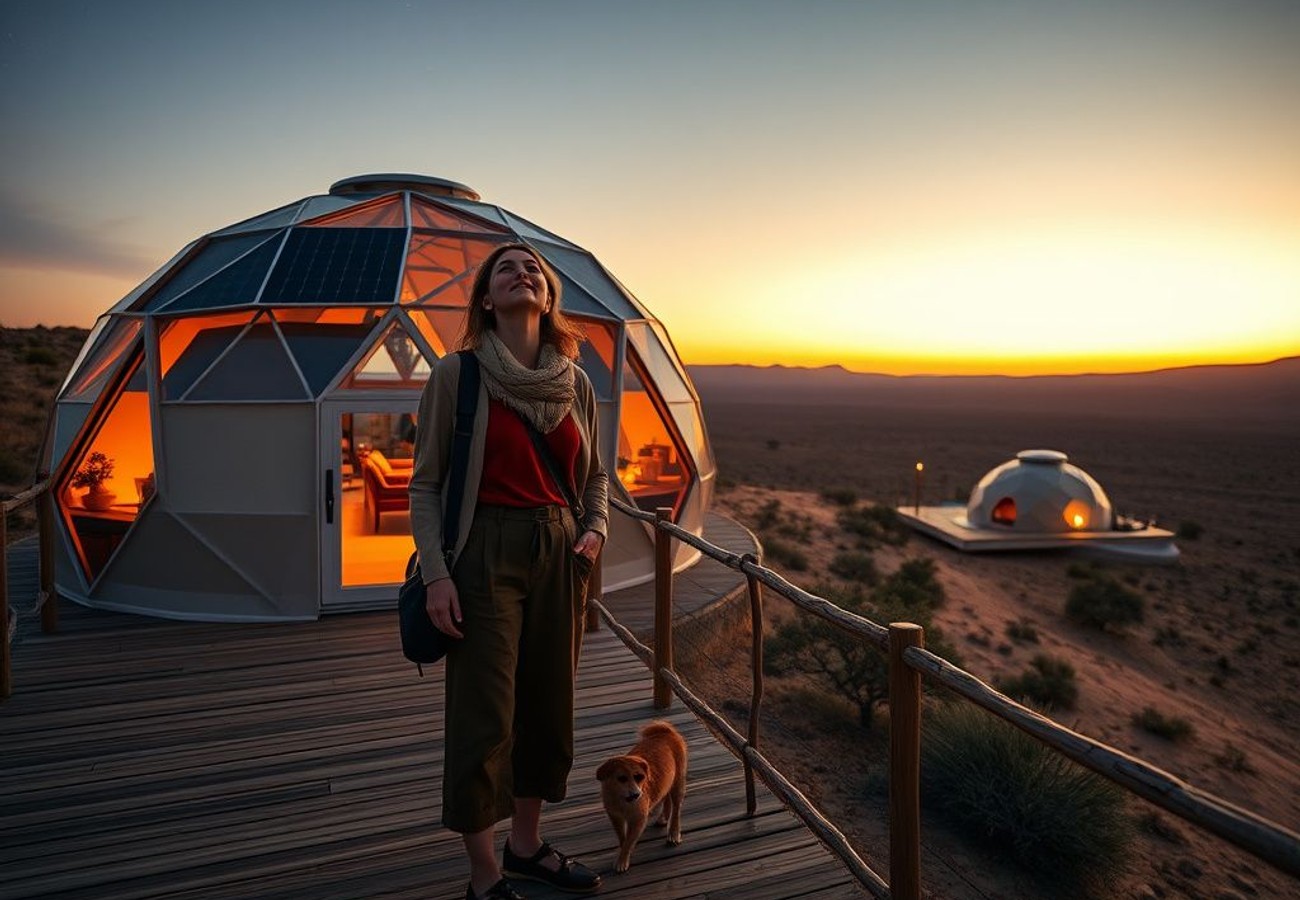
Image generated by AI
The allure of unplugged travel has never been stronger. But what if you could escape city lights, watch the stars dance across the night sky, and still enjoy a hot shower and charged phone? Welcome to the growing world of solar-powered glamping—where environmental consciousness meets luxury camping.
These destinations represent a fundamental shift in how conscious travelers approach hospitality. They're not trading modern comfort for sustainability; they're proving those two values can coexist beautifully.
The Philosophy Behind Solar Glamping
Solar energy isn't just a power source at these destinations—it's a statement. According to Céline Bossanne, co-founder of Huttopia, a pioneering glamping company now operating across Europe, Canada, and the United States, "Solar energy can be part of that experience, but what matters most is the broader philosophy behind it, demonstrating that hospitality can operate with a lighter footprint."
The magic of solar glamping lies in what it enables: you wake naturally with the sun, fall asleep to authentic nature sounds, and experience darkness so complete that the stars become overwhelming. Yet you're not roughing it in the traditional sense.
Reddit: "Finally found a way to see the Milky Way without feeling guilty about my carbon footprint. Solar glamping is the future of travel." — r/travel
Huttopia: The European Pioneer Goes North American
Huttopia, founded in 1999 in France, operates 68 global sites with five locations running primarily on solar power. The company's expansion into North America reveals a nuanced approach to renewable energy implementation.
Not every location needs to be entirely off-grid, according to Bossanne. "If a location already has access to an existing electrical network, it often makes more environmental sense to use that infrastructure rather than building an entirely new solar installation that would require additional materials, construction, and land impact."
Huttopia Lake George-Adirondacks: The North American Turning Point
When Huttopia Lake George-Adirondacks opened in 2021, it marked the company's first major integration of solar technology into their North American operations. But the real game-changer arrived three years later.
Huttopia Wine Country: The Complete Off-Grid Vision
Huttopia Wine Country in Northern California opened in 2024 as a fully off-grid, completely solar-powered property. Every system—from guest accommodations to the main lodge with restaurant—runs on renewable energy generated on-site.
This isn't deprivation masquerading as sustainability. Guests enjoy heated pools, pizza ovens, indoor dining areas, battery-powered fans and lights in tents, and yes—functional device charging.
The property recently expanded its astronomy programming with Astronomy Weekends featuring family-friendly guided "Solar System Hikes" at dusk. Participants walk a carefully designed route replicating the distances between planets from the sun. As darkness falls, guests settle into lounge chairs for two-hour stargazing sessions complete with telescopes and storytelling.
By day, visitors can ride e-bikes, lounge poolside, play yard games, hike with guides, and sample wines from the neighboring Six Sigma Ranch and Winery.
Under Canvas: Dark Sky Certification Meets Solar Power
Under Canvas, established in 2012 near West Yellowstone, now operates 13 locations positioned to showcase America's most iconic national park landscapes. The company's approach combines Dark Sky certification with aggressive renewable energy strategies.
Five Under Canvas properties hold Dark Sky Park certification—Lake Powell-Grand Staircase, Grand Canyon, Zion, Moab, and Bryce Canyon—ensuring zero light pollution for optimal stargazing conditions.
According to Sean Rush, Chief Operating Officer of Under Canvas, "Energy use at our camps varies by location as we work to minimize our footprint in each unique ecosystem." The company strategically excludes electrical power in guest tents, instead providing battery-powered fans and lanterns that dramatically reduce grid dependency.
Under Canvas Bryce Canyon represents the brand's commitment fully realized: 63 safari-style canvas tents positioned on elevated decks across 100 waterfront acres, completely off-grid and 100 percent solar-powered.
Arapaho Valley Ranch: Off-Grid Since Before It Was Trendy
Hidden in the Indian Peaks Wilderness of Colorado's Rocky Mountains, about two hours from Denver, Arapaho Valley Ranch takes a different approach. This self-sustaining property has operated off-grid for generations—sustainability wasn't a business strategy here; it was survival.
The final nine miles to the ranch follow a dirt road, signaling that this experience prioritizes remoteness over convenience. Yet the property's solar and battery system powers everything while maintaining authentic wilderness character.
Guests book accommodations ranging from historical and modern cabins to yurts, glamping tents, and RV sites. Visitors must bring their own provisions. On select evenings, live music performances echo outside the main lodge, and Colorado's Smallest Bar—the Red Dog Saloon—offers evening drinks.
Activities include kayaking, hiking, and fishing. WiFi is intentionally spotty. According to Hayden Hughes, ranch manager, the property plans to introduce night sky-viewing programming soon, but the stunning unobstructed views above Little Indian Lake, Lake Granby, and Monarch Lake already deliver the stargazing experience.
Glamping Canyonlands: Southern Utah's Astronomy Hub
Glamping Canyonlands occupies 22 acres near tiny Monticello, Utah—40 minutes from Moab and Arches National Park, 40 minutes from Canyonlands National Park's Needles District. Nine accommodation options include safari-style tents and wooden cabins with creatively celestial names: the "Stargazer Lotus Tent," "Stargazing Barrel," and "Skylight Casita."
The most unconventional stargazing spot? One of the communal bathroom showers, where an open ceiling transforms a utilitarian space into an astronomical observatory.
The property operates on a shared kitchen and bathroom model (notably without a freezer). Bi-monthly astronomy tours led by experts with telescopes run throughout the year. On clear nights, audio-guided stargazing experiences provide an alternative.
Shash Diné EcoRetreat: The Five Billion Star Hotel
Shash Diné EcoRetreat, situated on a private family ranch just outside Page, Arizona, represents the ultimate digital detox. There is literally no electricity or WiFi available.
Solar power provides modest lighting after dark. The property describes itself with brilliant marketing simplicity: a "five billion star hotel"—a direct reference to the staggering clarity and density of stars visible from this remote location.
Accommodations include canvas tents, restored sheepherder wagons, Navajo hogans, and innovative "Kyoob" structures—elevated glass and metal cabins offering landscape views from weatherproof comfort. All food must remain outside sleeping spaces to protect the property's pristine environment.
Planning Your Solar Glamping Adventure
Before booking any solar-powered glamping destination, contact the property directly about what to bring. Each location has specific requirements to minimize environmental impact while ensuring realistic guest expectations about amenities and infrastructure.
The broader trend reveals something crucial about modern travel: comfort and consciousness aren't opposing forces. Solar glamping proves that you can disconnect from the grid, reconnect with nature, and still maintain the modern conveniences that define contemporary hospitality.
The stars have never looked better—or felt more guilt-free.
Off-grid glamping isn't the future of travel; it's the present demanding we finally catch up.
Related Travel Guides
Disclaimer
This article is for informational and educational purposes only. It does not constitute legal, financial, or professional advice. While we strive to provide accurate and up-to-date information, travel policies, regulations, and conditions change rapidly. Always verify information with official sources before making travel decisions. Nomad Lawyer makes no representations about the accuracy, reliability, completeness, or suitability of the information provided. Readers should consult qualified professionals for advice specific to their circumstances. The views expressed in this article are those of the author and do not necessarily reflect the views of Nomad Lawyer.
Raushan Kumar
Founder & Lead Developer
Full-stack developer with 11+ years of experience and a passionate traveller. Raushan built Nomad Lawyer from the ground up with a vision to create the best travel and law experience on the web.
Learn more about our team →