
Olfactory Tourism: How Flower Fields and Ancient Scent Trails Are Redefining Sustainable Travel
Olfactory tourism replaces visual sightseeing with immersive botanical trails, connecting travelers to Grasse rose fields, Oman frankincense, and Kannauj attar stills.

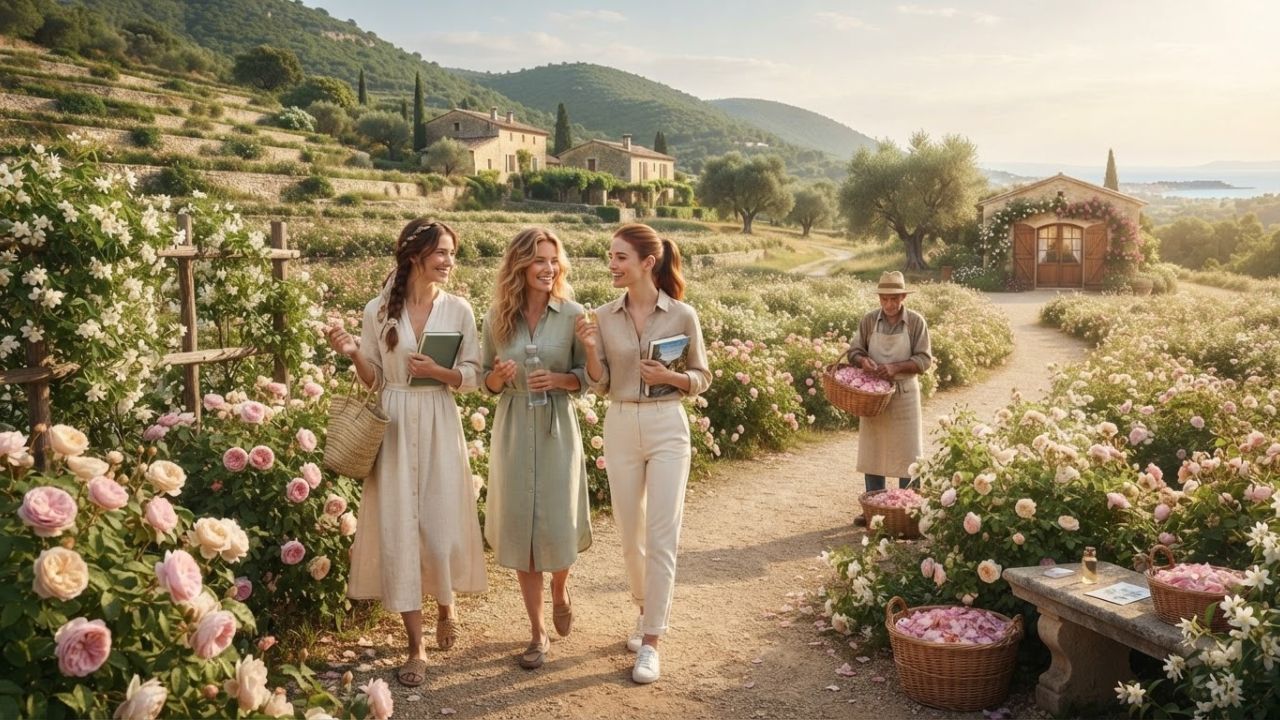
Image generated by AI
Olfactory tourism is transforming international travel, replacing conventional sightseeing with immersive aromatic trails across the flower valleys of Grasse, ancient frankincense routes in Oman, and clay attar stills in India.
PARIS — A sensory revolution is reshaping international leisure travel as holidaymakers look beyond traditional sightseeing to explore the world through its invisible aromatic heritage. Known as olfactory tourism, this fast-growing sector trades crowded monument selfie lines for fragrant agricultural circuits, centuries-old distillation workshops, and indigenous botanical conservation corridors.
By following regional scent maps, travelers are building profound emotional connections with historic trade routes, agricultural ecosystems, and traditional artisanal communities. From the terraced floral fields of the French Riviera to the ancient frankincense valleys of southern Arabia, sensory-driven travel is generating vital economic alternatives for rural growers while safeguarding fragile botanical habitats.
The Local Trend Revealed: Mapping Heritage Through Living Aromas
Modern travelers are increasingly prioritizing sensory depth over passive sightseeing. Rather than checking off famous landmarks, travelers are curating bespoke itineraries around seasonal blooming calendars, resin harvest cycles, and artisanal hydro-distillation rituals.
This transition reflects a fundamental shift toward experiential authenticity. Scent has a direct neurological link to memory and emotion through the brain's olfactory bulb and limbic system, allowing aroma-centered journeys to forge vivid, lasting impressions that photographic records cannot duplicate. Four iconic global regions exemplify this evolving travel philosophy:
1. Grasse and the French Riviera: Haute-Botanical Terroir
Perched in the sun-drenched hills above Cannes, Grasse reigns as the historical perfume capital of the world. Inscribed on UNESCO’s Representative List of the Intangible Cultural Heritage of Humanity, the region’s unique microclimate and mineral-rich limestone soil produce floral crops of unmatched chemical complexity.
Travelers walk terraced hillside estates alongside fifth-generation growers to witness the dawn harvest of fragile blooms. May brings the harvest of the Centifolia rose (the legendary cabbage rose), while late summer to early autumn is dedicated to Grandiflorum jasmine. Picked by hand before the morning sun evaporates their volatile essential oils, these petals undergo solvent extraction or steam distillation in historic ateliers. Visitors gain access to experimental research gardens, formulation workshops at the International Perfume Museum, and artisanal perfume houses preserving classical French olfactory arts.
2. The Dhofar Frankincense Trail of Southern Oman
In the arid expanse of southern Oman, the Dhofar governorate traces the wild harvest of Boswellia sacra trees along caravan tracks that have anchored global maritime and desert trade for 5,000 years. These resilient trees thrive on limestone escarpments swept by seasonal summer monsoon mists (Khareef), which naturally boost resin production.
Local pastoralists employ time-tested methods, making precise, shallow incisions into tree bark with traditional tools to release milky sap that hardens under desert sun into translucent aromatic tears. Explorers travel historic caravan paths through protected conservation wadis, learning complex color and purity grading systems while taking part in customary hospitality rituals centered around burning frankincense.
3. Kannauj and Gangetic Hydro-Distillation in India
Situated along the fertile alluvial plains of Uttar Pradesh, Kannauj endures as a living open-air laboratory for natural, alcohol-free botanical attars. Rejecting modern petrochemical solvents, multi-generational master distillers utilize the ancient Deg-Bhapka hydro-distillation method.
Giant copper cauldrons (degs) are packed with rose petals, vetiver roots, or baked earthen tablets and sealed with wet clay over simmering wood fires. The aromatic vapor travels through hollow bamboo receiver pipes (chongas) into water-cooled copper receivers submerged in circulating water baths. Kannauj is celebrated globally for producing Mitti attar, an elixir that captures the exact olfactory profile of parched Gangetic clay receiving its first seasonal monsoon downpours.
4. Sava and Nosy Be Vanilla Forestry in Madagascar
Winding through the coastal agroforestry belts of the Sava region and the island of Nosy Be, travelers witness the labor-intensive cultivation of high-grade Bourbon vanilla (Vanilla planifolia) and fragrant ylang-ylang. Because native insect pollinators are absent in Madagascar, every single vanilla orchid flower must be hand-pollinated within hours of opening at dawn using slender wooden needles.
Following hand-pollination, the green pods undergo a multi-month curing sequence: scalding in hot water, repeated blanket-sweating, precise morning sun-drying, and months of slow conditioning inside sealed wooden chests. Walking alongside smallholder farming cooperatives, visitors learn how traditional shade-canopy agroforestry protects Madagascar’s hyper-endemic rainforests from deforestation.
Global Olfactory Tourism Destinations at a Glance
| Destination | Primary Botanical / Scent Asset | Heritage Method & Craft | Optimal Harvest Window | Official Conservation Resource |
|---|---|---|---|---|
| Grasse, France | Centifolia rose, Grandiflorum jasmine | Dawn hand-picking, UNESCO heritage solvent extraction | May (Rose); August–September (Jasmine) | France.fr |
| Dhofar, Oman | Boswellia sacra (Frankincense resin) | Bark tapping, ancient 5,000-year trade grading | September to November (Post-Khareef) | Oman Ministry of Heritage and Tourism |
| Kannauj, India | Mitti attar (baked clay), Damask rose | Deg-Bhapka copper hydro-distillation with wet clay seals | June–July (Mitti); March–April (Rose) | Fragrance & Flavour Development Centre (FFDC) |
| Sava, Madagascar | Bourbon vanilla pods, ylang-ylang | Needle hand-pollination, blanket sweating, wood conditioning | October–January (Flower pollination) | Madagascar National Parks |
Cultural & Environmental Value: Protecting Living Botany and Rural Livelihoods
Olfactory tourism provides direct economic defense mechanisms against environmental degradation and cultural homogenization. When travelers choose botanical scent trails over conventional commercial attractions, their spending flows directly into the hands of family farmers, indigenous resin tappers, and rural distillers.
In Grasse, the renewed international demand for natural luxury ingredients has halted the conversion of historic agricultural parcels into luxury residential developments, preserving the agrarian green belt along the Préalpes d'Azur. In Oman, controlled ecotourism within the UNESCO-protected Wadi Dawkah Frankincense Park finances ranger patrols that protect wild Boswellia sacra groves from livestock overgrazing and destructive commercial harvesting.
Similarly, in Madagascar and India, certified scent trails incentivize smallholder cooperatives to preserve heirloom botanical cultivars and ancient agroforestry canopies. These canopy trees provide vital habitats for native birds and pollinators while preventing topsoil erosion across sensitive agricultural river basins.
Local Visitor Insider Tips: Navigating the World's Scent Sanctuaries
To immerse yourself fully in these global aromatic capitals, heed these practical field recommendations:
- Timing the Grasse Dawn Harvest: Schedule your visit to Grasse during May for the Centifolia rose or between late August and mid-September for jasmine. Arrive at flower farms by 06:30; morning dew protects the volatile floral essences before midday heat evaporates them. Afterwards, book a bespoke formulation class at historic perfumeries like Galimard, Molinard, or Fragonard, and sample sweet fougassette—a traditional Provençal orange-blossom brioche—from old-town bakeries.
- Purchasing Royal Hojari Frankincense in Oman: When exploring Salalah and the Dhofar wadis, time your travels for late September or October as monsoon mists recede. Head to the historic Haffa Souq to purchase frankincense directly from local harvesters. Seek out Hojari grade—identifiable by its pale green tint, crystalline clarity, and bright citrus-pine aroma. Always ask vendor permission before sampling or photographing traditional incense burners (majmar).
- Exploring the Copper Stills of Kannauj: Travel to Kannauj during early autumn when the monsoon humidity clears. Hire a knowledgeable regional heritage guide to navigate the historic distillation lanes of Bara Bazaar. When sampling authentic Mitti attar or Ruh Gulab, apply a single droplet to the inner pulse point of your wrist using the seller's glass applicator wand; allow your body heat thirty seconds to reveal the base notes rather than inhaling directly from the bottle.
- Ethical Vanilla Purchasing in Madagascar: When visiting vanilla plantations in Sambava or Antalaha, avoid buying unpackaged, loose green pods from roadside hawkers. Instead, purchase certified cured beans directly from community-managed agroforestry cooperatives, where pods are bound in raffia and graded for moisture content, ensuring fair wages for local pollinators.
Tourism Outlook: The Future of Sensory and Eco-Conscious Exploration
As global travel rebounds and travelers seek deeper meaning in their journeys, olfactory tourism represents a permanent evolution in destination storytelling. By shifting focus from sight to scent, travelers engage with the elemental rhythms of the earth—the soil, the season, the rainfall, and the human hands that nurture them.
In an increasingly digitized society dominated by visual screens, scent-based exploration reawakens an ancient, grounding human sense. By supporting rural botanical growers, conserving endangered flora, and celebrating living artisan heritage, scent trails prove that sustainable tourism smells sweet, authentic, and enduring.
Related Travel Guides
Disclaimer
This article is for informational and educational purposes only. It does not constitute legal, financial, or professional advice. While we strive to provide accurate and up-to-date information, travel policies, regulations, and conditions change rapidly. Always verify information with official sources before making travel decisions. Nomad Lawyer makes no representations about the accuracy, reliability, completeness, or suitability of the information provided. Readers should consult qualified professionals for advice specific to their circumstances. The views expressed in this article are those of the author and do not necessarily reflect the views of Nomad Lawyer.
Raushan Kumar
Founder & Lead Developer
Full-stack developer with 11+ years of experience and a passionate traveller. Raushan built Nomad Lawyer from the ground up with a vision to create the best travel and law experience on the web.
Learn more about our team →