
Wyoming Overtakes Florida as 61.2 Million Older Americans Reshape Western Retirement Migration

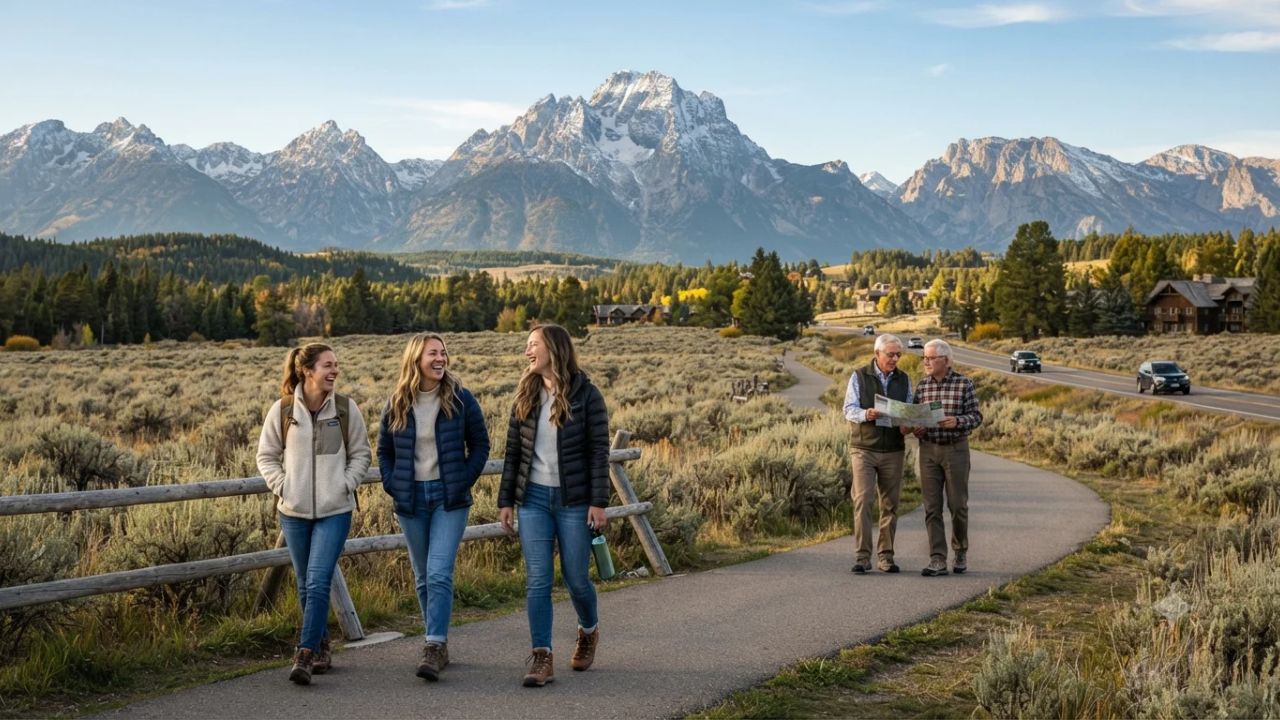
Image generated by AI
Between 2020 and 2024, the United States senior population surged by 13%—nearly ten times the 1.4% growth rate recorded among working-age adults—yet rather than following the decades-old herd toward crowded southern coastlines, millions of older Americans are actively turning their sights toward the wide-open horizons of Wyoming. According to the U.S. Census Bureau, the nation reached 61.2 million residents aged 65 and older in 2024, accounting for 18% of the total populace after expanding by 3.1% between 2023 and 2024 alone. That demographic shift marks a major leap from 2004, when seniors comprised 12.4% of the population. With the Baby Boomer generation entering retirement, escalating home insurance premiums, rising living expenses, and suburban congestion are triggering a reassessment of where retirees choose to settle, travel, and invest their savings.
The Mountain Migration Shift: Why Rocky Mountain Valleys Are Challenging Coastal Havens
For decades, the standard American retirement path was predictable: pack the car, head down Interstate 95, and buy a home along Florida's coast. While Florida continues drawing thousands of older residents through year-round warmth, ocean beaches, extensive senior developments, and zero state personal income tax, financial pressures are complicating that traditional dream. Escalating property insurance rates, soaring real estate costs, and persistent storm concerns have prompted retirees to explore fresh options.
Instead of accepting high humidity and dense traffic, retirees are favoring low-density states that combine tax advantages with direct access to nature. Wyoming leads this migration wave by offering a compelling tax environment: zero state personal income tax, no corporate income tax, and zero inheritance or estate taxes. Retirement distributions earned out-of-state remain completely untaxed by state authorities, allowing pensions and investment dividends to stretch further.
Across the country, alternative destinations are capturing the attention of older adults seeking financial security and outdoor recreation:
- Wyoming: Leads for retirees seeking complete tax relief, featuring no state personal income tax, no estate or inheritance taxes, minimal population density, and direct access to alpine parks.
- Florida: Retains appeal through zero state personal income tax, ocean beaches, golf communities, and vast healthcare networks, though countered by rising property insurance and housing expenses.
- South Dakota: Provides zero state personal income tax, lower general living costs, and scenic open spaces centered around the Black Hills.
- Tennessee: Imposes no broad-based state tax on wages while offering affordable housing, scenic lakes, and the ridges of the Great Smoky Mountains.
- Nevada: Features no state personal income tax, desert living, and rapid access to outdoor recreation at Red Rock Canyon and Lake Tahoe.
- Arizona: Draws active retirees with dry heat, master-planned communities, and immediate proximity to the Grand Canyon.
- Delaware: Combines a retiree-friendly tax environment with zero state sales tax, quiet beaches, and seamless transit links to major East Coast cities.
- North Carolina: Balances affordable mountain foothills, protected state parks, and coastline with growing medical centers.
- New Hampshire: Leans on no broad state wage taxes, safe small towns, sparkling glacial lakes, and the White Mountains.
- Iowa: Appeals through targeted retirement income tax exemptions, lower residential expenses, and tranquil rural settings surrounded by trail systems.
What Makes Wyoming Different: Big Skies, Wildlife Corridors, and Unvarnished Space
To understand why older Americans choose Wyoming over tropical shorelines, consider the physical reality of the Cowboy State. Wyoming contains fewer than 600,000 permanent residents across nearly 98,000 square miles, giving it the lowest population density in the contiguous United States. In the Bighorn Basin or outside Dubois, morning coffee is accompanied not by expressway roar, but by crisp mountain breezes filtering through lodgepole pine.
The state provides front-row access to North America's premier protected ecosystems. Living or traveling here places you minutes from Yellowstone National Park and Grand Teton National Park, where wild bison roam river valleys, bull moose graze in willow bottoms, and grizzly bears follow ancestral migration routes. Rather than strolling around artificial retention ponds in a planned subdivision, older travelers in Wyoming hike high-altitude trails, fly-fish pristine freestone rivers, and observe bald eagles circling granite ridges.
Yet this alpine lifestyle demands an understanding of the environment. Unlike Florida's warmth, Wyoming experiences four distinct seasons, including extended winters with sub-zero temperatures, heavy snowpack, and relentless high-plains winds. In addition, specialized medical centers are concentrated in regional hubs like Cheyenne, Casper, and Jackson, meaning rural residents often drive several hours for complex healthcare. For retirees who prize physical independence, self-reliance, and solitude, that geographic isolation is not a drawback—it is the very reason they choose to be here.
Visitor Insider Tips
Seasonal Windows and Weather Realities
Visit between late June and late September for snow-free mountain passes and open facilities. For solitude, target the shoulder window from September 10 to October 5, when golden aspens ignite foothills, elk bugle across frosty meadows, and temperatures hover around 18°C (65°F). Winter travelers between November and April need winter-rated tires, road webcam checks, and thermal emergency gear.
Local Etiquette and Ranch Country Values
Wyoming operates on traditional Western customs rooted in mutual respect. When driving along two-lane rural highways, extend the customary two-finger steering wheel wave to approaching drivers. Always close pasture gates behind you when crossing open-range public land, and yield right-of-way to working cattle drives or agricultural machinery. Locals value humility, direct speech, and self-sufficiency; avoid speaking loudly about big-city real estate prices in local diners, and practice strict Leave No Trace principles on public lands.
Mountain Cuisine and Regional Specialties
Skip national chains and savor high-plains heritage. Order pan-seared Rocky Mountain trout with wild herbs, locally raised grass-fed bison ribeyes, or elk sausages paired with tart chokecherry preserves. In frontier towns like Cody or Sheridan, morning bakeries serve warm huckleberry scones and sourdough flapjacks with native berry syrup.
High-Altitude Navigation and Transport Logistics
Distances are vast, with 80 to 100 miles of empty road separating settlements. Refill whenever the gas tank drops below one-quarter, as rural stations close early. Carry a physical road atlas since cellular coverage fades across canyons and prairie flats. For winter and shoulder seasons, an all-wheel-drive or four-wheel-drive vehicle with solid ground clearance is essential against sudden mountain squalls.
Cultural and Environmental Context: Stewardship Across the High Plains
The influx of retirees and seasonal travelers is reshaping the cultural equilibrium of Wyoming's historic communities. For generations, Wyoming's social fabric has been anchored by multi-generational cattle ranching families, energy workers, and indigenous nations including the Eastern Shoshone and Northern Arapaho on the Wind River Reservation. As newcomers purchase rural acreages and second homes, rising land valuations create both economic vitality and tax assessment challenges for agricultural families.
At the same time, this population expansion places new demands on conservation. The Greater Yellowstone Ecosystem represents one of the largest intact temperate ecosystems on earth. Maintaining seasonal migration corridors for pronghorn antelope, mule deer, and bighorn sheep requires careful community planning, wildlife-friendly fencing, and responsible recreation. Local land trusts, conservation groups, and longtime ranchers work collaboratively to protect open spaces from fragmentation. Travelers and incoming residents alike are expected to embrace this stewardship ethic, ensuring that the wild spirit drawing people to Wyoming remains protected for future generations.
FAQ: Visiting Wyoming 2026
Why are older Americans choosing Wyoming over Florida?
Retirees choose Wyoming for its complete lack of personal income and estate taxes, lower population density, peaceful communities, and direct access to mountain recreation, avoiding Florida's rising insurance costs and crowded coasts.
What tax advantages does Wyoming offer retirees?
Wyoming levies no state personal income tax, no corporate income tax, and no estate or inheritance taxes. Out-of-state retirement distributions, social security payments, and investment pensions are completely exempt from state taxation.
What is the best time of year to visit Wyoming?
The ideal travel window runs from late June through late September when mountain roads are clear and wildlife is active. September offers spectacular fall foliage and fewer visitors.
What vehicle should travelers use in Wyoming?
An all-wheel-drive or four-wheel-drive vehicle with high ground clearance is strongly recommended. Severe winter snow, sudden mountain squalls, and gravel backroads require dependable traction and emergency road supplies.
Where the horizon stretches unbroken across the sagebrush steppe, Wyoming reminds travelers that true luxury is found in silence, space, and self-reliance.
Related Travel Guides
U.S. Tourism Spending and Economic Trends
Disclaimer
This article is for informational and educational purposes only. It does not constitute legal, financial, or professional advice. While we strive to provide accurate and up-to-date information, travel policies, regulations, and conditions change rapidly. Always verify information with official sources before making travel decisions. Nomad Lawyer makes no representations about the accuracy, reliability, completeness, or suitability of the information provided. Readers should consult qualified professionals for advice specific to their circumstances. The views expressed in this article are those of the author and do not necessarily reflect the views of Nomad Lawyer.
Raushan Kumar
Founder & Lead Developer
Full-stack developer with 11+ years of experience and a passionate traveller. Raushan built Nomad Lawyer from the ground up with a vision to create the best travel and law experience on the web.
Learn more about our team →