
Six Indonesian Airports Closed as Anak Krakatau Eruption Triggers Mass Flight Cancellations 2026
Volcanic ash from Anak Krakatau has forced the shutdown of six key Indonesian airports, including Soekarno Hatta, stranding thousands of passengers across Java and Sumatra.

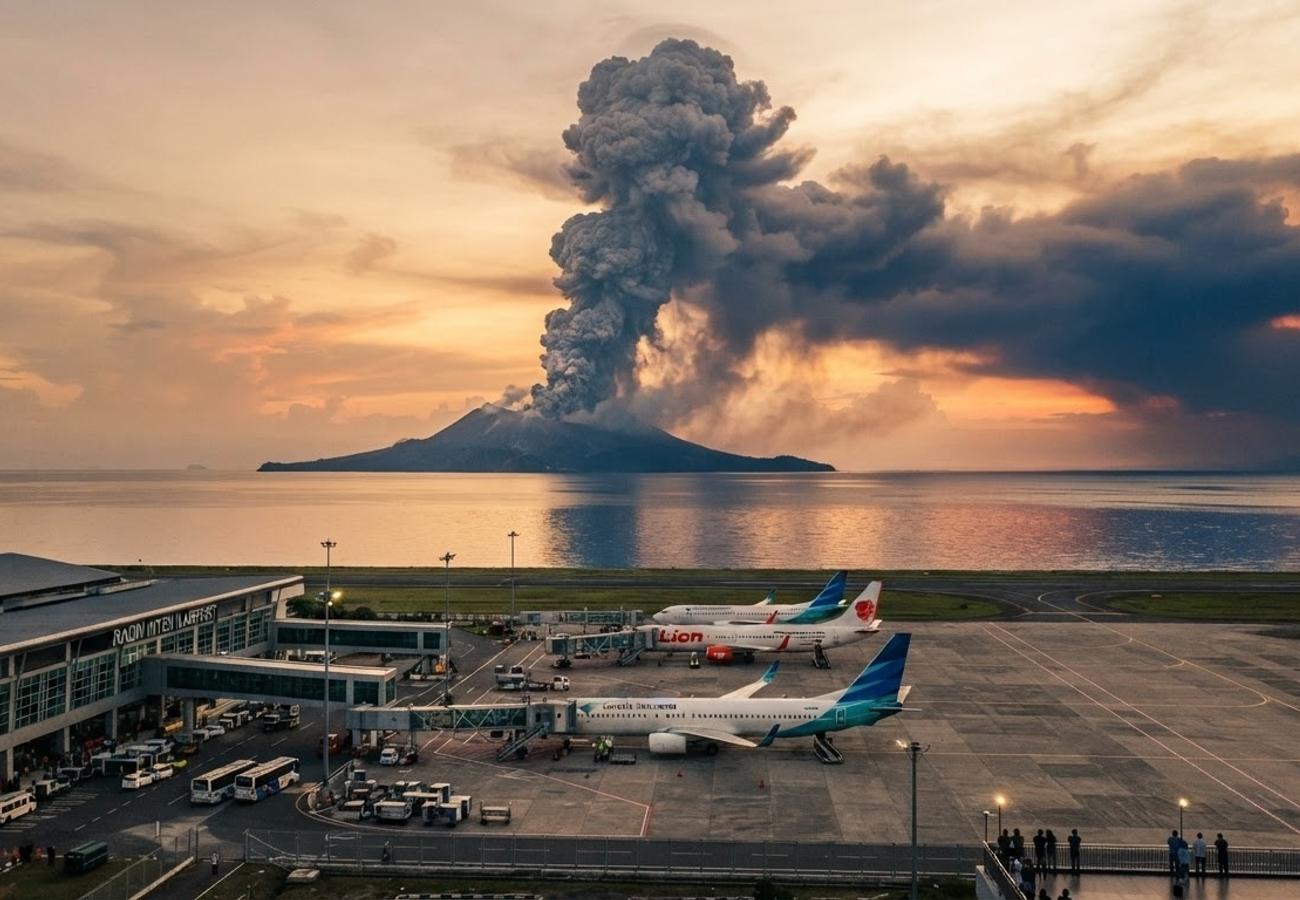
Image generated by AI
Volcanic ash from Anak Krakatau has forced the temporary shutdown of six airports across Java and Sumatra, disrupting hundreds of flights and stranding thousands of travelers.
Volcanic Ash Disrupts Western Indonesian Airspace
A fresh eruption of Anak Krakatau has released a dense ash plume into primary flight corridors, prompting Indonesian transport authorities to suspend operations at six airports. The ash cloud's trajectory has affected both major international gateways and regional facilities across the archipelago.
Flight tracking systems and official notices to air missions (NOTAMs) confirm that volcanic ash is present at both cruising altitudes and surface levels. This has led to the immediate halt of traffic in and out of the affected terminals to prevent engine failure and visibility loss.
Our analysis of current aviation data indicates the following facilities are affected:
- Soekarno Hatta International Airport (Jakarta): Full suspension of operations.
- Halim Perdanakusuma Airport (Jakarta): Full suspension of operations.
- Radin Inten II Airport (Lampung): Full suspension of operations.
- Husein Sastranegara Airport (Bandung): Full suspension of operations.
- Banten Province Airports: Two additional regional facilities closed.
Operational Impacts:
- Rerouting: Flights bound for Jakarta are being diverted to Singapore, Bali, and other regional hubs.
- Cancellations: Hundreds of domestic and international flights have been cancelled.
- Atmospheric Data: Meteorological assessments show an ash column extending above commercial cruising levels, drifting westward and southwestward over the Indian Ocean and Sumatra.
Passenger Rights and Advisory
For the affected passenger, this disruption falls under "extraordinary circumstances" due to the natural disaster. However, this does not waive all airline obligations.
Rebooking and Care Our analysis of international aviation policy suggests that while airlines may not be required to pay cash compensation for delays caused by volcanic eruptions, they must still provide:
- Duty of Care: Passengers stranded at airports are entitled to food, refreshments, and communication (emails/calls).
- Accommodation: If a stay is required overnight, airlines should provide hotel accommodation and transport between the airport and the hotel.
- Re-routing: Passengers must be offered a choice between a full refund of the ticket or re-routing to their final destination at the earliest opportunity.
Actionable Steps for Travelers:
- Avoid the Airport: Do not travel to the terminal without a confirmed departure update; terminals are currently experiencing extreme congestion.
- Document Expenses: Keep all receipts for food and hotels if the airline fails to provide them upfront; these can be claimed later.
- Verify Insurance: Check "Trip Interruption" or "Force Majeure" clauses in your travel insurance policy to see if volcanic activity is covered.
The response from Indonesia’s Transportation Ministry reflects a conservative safety-first approach. Volcanic ash consists of jagged glass and rock particles that can melt inside jet engines, causing total power loss, or sandblast cockpit windshields, rendering them opaque.
By utilizing satellite imagery and Volcanic Ash Advisory Centers (VAAC), authorities are implementing layered airspace closures. This strategy prevents the catastrophic engine failures seen in previous regional eruptions. The duration of these closures is fluid and dependent on wind patterns rather than a fixed schedule.
Anak Krakatau, located in the Sunda Strait, remains a high-risk entity. Because it sits between Java and Sumatra, even moderate eruptions create disproportionate disruptions to Southeast Asian logistics and tourism.
Regional Risk Outlook
Geological agencies report that the eruption began late last week, featuring sustained ash emissions and lava fountaining. While the primary threat to aviation is airborne ash, residents in downwind communities are warned of reduced air quality and limited visibility.
Airports will undergo inspections of runways and taxiways for ash residue before reopening. Even after official reopening, expect "ripple effect" delays as airlines reposition aircraft and crews.
Air travel in the region remains volatile as the ash plume evolves.
Related Travel Guides
Disclaimer
This article is for informational and educational purposes only. It does not constitute legal, financial, or professional advice. While we strive to provide accurate and up-to-date information, travel policies, regulations, and conditions change rapidly. Always verify information with official sources before making travel decisions. Nomad Lawyer makes no representations about the accuracy, reliability, completeness, or suitability of the information provided. Readers should consult qualified professionals for advice specific to their circumstances. The views expressed in this article are those of the author and do not necessarily reflect the views of Nomad Lawyer.
Raushan Kumar
Founder & Lead Developer
Full-stack developer with 11+ years of experience and a passionate traveller. Raushan built Nomad Lawyer from the ground up with a vision to create the best travel and law experience on the web.
Learn more about our team →