
UAE Flight Delays Hit Emirates, Etihad, flydubai, and Air Arabia Amid 2026 Security Alerts
Security alerts, regional tensions, and weather disruptions are causing rolling flight delays and select cancellations across Dubai, Abu Dhabi, and Sharjah airports for major UAE carriers.
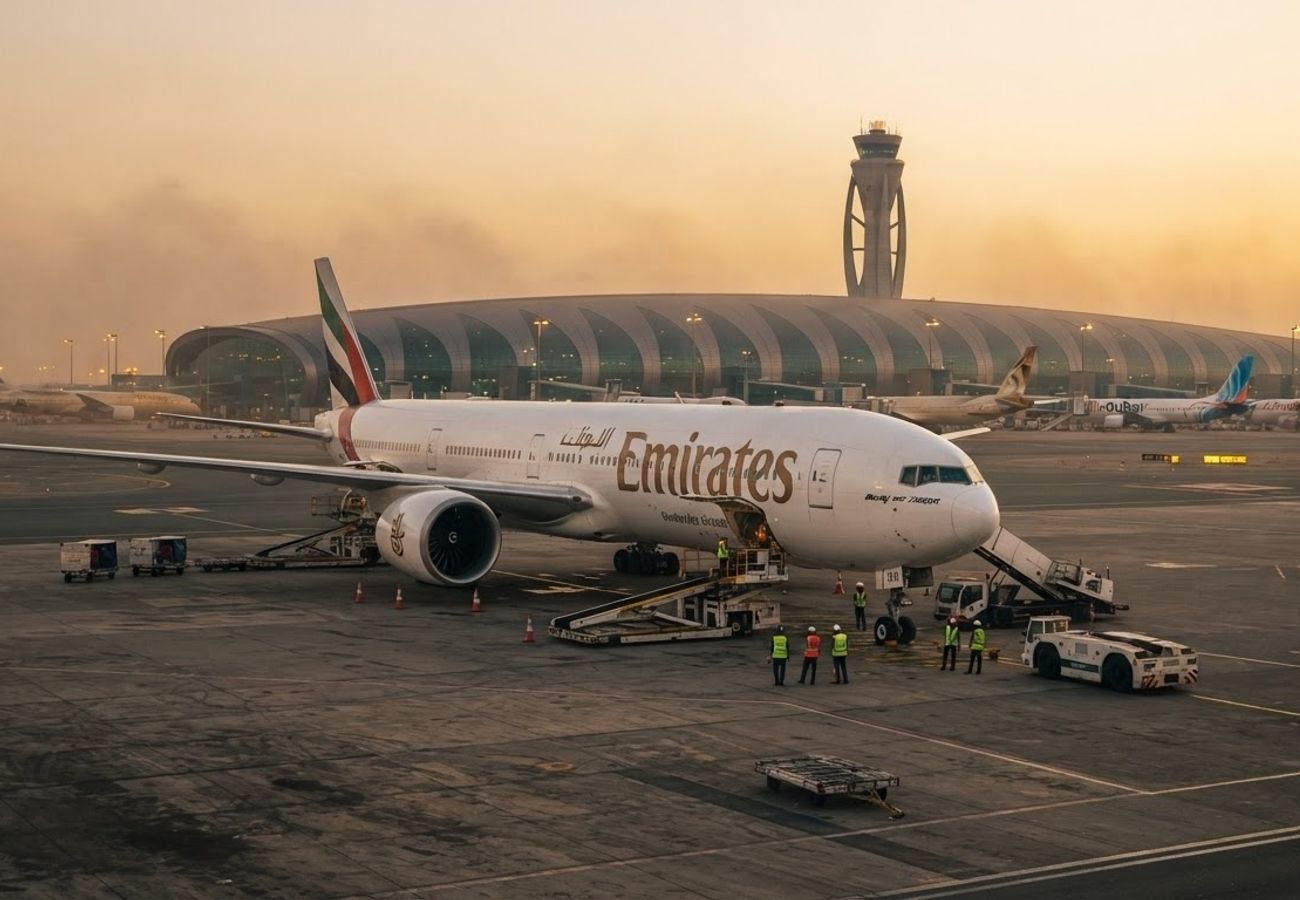
Image generated by AI
UAE travelers are facing scattered delays and select cancellations across Etihad, Emirates, flydubai, and Air Arabia due to a combination of regional security alerts and weather-related disruptions.
Rolling Disruptions Across UAE Aviation Hubs
Operations at Dubai International (DXB), Abu Dhabi’s Zayed International Airport (AUH), and Sharjah International Airport (SHJ) remain broadly intact, but a pattern of late arrivals and retimed departures has emerged. Data from September 3 indicates that multiple services into these hubs experienced extended delays, with a high concentration of impact on Etihad routes connecting Abu Dhabi to Europe, South Asia, and Africa.
Specific sectors seeing significant delays—sometimes exceeding several hours—include Abu Dhabi to London, Manchester, Moscow, Islamabad, Delhi, and Nairobi. Similarly, Emirates and flydubai arrivals into Dubai from European gateways such as London, Manchester, Amsterdam, Lisbon, and Rome have been recorded with revised arrival times and extended holding patterns.
While the majority of flights are operating, high-profile cancellations have occurred. Notable examples include New York to Dubai flight EK206 on September 3, alongside select flydubai services from Entebbe and various regional destinations. Air Arabia has also adjusted timings on select regional routes from Sharjah, canceling services where airspace restrictions made normal operations impractical.
Regional Security and Airspace Constraints
The current instability is driven by heightened geopolitical tensions in the Gulf region, specifically involving the United States and Iran. While total hub closures have not recurred since earlier in 2026, the risk environment remains volatile.
The European Union Aviation Safety Agency (EASA) has extended a conflict-zone information bulletin for Gulf airspace through the end of September. This mandate requires operators to conduct rigorous risk assessments when planning routes in the region. Consequently, UAE-based carriers are adapting routings and flight times to accommodate security assessments and air traffic flow measures.
The UK government and other national travel advisories have flagged the potential for sudden airspace closures. These precautionary reroutings result in longer flight times, which create a "rolling effect": a late arrival from one sector delays the aircraft and crew for their subsequent leg, causing disruption even on routes far removed from the actual tension zones.
Weather and Capacity Pressures
Beyond geopolitical factors, external operational issues are straining the network:
- Volcanic Activity: Volcanic eruptions in Indonesia have periodically disrupted the corridor between the Gulf and Jakarta. Ash clouds and airspace restrictions at Jakarta’s Soekarno Hatta International Airport have forced last-minute equipment swaps and rerouting for passengers transiting through Dubai and Abu Dhabi.
- Seasonal Volume: The surge in late-summer traffic into September has left carriers with minimal slack. In a high-capacity environment, a single delay to a widebody aircraft on a long-haul sector cascades across multiple rotations, impacting departures hours later.
Route and Carrier Impact Summary
| Carrier | Primary Hubs | Most Affected Routes | Nature of Disruption |
|---|---|---|---|
| Etihad | Abu Dhabi (AUH) | London, Manchester, Moscow, Islamabad, Delhi, Nairobi | Extended delays, tight connection windows |
| Emirates | Dubai (DXB) | New York (EK206), London, Amsterdam, Lisbon, Rome | Late arrivals, rolling knock-on departures |
| flydubai | Dubai (DXB) | Entebbe, Almaty, Bishkek, Moscow, Jeddah, Astana, Minsk, Addis Ababa | Selective delays, isolated cancellations |
| Air Arabia | Sharjah (SHJ) / AUH | Kuwait, Bahrain, South Asia, North Africa | Retimings, one-off cancellations |
Traveler Logistics Guide: Navigating UAE Transit
From a ground-level perspective, the best way to navigate this volatility is to treat your itinerary as fluid rather than fixed. When transiting through the UAE during this period, apply the following logistics strategies:
1. Connection Buffers Standard Minimum Connection Times (MCT) are currently unreliable due to rolling delays. If booking a multi-city trip through Zayed International or Dubai International, allow a minimum of 4 hours between flights. This provides a safety margin for late-arriving inbound aircraft.
2. Digital Monitoring Do not rely solely on airport monitors. Use the official airline apps for Emirates or Etihad to receive push notifications. Ensure your contact details (email and SMS) are updated in your PNR (Passenger Name Record) to receive real-time rerouting alerts.
3. Customs and Digital Transit For those transiting through Dubai, ensure your biometric data is updated. Utilizing digital transit corridors can shave significant time off your movement between terminals, which is vital if your inbound flight arrives late and your connection window has shrunk.
4. Document Readiness Given the EASA and UK government advisories, keep digital copies of your travel insurance and a secondary contact method for your embassy. In the event of a sudden airspace closure and diversion to a third country, having these documents accessible offline is essential.
Infrastructure Impact Assessment
The current situation highlights the vulnerability of "hub-and-spoke" aviation models to regional geopolitical shocks. While the UAE's infrastructure is world-class, the concentration of traffic in Dubai and Abu Dhabi means that any airspace restriction in the wider Gulf creates an immediate bottleneck. This period of instability is forcing a shift toward more conservative flight planning and a temporary reduction in the operational efficiency that usually defines Gulf aviation.
Stay updated on global transit shifts and aviation security protocols.
Related Travel Guides
Disclaimer
This article is for informational and educational purposes only. It does not constitute legal, financial, or professional advice. While we strive to provide accurate and up-to-date information, travel policies, regulations, and conditions change rapidly. Always verify information with official sources before making travel decisions. Nomad Lawyer makes no representations about the accuracy, reliability, completeness, or suitability of the information provided. Readers should consult qualified professionals for advice specific to their circumstances. The views expressed in this article are those of the author and do not necessarily reflect the views of Nomad Lawyer.