
Anak Krakatau Eruption Grounds Jakarta Flights: Hundreds of Cancellations at Soekarno-Hatta in 2026
Volcanic ash from Mount Anak Krakatau has triggered widespread airport closures across western Indonesia, disrupting over 700 flights at Jakarta's Soekarno-Hatta International Airport and stranding thousands of passengers.

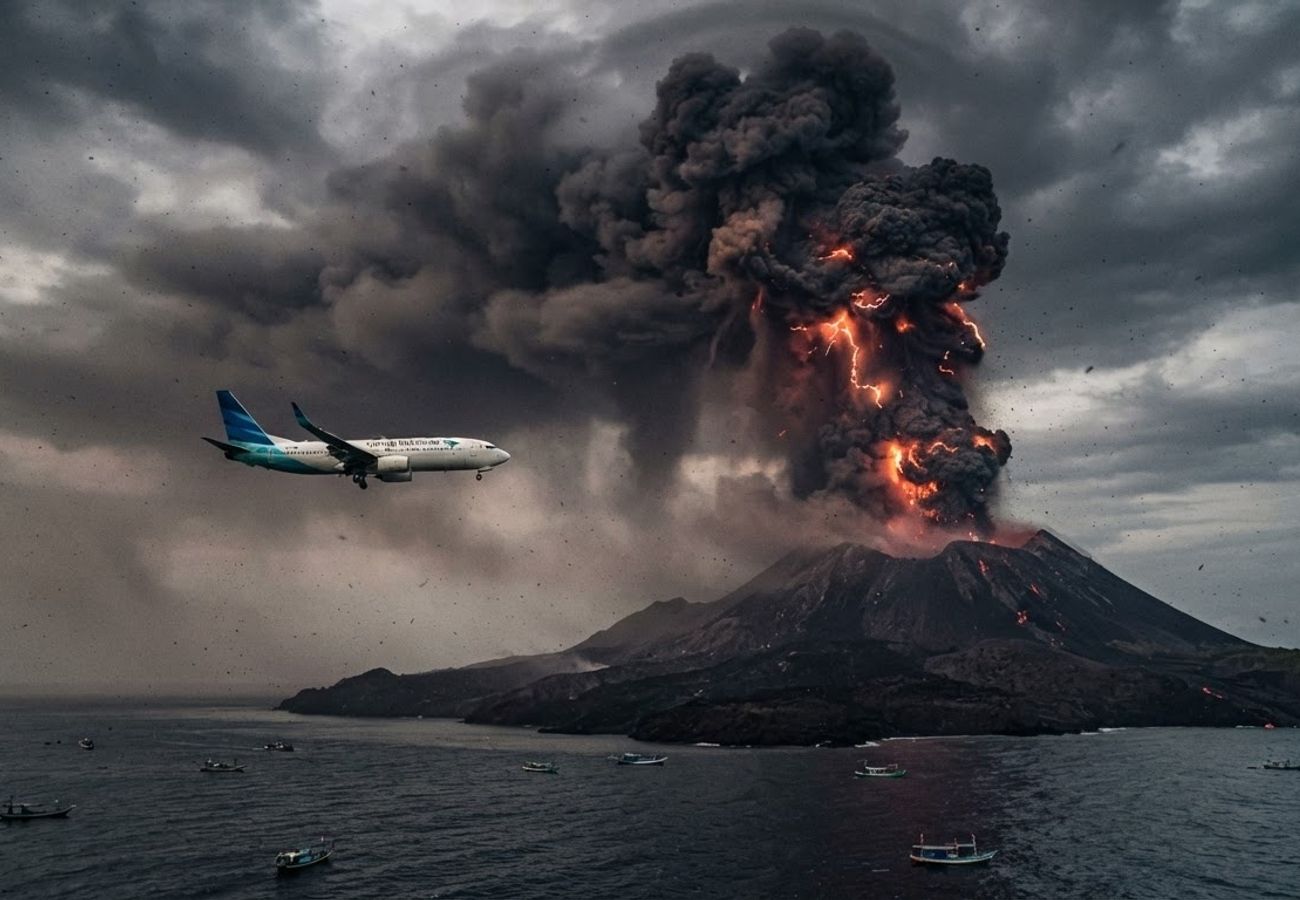
Image generated by AI
Tens of thousands of travelers are stranded across western Indonesia as ash plumes from Mount Anak Krakatau force rolling closures of Jakarta’s primary aviation hubs. Over 700 flights have been disrupted at Soekarno-Hatta International Airport alone.
Volcanic Activity and Airspace Closures
The eruption of Mount Anak Krakatau, situated in the Sunda Strait between Java and Sumatra, has released significant ash plumes reaching several kilometers above sea level. This activity has compromised key air corridors, leading to the suspension of flight operations across western Indonesia.
Indonesia’s Ministry of Transportation has ordered the closure of eight airports in the region. The most critical impacts are concentrated at Jakarta’s Soekarno-Hatta International Airport and Halim Perdanakusuma. These closures, which began Sunday, September 6, were extended through the morning of Monday, September 7, to ensure aircraft engine performance and cockpit visibility.
Our analysis of data from Indonesia’s Meteorology, Climatology and Geophysics Agency confirms that ash clouds have drifted over Banten province, Jakarta, Lampung, and West Java.
Flight tracking systems and official reports indicate a severe collapse of scheduling in the Jakarta hub:
- Soekarno-Hatta International Airport: More than 700 flights disrupted within the first 24 hours.
- Daily Attrition: Between 200 and 300 flights were canceled or diverted on the first full day of the crisis.
- Affected Carriers: Major operators including Lion Group and AirAsia have suspended services to and from both Soekarno-Hatta and Halim Perdanakusuma.
- Route Impact: Severe disruptions to domestic links between Jakarta and cities in Sumatra and Java, as well as international routes to Southeast Asian hubs and Australia.
- Rebooking Window: Some carriers have extended flexible rebooking waivers for passengers scheduled to travel through September 9.
Passenger Rights and Advisory
For the affected passenger, this situation falls under "extraordinary circumstances" due to the natural disaster. However, this does not absolve airlines of their basic duty of care.
Rebooking and Refunds Our analysis of standard aviation policy suggests that while passengers may not be entitled to monetary compensation for the delay itself (as volcanic eruptions are typically considered "Acts of God"), they are entitled to:
- Rerouting: Airlines must offer the earliest possible alternative flight or a full refund if the journey is no longer viable.
- Duty of Care: For those stranded in terminals, airlines are expected to provide communication facilities and, depending on the length of the delay, food and beverage vouchers.
Practical Steps for Stranded Travelers
- Avoid Terminal Congestion: With hotels in central Jakarta and near Soekarno-Hatta reaching capacity, passengers should check digital flight boards before commuting to the airport.
- Request Written Proof: Ensure you obtain a written statement of the cancellation from the airline to support travel insurance claims for hotels and missed connections.
- Monitor Official Channels: Rely on the Indonesia Ministry of Transportation and official airline apps rather than social media rumors for reopening times.
The current disruption highlights the vulnerability of Indonesia's "hub-and-spoke" aviation model, where a significant percentage of national traffic flows through a single point in Jakarta. The resulting backlog will likely require a multi-day recovery period.
Aviation operators are now forced to reposition aircraft and crews who are out of place due to the closures. We expect to see an increase in "recovery flights" using larger aircraft to absorb the passenger backlog once the Geological Agency confirms that ash concentrations have dropped below safety thresholds. The primary risk remains the "melting" of volcanic glass inside jet engines, which necessitates a zero-tolerance approach to ash-heavy corridors.
Travelers should anticipate intermittent closures and shifting schedules as wind patterns continue to move residual ash across the Sunda Strait.
Related Travel Guides
Disclaimer
This article is for informational and educational purposes only. It does not constitute legal, financial, or professional advice. While we strive to provide accurate and up-to-date information, travel policies, regulations, and conditions change rapidly. Always verify information with official sources before making travel decisions. Nomad Lawyer makes no representations about the accuracy, reliability, completeness, or suitability of the information provided. Readers should consult qualified professionals for advice specific to their circumstances. The views expressed in this article are those of the author and do not necessarily reflect the views of Nomad Lawyer.
Preeti Gunjan
Contributor & Community Manager
A passionate traveller and community builder. Preeti helps grow the Nomad Lawyer community, fostering engagement and bringing the reader experience to life.
Learn more about our team →