
Security failures leave dozens stranded across European airports in April 2026
Security staffing collapses and border control bottlenecks left dozens stranded at European airports in April 2026, exposing infrastructure vulnerabilities as outsourced contractors fail and new EU biometric systems overwhelm checkpoints.

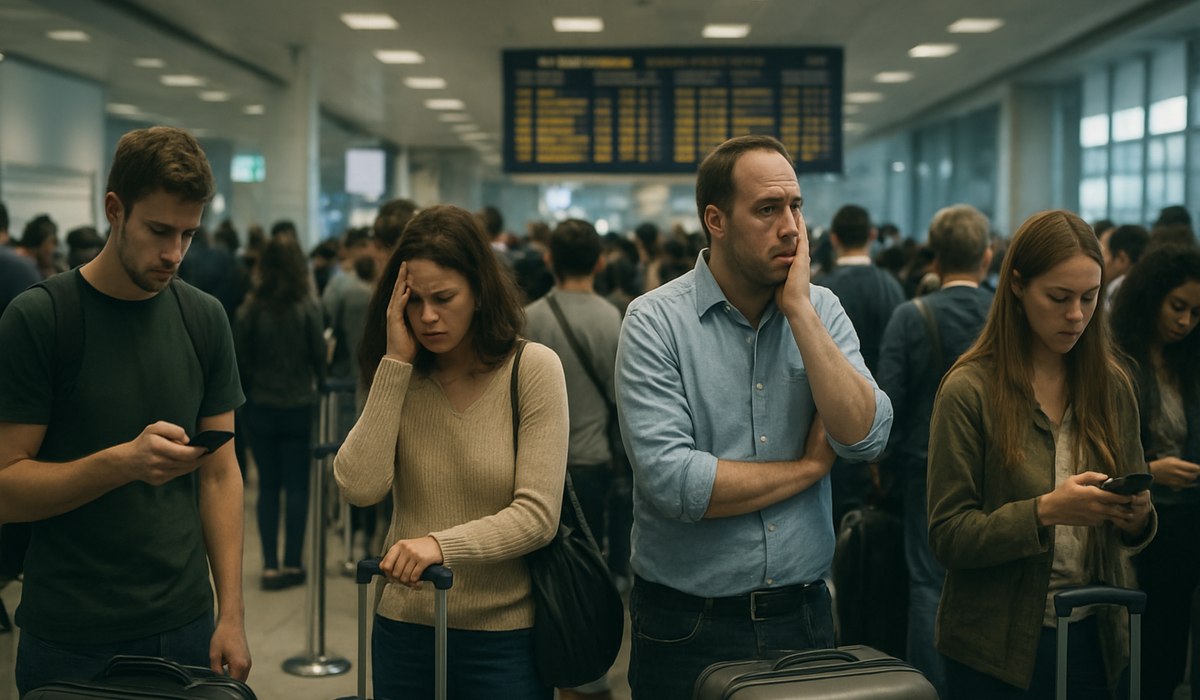
Image generated by AI
Ryanair Ghost Flight Exposes French Airport Security Collapse
A Ryanair flight departing Vatry Airport in eastern France on April 14, 2026 left the tarmac completely empty—a stark symbol of how security failures leave passengers stranded across European terminals. The aircraft, scheduled for Marrakech, was supposed to carry 192 ticketed travelers. Instead, every single passenger remained in the terminal after a private security contractor failed to staff the screening checkpoints. Multiple security guards called in sick on short notice, leaving no certified personnel to operate X-ray scanners or conduct body searches.
As departure time approached, confusion rippled through the terminal. Passengers waited for updates that never came. Boarding deadlines passed silently. The flight ultimately departed empty, leaving nearly two hundred travelers scrambling for rebooking, hotel accommodations, and answers about compensation rights. French media coverage captured passenger frustration, with many questioning how a major European airport could face such a fundamental operational breakdown. The Vatry incident crystallized a larger problem: when security failures leave passengers unable to board, responsibility fragments between airlines, airports, and contractors—often leaving travelers in legal limbo.
Outsourced Security Contractors Under Pressure
European airports increasingly rely on outsourced security firms operating under tight profit margins and challenging working conditions. Industry observers note that this model creates dangerous vulnerability. When a handful of guards call in sick, there's minimal redundancy to absorb the disruption. Small operational problems rapidly cascade into headline-making disasters.
The Vatry collapse highlighted how contractor economics can amplify staffing crises. Security guards at many European facilities earn modest wages while managing high-stress, repetitive work. When illness strikes or resignation rates spike, airports face impossible choices: operate understaffed checkpoints (creating security risks) or halt boarding entirely. Neither option serves passengers. Several European airport operators have publicly acknowledged these structural tensions, but contractual arrangements between airports and security firms often prevent immediate staffing increases. The April 2026 incidents suggest that current staffing models may be inadequate for Europe's actual travel volumes, particularly during peak seasons.
For travelers, this means security failures leave operational decisions in the hands of contractors with limited accountability. Your flight cancellation due to understaffed screening doesn't necessarily trigger airline compensation, since many carriers argue security staffing falls outside their control—a legal gray zone that frustrates passengers and consumer advocates alike.
EU Entry/Exit System Creates Border Control Bottlenecks
Beyond checkpoint staffing, the European Union's new Entry/Exit System launched April 10, 2026, introduced dramatic friction at border controls. The biometric scheme requires all non-EU nationals entering the Schengen zone to provide fingerprints and facial images at passport control. While designed to modernize security, the rollout overwhelmed airports unprepared for the volume of data capture required at peak travel times.
Industry bodies warned authorities that border posts lacked adequate staffing and hardware to process travelers efficiently. Despite warnings, queues stretched to two and three hours at control booths during the system's first week. Passengers arriving well in advance of departure times missed their flights. Passengers at major hubs like Barcelona, Milan, Athens, and Vienna reported waiting through entire gate announcements while biometric collection slowed to a crawl. The fundamental problem: officers grappled with unfamiliar procedures and software glitches while handling unprecedented data volumes. Some national authorities responded by temporarily relaxing procedures. Portugal's government, for example, eased EES requirements over one busy weekend at Lisbon, Porto, and Faro airports to prevent gridlock.
Travel analysts predict these bottlenecks will persist until the majority of frequent visitors complete initial biometric registration. Until that backlog clears, airports face a persistent mismatch between processing capacity and traveler demand—meaning security failures leave passengers vulnerable to missing connections, cancellations, and compensation disputes.
Dozens Stranded: Incidents Across France, Italy, and UK Airports
The Vatry incident wasn't isolated. Dozens of passengers faced security-related stranding across European airports throughout April 2026. A Ryanair flight from Marseille to Morocco left over 80 passengers behind when slow-moving passport control queues prevented them from reaching the gate before boarding closed. Smaller incidents accumulated at Pisa and Florence airports, where travelers reported extended waits linked to the combination of understaffing and new biometric procedures.
UK airports also experienced disruptions, though less dramatic than Continental hubs. Regional airports handling primarily EU and UK traffic reported manageable delays, while major international gateways (Heathrow, Gatwick) implemented additional staffing to mitigate the Entry/Exit System's impact. Passenger reports on social media painted a consistent picture: security failures leave travelers stranded not from dramatic incidents but from the cumulative effect of understaffing, new procedures, and insufficient planning. By late April, passenger advocacy groups had filed formal complaints with European authorities, demanding acceleration of biometric registration completion to reduce bottleneck severity.
Live Disruption Tracking and Flight Status
Passengers currently traveling through affected European airports should monitor real-time flight status using FlightAware, which provides accurate gate assignments, boarding times, and delay information. Many airlines now send push notifications alerting passengers to boarding delays caused by security or border control queues. Check your airline's mobile app for departure status updates at least 90 minutes before scheduled boarding.
If your flight involves Schengen passage, budget 45 additional minutes for biometric procedures beyond normal security wait times, particularly between April and June 2026. International travelers transiting through major hubs should arrive 3.5 hours before departure to accommodate both standard screening and Entry/Exit System processing. Disruption patterns suggest morning hours (6–9 AM) experience higher queue volumes than mid-day or evening departures. European airports publish real-time security queue wait times on their websites and departure hall displays.
EU Regulation 261 Leaves Passengers in Legal Limbo
When security failures leave passengers stranded, compensation eligibility becomes murky. EU Regulation 261/2004 requires airlines to compensate passengers for delays exceeding 3 hours—unless the disruption qualifies as "extraordinary circumstances" beyond the airline's control. Security staffing failures and border control bottlenecks often fall into this exemption category.
The legal distinction creates frustration. Passengers left behind at Vatry after the security contractor failed to staff checkpoints had no compensation claim against Ryanair, since the airline didn't cause the staffing collapse. Similarly, travelers missing flights due to Entry/Exit System delays can't claim compensation from carriers, since border procedures fall under government authority. However, airline responsibility isn't absolute. Some legal interpretations suggest that if an airline failed to allow sufficient time for passenger processing before scheduled departure, the carrier shares responsibility. Courts in several European nations have awarded partial compensation in such cases.
The safest approach: if security failures leave you stranded, immediately contact your airline's customer service desk and request written documentation of the delay cause. Request rebooking on the next available flight and ask about compensation eligibility. Document your arrival time at the airport, time spent in security or border queues, and final boarding outcome. European airlines must assist stranded passengers with accommodation and meals during long delays; ensure you collect receipts for all expenses. Contact your national aviation authority's consumer office if compensation claims are denied.
What Passengers Can Do When Security Fails
Traveler Action Checklist
-
Arrive extra early: Give yourself 3.5+ hours for international flights involving Schengen entry through April 2026 to absorb security failures and border control delays.
-
Monitor queue information: Check airport websites and your airline app for real-time security wait times 90 minutes before departure. If queues exceed 45 minutes, notify your airline immediately.
-
Request written documentation: If security delays affect your flight, ask the airline to provide written confirmation of the delay cause and time. This documentation supports future compensation claims.
-
**Collect all receip
Disclaimer
This article is for informational and educational purposes only. It does not constitute legal, financial, or professional advice. While we strive to provide accurate and up-to-date information, travel policies, regulations, and conditions change rapidly. Always verify information with official sources before making travel decisions. Nomad Lawyer makes no representations about the accuracy, reliability, completeness, or suitability of the information provided. Readers should consult qualified professionals for advice specific to their circumstances. The views expressed in this article are those of the author and do not necessarily reflect the views of Nomad Lawyer.
Raushan Kumar
Founder & Lead Developer
Full-stack developer with 11+ years of experience and a passionate traveller. Raushan built Nomad Lawyer from the ground up with a vision to create the best travel and law experience on the web.
Learn more about our team →