
Security failures leave hundreds stranded at European airports in April 2026
Security staff shortages and EU biometric system rollouts are leaving hundreds of ticketed passengers stranded across European airports this April 2026. New Entry Exit System delays combine with staffing gaps to create massive departure bottlenecks.

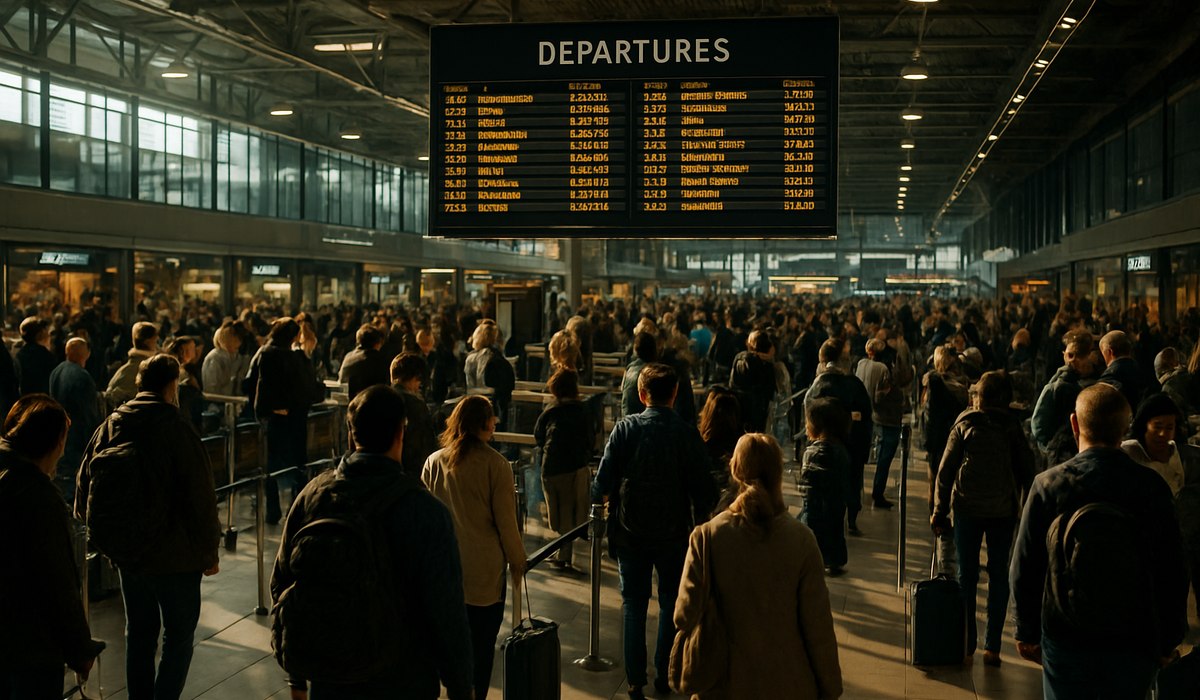
Image generated by AI
Security Failures Leave Hundreds Stranded Across Europe This April
Hundreds of ticketed passengers are facing severe disruptions at major European airports as a perfect storm of security staffing shortages and new EU biometric mandates converges during April 2026. At Vatry Airport in eastern France, a Ryanair flight to Marrakech departed without 192 passengers after security personnel failed to report for duty, leaving travelers unable to clear screening despite arriving hours in advance. Simultaneously, the European Union's new biometric Entry Exit System (EES) is triggering multi-hour delays at border control checkpoints, with reports from Milan Linate Airport showing only 34 of 156 booked passengers boarding an EasyJet flight to Manchester. These incidents expose critical gaps in passenger protection frameworks when government-mandated security processes fail.
Ghost Departures: When Security Staffing Collapses
The Vatry Airport incident represents a worst-case scenario for modern air travel: aircraft operating empty while hundreds of confirmed passengers remain stuck in the departure hall. Airport security positions went completely unfilled on the departure date, effectively shutting down the outbound screening checkpoint while the aircraft remained ready to operate. Airline and airport planners faced an impossible choice—hold the flight indefinitely hoping replacement staff would materialize, or depart empty to protect crew scheduling and downstream operations.
This decision has drawn sharp criticism from travelers and consumer advocates who argue that staffing resilience at security checkpoints is now fundamental to service reliability. The incident also exposes a jurisdictional grey area: when government-mandated security processes fail due to staffing shortages, responsibility becomes unclear between airport operators and airlines. European passenger rights frameworks traditionally focus on carrier-controlled disruptions, leaving travelers stranded by closed security lanes with minimal compensation guarantees. For real-time flight status during disruptions, monitor FlightAware for live updates and alternative routing information.
The EU Biometric System Rollout Exacerbates Airport Bottlenecks
The European Union's Entry Exit System went fully live across the Schengen area in April 2026, requiring non-EU nationals to provide fingerprints and facial scans at border control during departure. Early data from multiple airports shows processing times have lengthened dramatically, creating queues that snake backward toward departure gates and boarding areas. At Milan Linate, border control backlogs stretched so long that over 100 travelers missed their boarding window, reducing the EasyJet Manchester flight occupancy to just 22 percent of booked capacity.
Industry analyses indicate that airports across Italy and Portugal have intermittently paused or scaled back biometric kiosk operations to clear backlogs, only to restart processing later in the day—creating unpredictable delays for subsequent waves of departing passengers. Trade bodies representing airports and airlines report two-to-three-hour waits at border control during peak periods, a duration virtually guaranteeing missed departures for travelers with tight connections or standard arrival windows. Travelers on nomadic or frequent international routes should now budget additional time for border processing, particularly when traveling with non-EU passports.
Terminal Capacity Crisis: When Security Queues Overwhelm Physical Space
London Stansted Airport has become emblematic of how rapidly security lines can exceed terminal capacity. Recent travel accounts describe waits exceeding two hours during bank holiday periods, with passengers reporting abandoned baggage, missed flights, and last-minute scrambles through concourses as boarding closed. Hundreds of departing travelers have occupied the departure hall in static queues, effectively converting large terminal sections into holding areas rather than functional passenger processing zones.
Once security lines exceed their designated space, they block access to retail shops, boarding gates, and customer service counters, compounding passenger frustration and operational chaos. Some travelers have reached airline desks only after their flights departed, forcing expensive same-day rebooking or overnight hotel stays. Similar congestion patterns appear across European gateways where non-EU passport control lanes handle larger volumes of travelers subject to enhanced biometric checks. Check FAA guidelines and consult US DOT resources for passenger rights frameworks applicable to international travel disruptions.
Who Bears Responsibility When Government Mandates Fail
A critical legal and operational question now confronts European aviation: when security failures stem from government-mandated biometric systems or insufficient staffing at public security checkpoints, which entity bears financial responsibility? Current EU regulation focuses on airline accountability for carrier-controlled disruptions, but stranded passengers discover that compensation and care provisions become murky when government processes fail.
Airlines argue they cannot control security checkpoint operations managed by airport authorities or government agencies. Airports counter that biometric system delays result from EU directives beyond their control. Meanwhile, passengers receive conflicting information about eligibility for accommodation, meals, rebooking, and compensation. This jurisdictional ambiguity means travelers face uncertainty about their rights precisely when they need clarity most. Consumer advocates are pushing for regulatory clarification that establishes clear responsibility chains when government-mandated security systems cause passenger disruption.
| Airport | Airline | Route | Passengers Affected | Primary Cause | Status |
|---|---|---|---|---|---|
| Vatry, France | Ryanair | Marrakech | 192 | Security staff absence | Flight departed empty |
| Milan Linate, Italy | EasyJet | Manchester | 122 missed | EES biometric delays | Partial boarding, rebooking ongoing |
| London Stansted, UK | Multiple | Various EU routes | 300+ | Terminal capacity overload | Ongoing daily disruptions |
| Lisbon Humberto Delgado, Portugal | TAP Air Portugal | EU destinations | 85+ | EES processing bottleneck | Intermittent delays |
| Rome Fiumicino, Italy | Alitalia | EU network | 150+ | Border control backup | Peak-hour disruptions |
| Barcelona-El Prat, Spain | Vueling | EU/non-EU mix | 200+ | Combined staffing/EES issues | Recurring delays |
What This Means for Travelers: Actionable Steps
Security failures leave travelers vulnerable to costly disruptions when basic airport infrastructure fails. Here's how to protect yourself:
-
Arrive 4+ hours early for international departures from European airports, especially if you hold a non-EU passport subject to biometric screening.
-
Budget extra time for border control, not just security screening—assume 90+ minutes during peak periods at major airports with significant non-EU passenger volumes.
-
Research real-time queue status before traveling by checking airport websites and live social media accounts that post current wait times.
-
Photograph your boarding pass and booking confirmation immediately upon receiving them, in case you need to prove your reservation if stranded.
-
Document all missed flight incidents with timestamped photos of departure boards, security queues, and border control areas showing why you couldn't board.
-
Request written statements from airport staff or airline representatives explaining why you missed your flight, creating evidence for compensation claims.
-
Know your rights under EU261/2004 regulations, which may entitle you to €250–€600 compensation for missed departures caused by airport operator failures.
-
Purchase comprehensive travel insurance that covers missed connections due to airport congestion and border delays.
Frequently Asked Questions
Q: Am I entitled to compensation if I miss my flight due to security queue delays at a European airport?
A: Compensation eligibility depends on whether the delay stems from airline operations or government security processes. If airport security shortages caused your missed flight, compensation responsibility remains legally unclear in many EU jurisdictions. Document everything and file claims with your airline, airport operator, and relevant aviation authority. Consult US DOT guidelines for broader passenger rights frameworks.
**
Disclaimer
This article is for informational and educational purposes only. It does not constitute legal, financial, or professional advice. While we strive to provide accurate and up-to-date information, travel policies, regulations, and conditions change rapidly. Always verify information with official sources before making travel decisions. Nomad Lawyer makes no representations about the accuracy, reliability, completeness, or suitability of the information provided. Readers should consult qualified professionals for advice specific to their circumstances. The views expressed in this article are those of the author and do not necessarily reflect the views of Nomad Lawyer.
Raushan Kumar
Founder & Lead Developer
Full-stack developer with 11+ years of experience and a passionate traveller. Raushan built Nomad Lawyer from the ground up with a vision to create the best travel and law experience on the web.
Learn more about our team →