
Security Failures Leave 192 Passengers Stranded at Vatry Airport in April 2026
Security staffing shortages across European airports left dozens stranded in April 2026 as outsourced contractors failed to maintain screening checkpoints. A Ryanair flight departed empty from France, exposing infrastructure vulnerabilities and compensation gaps under EU law.

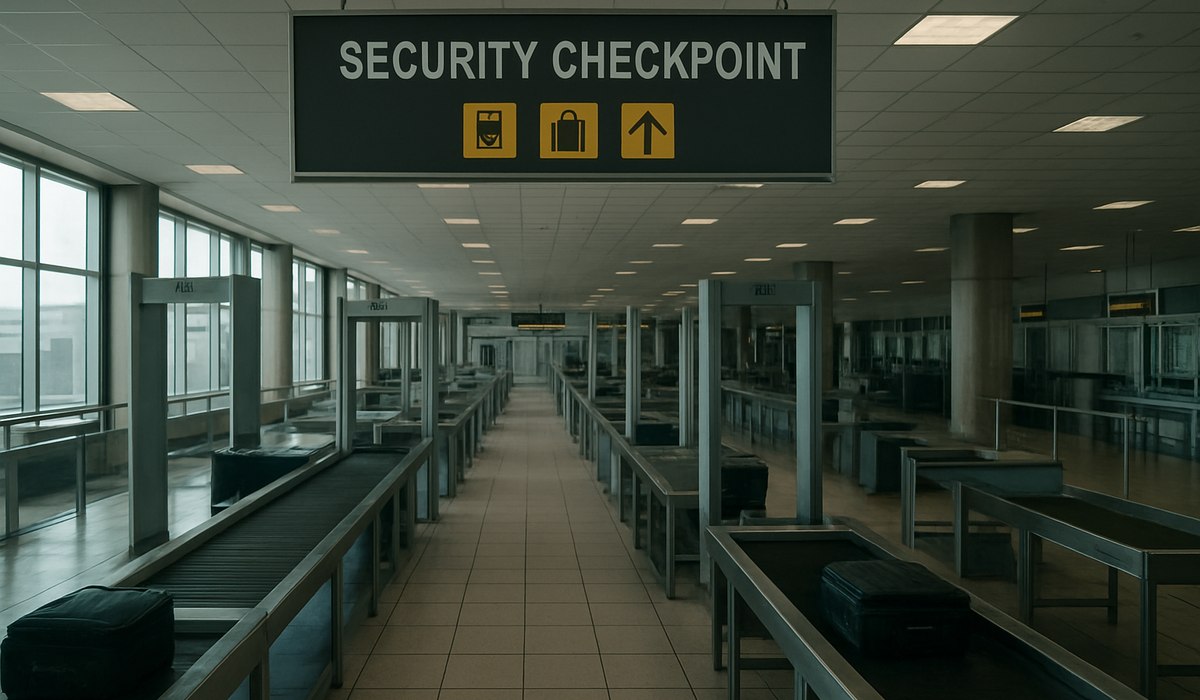
Image generated by AI
Ryanair Ghost Flight Exposes Vatry Airport Staffing Crisis
A Ryanair service to Marrakech departed from Vatry Airport in eastern France on April 14, 2026, with zero passengers aboard. The incident left 192 ticketed travelers stranded in the terminal after a private security contractor failed to staff screening checkpoints adequately. Multiple security personnel called in sick simultaneously, leaving no certified operators available for scanner equipment. Without functioning security lanes, boarding deadlines passed and the aircraft took off empty—a rare operational failure that exposed critical vulnerabilities in how European airports depend on outsourced personnel for critical infrastructure functions.
Passengers reported hours of confusion as departure time approached. Staff offered conflicting information about rebooking options and accommodation arrangements. Many travelers questioned whether they'd receive compensation for missed connections, hotel costs, and lost time. The Vatry incident became a rallying point for passenger advocacy groups demanding clearer accountability structures across European aviation.
How Outsourced Security Contractors Are Failing Europe's Airports
The reliance on third-party security contractors has transformed how European airports manage screening operations. These firms operate under tight profit margins, often leading to wage pressures and challenging working conditions. When staffing gaps emerge—whether from illness, sudden resignations, or scheduling errors—few backup systems exist to prevent operational collapse.
Industry observers note that economies of scale work against smaller regional airports. Vatry, serving eastern France, lacks the redundancy that major hub airports maintain. A single understaffed shift can cascade into canceled flights and stranded passengers. Larger carriers and airports have begun diversifying their contractor relationships, but many facilities across central and southern Europe still depend on single-provider arrangements.
The April 2026 incidents highlight how outsourced models prioritize cost reduction over resilience. Contract terms often include penalty clauses for missed flights but lack corresponding investments in contingency staffing. When security failures leave passengers stranded, responsibility becomes diffuse—shared ambiguously between airports, airlines, contractors, and national authorities.
EU Regulation 261: Why Passengers Fall Through Compensation Cracks
Passengers affected by the Vatry incident faced immediate uncertainty about financial remedies. Under EU Regulation 261/2004, airlines must compensate passengers for flight cancellations and long delays, typically €250 to €600 depending on flight distance. However, exemptions apply when disruption stems from extraordinary circumstances beyond airline control.
Security failures occupy a legal grey zone. Courts across Europe have interpreted security-related disruptions inconsistently. Some rulings classify them as extraordinary circumstances (exempting airlines from compensation), while others hold carriers responsible for maintaining contractual relationships with reliable security providers. This ambiguity leaves stranded passengers uncertain about their rights and remedies.
The April 2026 security failures across multiple European airports prompted passenger advocates to demand clarification from EU regulators. Legal experts argue that security contractor failures should not shield airlines from compensation obligations, since carriers select and oversee these relationships. Until legislative clarity emerges, passengers must document incidents carefully and pursue claims individually—a process requiring legal expertise many travelers lack.
New EU Entry/Exit System Fuels Border Control Bottlenecks
Beyond individual staffing failures, the rollout of the European Union's new Entry/Exit System on April 10, 2026, introduced systemic border control delays. This biometric scheme requires non-EU nationals to provide fingerprints and facial images at Schengen entry points. The system consolidates entry and exit records, enhancing security tracking but creating processing bottlenecks during implementation.
Airports across the EU reported queues stretching two to three hours at passport control during the system's first weeks. Officers unfamiliar with new procedures, combined with software glitches, slowed processing rates significantly. Passengers arriving well in advance missed outbound flights due to border delays rather than airline scheduling issues.
Portugal, Italy, Spain, and France temporarily adjusted procedures to prevent gridlock. Lisbon Airport relaxed biometric requirements during one busy April weekend, prioritizing passenger flow over data collection completeness. Industry analysts predict these bottlenecks will persist until the majority of frequent travelers complete initial biometric registration—a process expected to take months.
Stranded Passengers: Marseille, Pisa, Florence, and Beyond
The Vatry incident represented the most severe single failure, but smaller disruptions occurred across Europe throughout April 2026. Marseille Airport reported that an Air France service to Casablanca departed without 84 passengers after passport control queues prevented timely boarding. Social media accounts from travelers at Pisa and Florence documented similar delays linked to both security screening and border control procedures.
Regional airports in Italy, Spain, and southern France reported cumulative effects: understaffed security checkpoints combined with new biometric border procedures created compounding delays. Passengers described arriving three hours before flights, as recommended, only to miss departures due to unexpected queue lengths at passport control.
No comprehensive data yet quantifies total passengers affected across all European airports in April 2026, but industry estimates suggest several thousand experienced flight disruptions linked to security or border control failures. Some passengers faced overnight accommodation costs, missed connections, and financial losses when compensation eligibility remained unclear.
Critical Timeline and Data Table
| Date | Airport | Airline | Route | Passengers Affected | Primary Cause |
|---|---|---|---|---|---|
| April 10, 2026 | Multiple EU airports | Multiple | EU-wide | Unknown | EU Entry/Exit System rollout |
| April 14, 2026 | Vatry (France) | Ryanair | Vatry–Marrakech | 192 stranded | Security contractor staffing failure |
| April 12, 2026 | Marseille (France) | Air France | Marseille–Casablanca | 84 missed departure | Border control queues |
| April 15–20, 2026 | Lisbon (Portugal) | Multiple | EU routes | Hundreds delayed | Biometric entry/exit system delays |
| April 16–18, 2026 | Pisa & Florence (Italy) | Multiple | EU routes | Unknown | Combined security and border delays |
| April 20–22, 2026 | Multiple southern European hubs | Multiple | EU routes | Thousands of minutes delayed cumulatively | Ongoing Entry/Exit System friction |
What This Means for Travelers
Security failures leave European airport operations vulnerable to cascading disruptions, but passengers can take concrete steps to protect their interests.
1. Arrive earlier than standard recommendations. Security contractor failures and biometric border delays are unpredictable. Plan to arrive four hours before international flights from April 2026 onward, rather than the standard three hours.
2. Document everything. Photograph or record boarding pass details, gate closing times, and delay announcements. Obtain written confirmation from airlines regarding the reason for missed flights or boarding failures.
3. Request written compensation determinations. Airlines may deny claims citing extraordinary circumstances. Demand written explanations. If denied, file complaints with your national aviation authority and the EU's air passenger rights portal.
4. Understand your rights under EU 261. Visit the U.S. Department of Transportation website for comprehensive passenger rights guidance, even if your journey originates in Europe.
5. Contact advocacy organizations. Groups like IATA and regional passenger rights advocates provide free guidance on compensation claims when security or border failures affect your travel.
6. Monitor real-time flight status. Use FlightAware to track gate assignments, boarding progress, and departure status. Report discrepancies to your airline immediately.
7. Purchase travel insurance with disruption coverage. Until security infrastructure stabilizes, insurance protecting against airport-related delays offers financial protection.
Frequently Asked Questions
Q: If I'm stranded due to airport security failure, can I demand compensation from the airline?
A: Not automatically. Under EU Regulation 261,
Disclaimer
This article is for informational and educational purposes only. It does not constitute legal, financial, or professional advice. While we strive to provide accurate and up-to-date information, travel policies, regulations, and conditions change rapidly. Always verify information with official sources before making travel decisions. Nomad Lawyer makes no representations about the accuracy, reliability, completeness, or suitability of the information provided. Readers should consult qualified professionals for advice specific to their circumstances. The views expressed in this article are those of the author and do not necessarily reflect the views of Nomad Lawyer.
Preeti Gunjan
Contributor & Community Manager
A passionate traveller and community builder. Preeti helps grow the Nomad Lawyer community, fostering engagement and bringing the reader experience to life.
Learn more about our team →