
Security Failures Leave Hundreds Stranded Across European Airports in April 2026
Security failures leave hundreds of travelers stranded across European airports in April 2026, with a Ryanair flight departing empty from Vatry Airport and EU's new biometric system creating major gridlock at Schengen checkpoints.

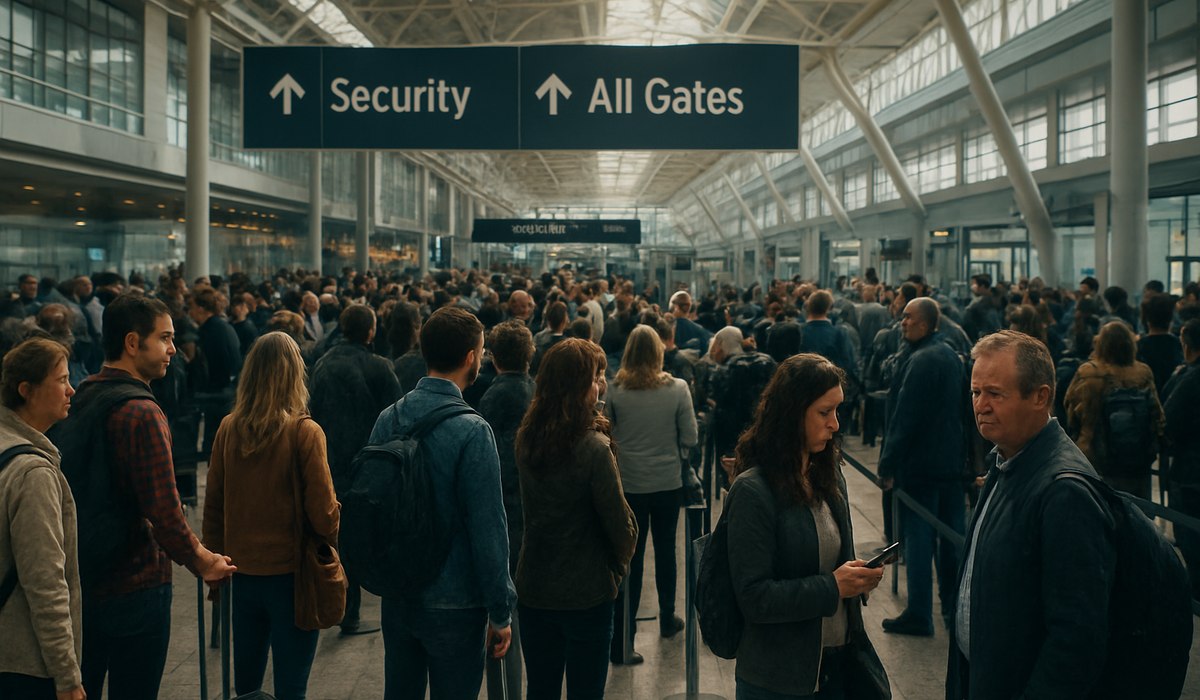
Image generated by AI
Hundreds of Travelers Face Major Disruptions
Hundreds of passengers were left stranded across European airports in April 2026 following a perfect storm of staffing shortages at security checkpoints and operational challenges tied to the European Union's newly implemented biometric border system. The incidents affected major hubs including France's Vatry Airport, Milan Linate, and airports throughout Spain and Italy. One of the most striking examples occurred when a Ryanair flight to Marrakech departed completely empty from Vatry on April 14, carrying only crew members while 192 ticketed passengers remained stuck in security queues. This confluence of events has intensified scrutiny on how European airports and airlines manage capacity during peak travel periods and system transitions.
Ryanair Flight Departs Empty After Security Staffing Breakdown at Vatry Airport
The April 14 incident at Vatry Airport represents one of the most dramatic examples of how security failures leave travelers without recourse. Passengers who had arrived well ahead of their scheduled departure were unable to clear security screening due to insufficient staff at checkpoints. Despite being processed through check-in and having boarding passes in hand, 192 travelers watched as their aircraft was prepared, boarded with crew only, and took off without them.
This event has reignited debate around passenger rights under European air travel regulations. Industry experts note that when operational shortcomings—rather than extraordinary circumstances—cause passengers to miss flights, travelers may be entitled to compensation. The incident has prompted questions about coordination between airlines and airport security providers, particularly regarding contingency planning when staffing falls below operational requirements. Ryanair later rebooked affected passengers on alternative flights, though the airline did not immediately issue compensation statements.
EU's New Biometric Border System Creates Schengen Gridlock
The rollout of the European Union's Entry/Exit System, which became fully operational across Schengen-area airports in April 2026, has created widespread bottlenecks at border control checkpoints. This biometric system captures fingerprints and facial images from non-EU travelers, replacing traditional passport stamping procedures. However, the transition has overwhelmed processing capacity at critical airports.
At Milan Linate Airport, more than 120 easyJet passengers heading to the United Kingdom missed flights between April 12 and 19 while waiting in border control queues. These delays occurred even after passengers had completed airline check-in and standard security screening. Spanish airports experienced similar gridlock, with multi-hour waits reported at passport control stations throughout the Iberian Peninsula during peak holiday travel periods.
Industry groups had warned ahead of Easter that insufficient staffing, physical space, and contingency planning posed risks of "systemic disruption." The transition period continues to challenge both border police and airport operators as they adapt to new equipment and procedures. Peak travel seasons have amplified these pressures, leaving passengers vulnerable to missed connections and stranded itineraries.
Passenger Rights and Compensation Under European Air Travel Regulations
Travelers affected by the April 2026 security failures have potential legal protections under EU Regulation 261/2004, which governs passenger rights in aviation. This regulation may entitle affected passengers to compensation when denied boarding occurs due to operational failures rather than extraordinary circumstances beyond an airline's control.
The European Court of Justice has examined whether widespread shortcomings in airport security processing can trigger compensation obligations. Recent case law suggests that when passengers arrive at airports with sufficient time before departure but miss flights due to inadequate checkpoint capacity, airlines and airport operators may face liability. The compensation amounts vary based on flight distance, ranging from €250 to €600 per passenger.
Travelers should document their arrival time, security queue experiences, and airline communications. Many passengers are pursuing claims through national enforcement bodies. Legal precedent continues to develop as courts balance airline operational responsibility against airport infrastructure challenges during system transitions.
What Airlines and Airports Must Do to Prevent Future Disruptions
Recovery from April 2026's disruptions requires coordinated action across multiple stakeholders. Airlines and airport operators must implement robust contingency planning that accounts for both staff shortages and technology system transitions. Pre-deployment testing of biometric border systems should include load testing during peak periods to identify capacity constraints before passengers are affected.
Staffing agreements between airports and security providers need flexibility mechanisms that allow rapid deployment of additional personnel during transitional periods. Real-time information sharing between border authorities, airlines, and airport operations centers can help route passengers efficiently. Investment in physical infrastructure—including additional queue space and processing lanes—remains essential as biometric systems become standard across Europe.
Airlines should establish clearer communication protocols informing passengers of delays at security and border control, along with updated departure estimates. Regular drills simulating high-volume biometric processing scenarios can improve operational readiness. Industry associations are advocating for phased rollouts of new systems that account for seasonal demand variations and adequate staff training periods.
Live Flight Tracking and Current Status Updates
Passengers tracking flights affected by April 2026 disruptions can monitor real-time aircraft movements through FlightAware, which provides updated departure and arrival information. Airlines typically notify passengers of delays via email and SMS using contact information provided at booking.
The Federal Aviation Administration (FAA) maintains information on transatlantic flight operations, while the U.S. Department of Transportation (US DOT) provides guidance on passenger rights for flights involving U.S. carriers. European passengers can contact their national aviation authority or the airline directly for compensation claim procedures.
| Airport | Date | Airline | Route | Passengers Affected | Cause |
|---|---|---|---|---|---|
| Vatry, France | April 14 | Ryanair | Marrakech | 192 | Security staffing shortage |
| Milan Linate, Italy | April 12-19 | easyJet | London | 120+ | EU biometric system delays |
| Barcelona, Spain | April 10-20 | Multiple | Schengen exits | 200+ | Border control gridlock |
| Madrid-Barajas, Spain | April 13-21 | Iberia, Vueling | EU routes | 150+ | Biometric processing bottleneck |
| Rome Fiumicino, Italy | April 15-18 | Alitalia, Ryanair | EU routes | 100+ | Combined security delays |
| Valencia, Spain | April 14-19 | easyJet | UK routes | 80+ | New Entry/Exit System transition |
What This Means for Travelers
The April 2026 disruptions underscore several critical actions travelers should take to protect themselves:
-
Arrive earlier than recommended during biometric system rollout periods, adding 45 minutes to standard arrival windows at affected airports.
-
Document all delays with timestamps, boarding passes, and communications from airlines and airport staff to support compensation claims.
-
Check airline communication channels for real-time updates on security and border control delays before heading to the airport.
-
Review travel insurance policies to confirm coverage for missed connections caused by airport security delays or system failures.
-
Monitor EU and national aviation authority announcements regarding staffing levels and system readiness at your departure airport.
-
Request written confirmation from airlines if you miss a flight due to airport checkpoint delays, establishing your airline's acknowledgment of the event.
Frequently Asked Questions
Q: Am I entitled to compensation if I miss a flight due to airport security delays?
A: Under EU Regulation 261/2004, you may qualify for compensation (€250-€600) if you arrive at the airport with sufficient time before departure but miss your flight due to operational failures at security or border control. Courts have increasingly ruled that widespread checkpoint inadequacy constitutes an airline or airport operational responsibility rather than an extraordinary circumstance. Document your arrival time and keep all airport
Disclaimer
This article is for informational and educational purposes only. It does not constitute legal, financial, or professional advice. While we strive to provide accurate and up-to-date information, travel policies, regulations, and conditions change rapidly. Always verify information with official sources before making travel decisions. Nomad Lawyer makes no representations about the accuracy, reliability, completeness, or suitability of the information provided. Readers should consult qualified professionals for advice specific to their circumstances. The views expressed in this article are those of the author and do not necessarily reflect the views of Nomad Lawyer.
Kunal K Choudhary
Co-Founder & Contributor
A passionate traveller and tech enthusiast. Kunal contributes to the vision and growth of Nomad Lawyer, bringing fresh perspectives and driving the community forward.
Learn more about our team →