
Saudi Arabia Disrupts Global Tourism Markets With Massive Coastal and Urban Expansion
Saudi Arabia is currently generating approximately 15% of all worldwide tourism growth, triggering a systemic realignment of long-haul aviation routes and lux

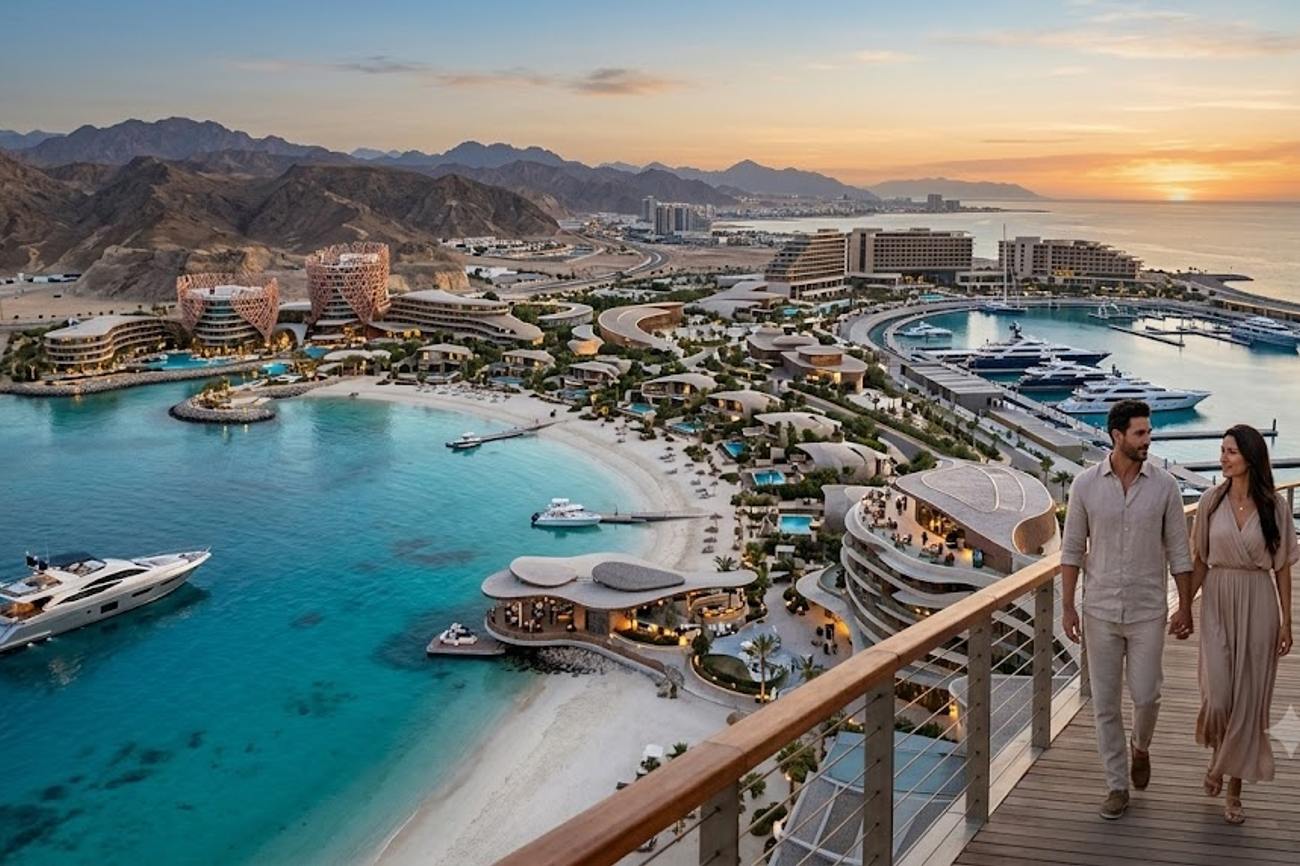
Image generated by AI
RIYADH —
Saudi Arabia is executing a rapid strategic pivot from a traditional religious pilgrimage site to a global leisure powerhouse, leveraging massive infrastructure investments to capture a significant share of the international travel market. By developing unrivaled coastal resorts and futuristic city expansions, the Kingdom is fundamentally altering how global tourists allocate their spending and how airlines distribute their long-haul capacity.
A Statistical Surge in International Arrivals
The trajectory for international leisure visitors entering Saudi Arabia is currently outpacing global trends by a significant margin. Data indicates that projected overnight arrivals in the Kingdom are expected to grow more than three times faster than the 30% global average growth rate anticipated over the same multi-year period. This aggressive expansion is mirrored in regional trends, with overall growth across the Middle East projected to reach 64%.
This momentum is not a sudden spike but the result of a sustained expansion period between 2019 and 2025. During this window, foreign visitor arrivals to Saudi Arabia surged by 67%. To put this in perspective, general travel growth across the wider Middle East stood at 20%, while worldwide tourism grew by only 5%. Most notably, Saudi Arabia was responsible for approximately 75% of all international travel growth recorded across the entire Middle East during that six-year interval.
Shifting Global Expenditure and Hotel Infrastructure
The structural realignment of the Saudi travel sector is redefining the economics of global aviation and hospitality. Since 2019, the Kingdom has accounted for roughly 15% of all global travel growth. This shift is most evident in the composition of tourist spending; overseas holiday expenditure, which represented a mere 9% of total foreign tourist spending in 2019, climbed to 28% in 2025. Projections suggest this figure will reach 31% by 2030.
This evolution is driving a massive influx of capital into the hotel sector, particularly in major metropolitan hubs. In Riyadh, revenue per available room (RevPAR) is projected to increase by 18.6% in 2027, fueled by a strategic blend of corporate and leisure traffic. Simultaneously, Jeddah is expanding its capacity to accommodate both seasonal pilgrims and new coastal vacationers, with over 2,300 new hotel rooms scheduled for addition in 2027 alone.
The global travel trade is reacting quickly to these changes. In China, for instance, over 50% of surveyed foreign travel agents now actively market tours to Saudi Arabia. Additionally, 32% of global agents now categorize the destination as a premier emerging ecosystem for outdoor adventure, heritage exploration, and luxury stays.
Realignment of Long-Haul Aviation and Capacity
The surge in arrival metrics is forcing legacy markets in North America, Southeast Asia, and Europe to recalibrate their competitive strategies. Because Saudi Arabia is capturing 15% of worldwide tourism growth, international carriers are actively shifting long-haul capacity toward Jeddah and Riyadh.
This shift is creating a new network of direct flight connectivity that bypasses traditional stopover hubs. This permanent realignment of worldwide travel networks is redirecting both passenger volume and capital investment toward these new commercial centers, reducing travel time for global tourists entering the Middle East.
Global Industry Impact and Statistical Indicators
The current data suggests a permanent structural evolution in how tourists move globally. International visitors now account for nearly half of all overnight stays within Saudi Arabia. This has attracted significant interest from infrastructure funds and major hotel operators, leading to the development of direct routes between Riyadh and key population centers across the Americas, Europe, and Asia.
For the end-user, these systemic changes result in tangible benefits:
- Streamlined Access: Implementation of faster electronic visa processing.
- Market Competition: More competitive international airfares due to increased capacity.
- Product Diversity: A broader range of travel products, from the ancient historical sites of AlUla to luxury coral reef resorts.
Regional Spending Transformation and Market Reach
The acceleration of leisure travel is closely tied to aggressive commercial outreach in key source markets. Strategic research indicates that 52% of travel trade professionals in China are now marketing structured holiday packages to the Kingdom, signaling a deep penetration into the Asian luxury travel market.
| Metric | 2019 Value | 2025 Value | 2030 Projection |
|---|---|---|---|
| Holiday Spending (% of Total) | 9% | 28% | 31% |
| International Arrival Growth (KSA) | Baseline | 67% (vs 2019) | Continuing Trend |
| Global Tourism Growth Contribution | Baseline | ~15% | Sustained |
| Middle East Growth Contribution | Baseline | ~75% | Sustained |
Why This Matters: The Traveler's Perspective
From a logistical and experiential standpoint, the transformation of Saudi Arabia creates a "new frontier" effect for the global traveler. For decades, the Middle East's tourism was dominated by a few established hubs; the rise of the Kingdom introduces a massive amount of new "inventory" into the global luxury market.
For the high-net-worth traveler, this means a sudden increase in ultra-luxury options that compete directly with the Maldives or the French Riviera, but with the added draw of untapped heritage sites. From a legal and administrative standpoint, the shift toward streamlined e-visas removes the historical friction that once deterred casual tourists. Essentially, Saudi Arabia is not just adding hotels; it is rewriting the accessibility rules of the Arabian Peninsula, making it a viable primary destination rather than a secondary stopover.
Related Travel Guides
Disclaimer
This article is for informational and educational purposes only. It does not constitute legal, financial, or professional advice. While we strive to provide accurate and up-to-date information, travel policies, regulations, and conditions change rapidly. Always verify information with official sources before making travel decisions. Nomad Lawyer makes no representations about the accuracy, reliability, completeness, or suitability of the information provided. Readers should consult qualified professionals for advice specific to their circumstances. The views expressed in this article are those of the author and do not necessarily reflect the views of Nomad Lawyer.
Kunal K Choudhary
Co-Founder & Contributor
A passionate traveller and tech enthusiast. Kunal contributes to the vision and growth of Nomad Lawyer, bringing fresh perspectives and driving the community forward.
Learn more about our team →