
Naples Shifts Toward Car-Free Tourism to Preserve Historic Urban Character
Discover the best ways to explore Naples without a car. From "Stations of Art" metros to historic pedamentine stairways and regional rail to Pompeii.

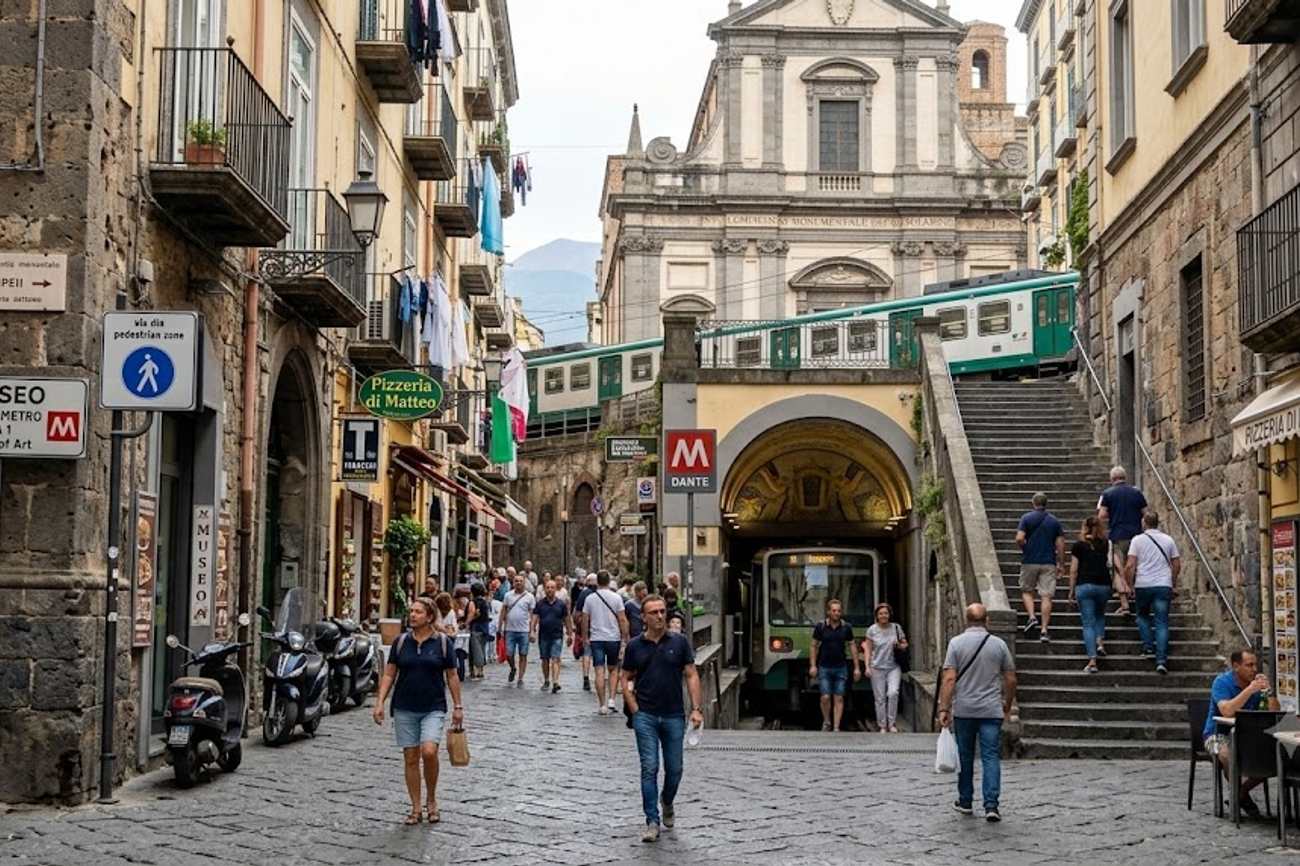
Image generated by AI
Prioritizing Pedestrianism in a 2,500-Year-Old City
Naples is fundamentally designed for pedestrians. With a history spanning over two and a half millennia, the city's street layout consists of narrow corridors and uneven paving that make conventional driving difficult and often stressful for visitors.
Walking is the most effective way to engage with the city's architecture and street life. By removing the barrier of a vehicle, travelers can access central attractions more fluidly and experience the authentic pace of Neapolitan neighborhoods.
The Pedamentine: Historic Vertical Arteries
A unique feature of the city's pedestrian network is the pedamentine—a system of ancient stairways connecting the lower city to the elevated districts.
- Pedamentina San Martino: This 700-year-old route consists of 414 steps, linking the San Martino area directly to the historic center.
- Vomero to Chiaia: Travelers can utilize the Petraio and Calata San Francesco routes to navigate between these two districts.
To manage the physical demand of these climbs, a common local strategy is to explore the city via downhill walking and utilize public transport for the return ascent.
Integrated Transit: Funiculars and "Stations of Art"
Because of its steep geography, Naples relies on a sophisticated system of vertical and underground transport that doubles as a cultural attraction.
Funicular Railways
For over a century, Naples' funiculars have provided essential links between the hilltop neighborhoods and the city center. Beyond their utility, these railways are architectural landmarks, featuring Liberty-style stations that contribute to the city's aesthetic identity.
The Metro as a Gallery
The Naples metro system transcends basic transportation through its "Stations of Art" initiative, where infrastructure meets fine art.
- Toledo Station: Renowned for its immersive blue-toned design evoking the Mediterranean Sea.
- Chiaia Station: Features designs reflecting the classical heritage of the region.
The network is served by two primary lines, L1 and L6, providing efficient movement across the urban core. To avoid crowds and maximize the visual impact of the architecture, visiting during daylight hours and outside peak commuting times is recommended.
Regional Connectivity: Extending the Journey Beyond the City
Naples serves as the primary transit hub for the Campania region, allowing travelers to reach world-class archaeological sites and coastal retreats without a rental car.
Rail Access to Ancient Sites
The Circumvesuviana railway, departing from Napoli Centrale, is the vital link for archaeological tourism. This line provides direct access to:
- Pompeii and Herculaneum: Roman cities preserved by the eruption of Mount Vesuvius.
- Oplontis and Sorrento: Key gateways to the coast and ancient villas.
For those extending their trip to the Amalfi Coast, the SITA Sud bus operates from Sorrento, completing a seamless rail-and-bus transit chain.
Maritime Gateways
The Bay of Naples is navigated via a robust ferry network. These services provide direct maritime connections to:
- Capri, Ischia, and Procida: The primary islands of the region.
- Sorrento: Offering an alternative scenic route to the coastal mainland.
Naples Transport Summary
| Transport Option | Primary Use Case | Key Advantage |
|---|---|---|
| Walking | Historic center & landmarks | Direct access to hidden alleys |
| Pedamentine | Scenic exploration | Panoramic views via historic stairs |
| Funicular | Hilltop districts | Rapid vertical transit |
| Metro | City-wide movement | Artistic stations (L1 & L6) |
| Circumvesuviana | Pompeii, Herculaneum, Sorrento | Essential regional rail link |
| Ferry | Capri, Ischia, Procida | Direct Bay of Naples access |
| Alibus | Airport transfers | Link to main station and port |
Key Takeaways
- Avoid Cars: Narrow streets and unpredictable traffic make vehicles impractical in the city center.
- Embrace the Vertical: Use funiculars for ascent and the pedamentine stairways for scenic descents.
- Transit as Art: The Metro (specifically Toledo station) is a destination in itself.
- Regional Hub: Use Napoli Centrale and the port as bases for car-free trips to Pompeii and the Amalfi Coast.
FAQ
What is the best way to get from Naples airport to the city? The Alibus provides a direct connection between the airport, the main railway station, and the port.
Can I visit Pompeii without a car? Yes, the Circumvesuviana railway from Napoli Centrale is the standard method for reaching Pompeii and Herculaneum.
Which metro station is the most famous? Toledo station is widely considered the most visually striking due to its sea-inspired blue architecture.
Related Travel Guides
Disclaimer
This article is for informational and educational purposes only. It does not constitute legal, financial, or professional advice. While we strive to provide accurate and up-to-date information, travel policies, regulations, and conditions change rapidly. Always verify information with official sources before making travel decisions. Nomad Lawyer makes no representations about the accuracy, reliability, completeness, or suitability of the information provided. Readers should consult qualified professionals for advice specific to their circumstances. The views expressed in this article are those of the author and do not necessarily reflect the views of Nomad Lawyer.
Naina Thakur
Contributor & Travel Specialist
Travel enthusiast and legal writer covering visa regulations, responsible tourism, and cultural journeys across global destinations.
Learn more about our team →