
Northern Lights Surge Drives Massive Tourism Boom Across 20 US States
Aurora Borealis activity is sparking a tourism surge across 20 US states, with Montana, Washington, and Alaska seeing spikes in hotel and local spending.

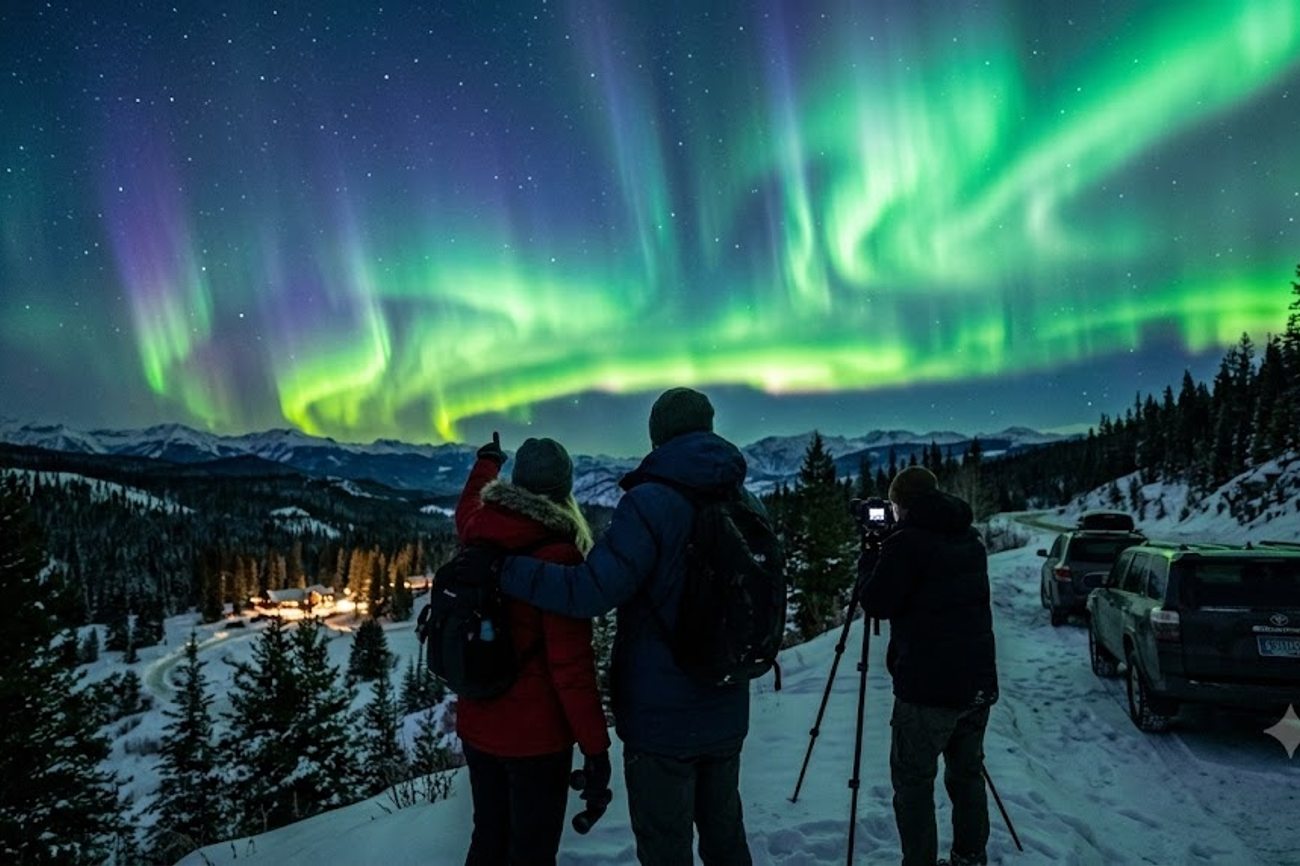
Image generated by AI
[BILLINGS, MT] — A rare surge in geomagnetic activity is triggering a massive tourism influx across the United States in 2026, as the Northern Lights become visible in regions far beyond the Arctic Circle. This celestial phenomenon is currently driving a powerful economic boom for skywatching travelers, with Montana and Washington emerging as primary hubs for tourists seeking the aurora borealis.
Industry data indicates that the aurora spectacle has the potential to be visible in up to 20 different US states. This expanded visibility is shifting traditional travel patterns, moving tourists away from urban centers and into remote, dark-sky regions. The phenomenon occurs when solar charged particles collide with Earth’s atmosphere, producing vivid displays of red, pink, purple, and green light. While the frequency of these sightings depends on fluctuating solar activity and cloud cover, the trend is cementing astronomy and nature-based travel as high-value sectors of the American tourism economy.
For local businesses, the aurora is no longer just a scientific curiosity; it is a primary travel motivator. The influx of "aurora hunters" is directly correlating with increased hotel occupancy rates, higher restaurant expenditures, and a rise in regional road-trip bookings.
Montana Emerges as Premier Dark-Sky Hub
Montana is currently positioned as one of the most significant beneficiaries of this tourism shift. The state's unique geography—characterized by low population density, vast open landscapes, and minimal light pollution—provides the ideal environment for high-visibility skywatching. Travelers are increasingly flocking to the state's rural communities, national parks, and mountain ranges to secure an unobstructed view of the atmosphere.
This surge in interest is augmenting Montana's existing outdoor recreation economy. Reports show that visitors are rarely traveling solely for the lights; instead, they are integrating aurora viewing into broader itineraries. This "multi-experience" travel approach includes visits to Glacier National Park, wildlife tracking, mountain photography, and hiking expeditions.
The economic ripple effect is evident across several key sectors of the Montana tourism industry:
| Montana Tourism Sector | Northern Lights Impact |
|---|---|
| Hotels and lodges | Surge in overnight bookings from aurora hunters |
| Local restaurants | Marked increase in visitor spending |
| Outdoor companies | Growth in demand for guided night experiences |
| Rental vehicles | Increase in regional and rural road travel |
| Small communities | New streams of tourism income for remote towns |
Washington State Diversifies Beyond Urban Centers
Washington is leveraging the aurora boom to push tourism beyond the confines of Seattle and other major metropolitan areas. By promoting the Pacific Northwest’s rugged landscapes and mountain environments, the state is successfully attracting visitors to its northern and eastern regions.
This shift is helping to distribute tourism wealth more equitably across the state. By drawing travelers into rural mountain regions, Washington is seeing a spike in demand for accommodations and local services in areas that typically see lower foot traffic. This trend aligns with a broader move toward nature-based travel, where the Northern Lights serve as a catalyst for exploring national forests and scenic vistas.
Alaska Maintains Dominance as the Global Standard
Despite the expansion of visibility into the lower 48 states, Alaska remains the definitive destination for aurora tourism due to its proximity to the Arctic. The state has spent decades building a sophisticated infrastructure for skywatching, making it the gold standard for international travelers.
Alaska's economy continues to be bolstered by specialized aurora services, including:
- Dedicated wilderness viewing tours
- High-end remote lodge stays
- Professional astrophotography workshops
- Comprehensive winter adventure packages
Industry observers suggest that the increased aurora activity across the rest of the US in 2026 may actually act as a "gateway" for travelers. Many who first witness the lights in states like Montana or Washington are now extending their journeys to Alaska to experience the phenomenon in its most potent and frequent form.
Minnesota and the Great Lakes Region Capitalize on Night Skies
Minnesota is utilizing its vast network of lakes and forests to attract the skywatching crowd. By marketing its remote areas as prime viewing locations, the state is encouraging longer visitor stays, which provides a more sustainable economic boost than short-term day trips. This is particularly beneficial for cabin rentals and outdoor equipment retailers.
Similarly, Michigan and Wisconsin are transforming their lake regions into aurora hotspots. Both states are seeing an increase in "shoulder season" travel—visits that occur during traditionally quiet periods between the peak summer and winter rushes.
| Destination | Tourism Opportunity |
|---|---|
| Michigan | Lake-based aurora viewing and outdoor escapes |
| Wisconsin | Rural stays and dark-sky experiences |
| North Dakota | Wide landscapes and easy horizon viewing |
| South Dakota | Nature tourism combined with night-sky experiences |
Northeastern States and Potential Southern Expansion
In the Northeast, Maine, Vermont, and New Hampshire are integrating aurora viewing into their existing mountain and forest tourism models. The addition of night-sky photography and winter travel packages is providing a new incentive for tourists to visit rural lodges and local eateries in these states.
Furthermore, there is a growing possibility of southern expansion. If geomagnetic storms intensify, the aurora could become visible in states such as Oregon, Wyoming, Nebraska, Iowa, Illinois, Indiana, Ohio, Pennsylvania, and New York. While visibility in these regions is not guaranteed and depends entirely on the strength of solar storms, the mere possibility is driving significant travel interest. The rarity of the event means many travelers are willing to drive hundreds of miles on short notice for a chance to see the sky glow.
Why This Matters (Information Gain & Experience)
For the modern traveler, this shift represents a transition from "passive" sightseeing to "event-driven" exploration. Unlike visiting a monument or a museum, aurora tourism is unpredictable, which creates a high-stakes, high-reward travel experience. This unpredictability actually increases the economic value for local hosts; when a solar storm is predicted, rural hotels often see 100% occupancy within hours.
From a logistical standpoint, this creates a massive opportunity for "astrotourism" infrastructure. We are seeing a move toward "Dark Sky Certified" accommodations and the rise of specialized guides who combine meteorological data with local geography. For the visitor, this means that the value of a trip is no longer just about the destination, but about the timing and the environment. The "hunt" for the lights encourages exploration of the "hidden" US—the small towns and remote forests that are typically bypassed on the way to major landmarks.
Related Travel Guides
Disclaimer
This article is for informational and educational purposes only. It does not constitute legal, financial, or professional advice. While we strive to provide accurate and up-to-date information, travel policies, regulations, and conditions change rapidly. Always verify information with official sources before making travel decisions. Nomad Lawyer makes no representations about the accuracy, reliability, completeness, or suitability of the information provided. Readers should consult qualified professionals for advice specific to their circumstances. The views expressed in this article are those of the author and do not necessarily reflect the views of Nomad Lawyer.
Kunal K Choudhary
Co-Founder & Contributor
A passionate traveller and tech enthusiast. Kunal contributes to the vision and growth of Nomad Lawyer, bringing fresh perspectives and driving the community forward.
Learn more about our team →