
Breaking Airline News: Severe Travel Chaos Strikes Sacramento International Airport as Southwest and American Suffer Sudden Flight Cancellations
Breaking airline news: Amidst a terrifying era of sudden operational failures, Northern California's vital aviation gateway completely collapses under severe flight disruptions, igniting massive regional travel chaos.

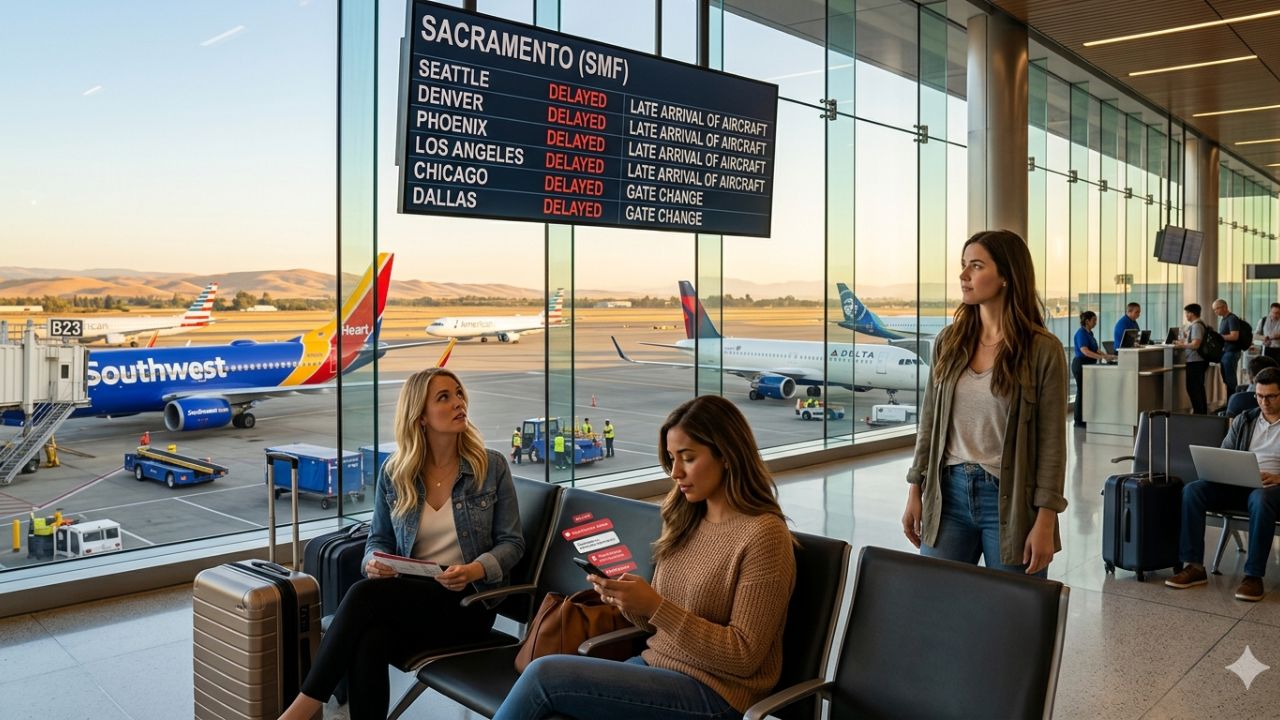
Image representing the intense strategic battle as global aviation leaders desperately attempt to contain severe flight cancellations and massive travel chaos across the highly congested Sacramento airspace.
Breaking Airline News: Severe Travel Chaos Strikes Sacramento International Airport as Southwest and American Suffer Sudden Flight Cancellations
As paralyzing airport disruptions, heavily congested national airspace corridors, and massive waves of passenger congestion violently sweep through the United States aviation network, the absolute primary gateway for Northern California has buckled under severe operational pressure. In a devastating blow to West Coast connectivity, a catastrophic cascade of exactly 3 outright flight cancellations and a highly disruptive 54 severe delays aggressively crippled operations across Sacramento International Airport (SMF), violently plunging thousands of domestic travelers into an inescapable web of severe travel chaos.
In a harrowing display of modern aviation fragility, a seemingly routine day of intense regional scheduling rapidly devolved into a high-stress survival scenario for thousands of desperate travelers passing through California's capital. Operating as a critical strategic alternative to the massive Bay Area mega-hubs, major national flagship carriers and massive low-cost operators including Southwest Airlines, American Airlines, Delta Air Lines, United Airlines, and Alaska Airlines suffered sudden network failures. The volume of flight cancellations and severe delays stemming directly from Sacramento reflects the terrifying peak travel pressure currently suffocating the broader national network. This logistical collapse instantly severed critical travel lifelines connecting California to massive strategic destinations like Seattle, Denver, Phoenix, Los Angeles, Chicago, and Dallas, leaving furious passengers trapped in an environment completely devoid of immediate rebooking options.
Expanded Overview: The Massive Scale of the Contagion
The terrifying crisis currently gripping the Sacramento transit network brutally exposes the highly interconnected nature of modern air travel. Managed by the Sacramento County Department of Airports, the facility handles millions of passengers annually and relies entirely on highly synchronized aircraft rotations, massive crew scheduling matrices, and unrestricted gate availability. When these highly sensitive factors intersect and abruptly fail—aggravated by intense traffic management measures implemented by the Federal Aviation Administration (FAA)—the terrifying ripple effects instantly devastate connecting flights. Transportation analysts explicitly warn that even when local weather remains perfectly clear, disruptions occurring hundreds of miles away frequently generate massive downstream effects, actively injecting severe logistical friction into the Sacramento system and causing incredibly persistent delays that slow terminal operations to an absolute crawl.
Section-Wise Breakdown: The Operational Collapse
The Sacramento Epicenter
The incident aggressively centered around the sudden collapse of operations at Sacramento International Airport. The vital Northern California terminal suffered exactly 3 outright flight cancellations. However, it was the staggering 54 flight delays that completely destroyed the airport's efficiency. Because SMF operates as a high-frequency turnaround point for massive fleets belonging to Southwest Airlines and others, the sheer volume of delayed aircraft violently crippled the tightly scheduled transfer system. The inability to seamlessly route passengers completely paralyzed vital short-haul connections and transcontinental routes bridging the region with the rest of the country.
The Nationwide Contagion
The terrifying contagion violently spread outward, actively paralyzing incoming and outgoing routes connected to the California hub. Heavyweight carriers including Southwest Airlines, American Airlines, Delta Air Lines, United Airlines, and Alaska Airlines faced intense operational strain. Massive logistical bottlenecks completely crippled essential, high-frequency routes heading to major domestic centers including Seattle, Denver, Phoenix, Los Angeles, Chicago, and Dallas. For passengers relying on these vital corridors, the sudden collapse of SMF meant that their entire nationwide itinerary was effectively choked off.
Flight Details & Aviation Defense Matrix
To fully comprehend the massive logistical and strategic fallout of this hub collapse, corporate travel managers must review the exact disruption metrics currently paralyzing the Northern California network. The following matrix provides a granular breakdown of the specific operational failures driving the crisis.
| Operational Hub | Cancelled Flights | Delayed Flights |
|---|---|---|
| Sacramento International (SMF) | 3 | 54 |
Passenger Impact: Surviving the Terminal Nightmare
For the thousands of passengers physically trapped inside the heavily congested Sacramento terminals, the human cost of this operational emergency is absolutely terrifying. The brutal reality of enduring a sudden flight cancellation or a multi-hour delay inflicts intense psychological stress and entirely destroys meticulously planned domestic itineraries. Instead of reaching their final destinations or critical business meetings, travelers were violently stranded. The disruption caused immediate friction, resulting in missed luxury hotel bookings, abandoned ground transportation arrangements, and entirely ruined, high-stakes conventions and family reunions.
Survival Guide for Stranded Travelers
Travelers desperately navigating this chaos must immediately execute the following survival protocols:
- Stay Updated: Aggressively monitor your email, phone, and the airline’s app for rebooking confirmation or further emergency announcements directly from the FAA.
- Stay Calm and Check for Updates: Visit official passenger information systems at Sacramento International for real-time updates regarding departures, baggage services, and security wait times to avoid terrifying terminal rumors.
- Contact the Airline Digitally: Reach out to the airline’s online chat system or call center to completely bypass the massive, suffocating queues forming at the physical service desks.
- Know Your Rights: Familiarize yourself with the Department of Transportation's passenger rights dashboard. You are actively entitled to specific passenger protections, rerouting options, and potential compensation depending on whether the delay was caused by airline operations or uncontrollable airspace congestion.
- Consider Alternative Gateways: Demand the absolutely next available flight. If the airline refuses, aggressively consider securing ground transport to nearby Bay Area hubs like San Francisco International (SFO) or Oakland International (OAK) to completely escape the paralyzed Sacramento airspace.
Industry Analysis: The Fragility of the National Airspace
From a strategic aviation perspective, the travel turmoil currently decimating the network highlights the terrifying vulnerability of regional airports to nationwide gridlock. Major airport delays at Sacramento rarely stem from a single isolated incident; they are the violent result of interconnected failures involving FAA traffic flow management initiatives, departure controls, severe weather systems in other states, and intense airspace congestion. When the national network falters, both legacy carriers like American Airlines and massive low-cost operators like Southwest instantly suffer the downstream effects. This incident proves that even highly optimized regional infrastructure operating in perfect local weather can actively collapse, heavily threatening the absolute survival of the local travel economy.
Conclusion: A Strategic Retreat to Ensure Aviation Survival
As the situation remains highly fluid and extremely volatile during periods of strong passenger demand, the sudden collapse of Sacramento's air travel network represents a massive warning to regional travelers. The 3 outright cancellations and 54 severe delays prove that domestic flight schedules remain terrifyingly fragile. Corporate travel buyers, tourists, and everyday passengers attempting to navigate this highly unstable era of airport disruptions must maintain extreme flexibility. To survive this travel chaos, flyers must heavily prioritize real-time updates over published schedules, acting aggressively to secure alternative travel arrangements before available inventory vanishes entirely.
Key Takeaways
- Regional Hub Collapse: Sacramento International Airport (SMF) violently buckled, suffering exactly 3 flight cancellations and 54 severe delays.
- Major Carrier Gridlock: Massive domestic operators including Southwest Airlines, American Airlines, Delta Air Lines, United Airlines, and Alaska Airlines were heavily impacted by the operational collapse.
- Nationwide Severance: Massive logistical bottlenecks completely paralyzed essential flights heading from California to Seattle, Denver, Phoenix, Los Angeles, Chicago, and Dallas.
- FAA Intervention and Downstream Effects: The delays were heavily influenced by interconnected failures across the National Airspace System, causing severe downstream effects at SMF despite clear local weather.
- Traveler Advisory: Passengers must aggressively monitor real-time updates via official FAA and airline apps to avoid massive queues and proactively demand alternative routings immediately upon cancellation.
Related Travel Guides
Disclaimer
This article is for informational and educational purposes only. It does not constitute legal, financial, or professional advice. While we strive to provide accurate and up-to-date information, travel policies, regulations, and conditions change rapidly. Always verify information with official sources before making travel decisions. Nomad Lawyer makes no representations about the accuracy, reliability, completeness, or suitability of the information provided. Readers should consult qualified professionals for advice specific to their circumstances. The views expressed in this article are those of the author and do not necessarily reflect the views of Nomad Lawyer.
Kunal K Choudhary
Co-Founder & Contributor
A passionate traveller and tech enthusiast. Kunal contributes to the vision and growth of Nomad Lawyer, bringing fresh perspectives and driving the community forward.
Learn more about our team →