
Rail Services Radio System Failure Paralyzes Southern England Network May 2026
A critical GSM-R radio communication system failure crippled southern England's rail network on May 7, 2026, triggering widespread cancellations and 90-minute delays across London's busiest terminals during morning commute hours.

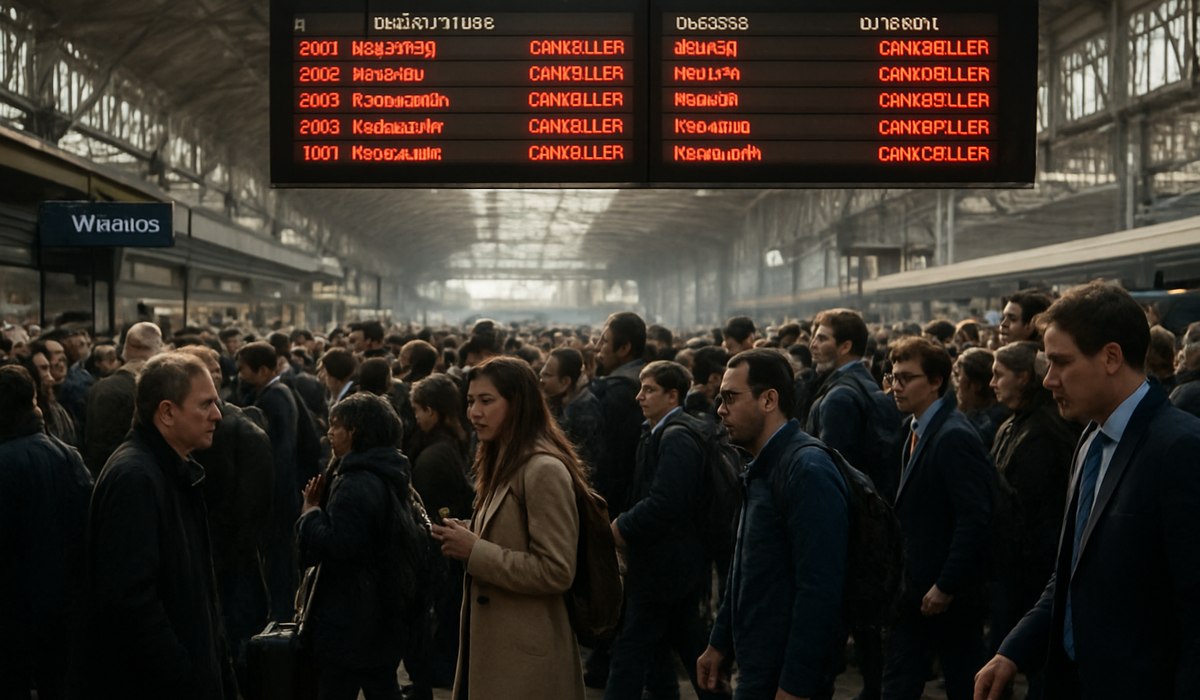
Image generated by AI
GSM-R Radio Communication System Failure Halts Major Southern Routes
A critical failure in rail services radio infrastructure left thousands of commuters stranded across southern England on May 7, 2026. The Global System for Mobile Communications Railway (GSM-R)—a dedicated digital radio network enabling secure communication between train drivers and signallers—suffered a widespread outage during peak morning travel hours. This system failure forced railway operators to halt trains on some of Britain's busiest corridors, including the Wessex route anchored by London Waterloo. Without reliable radio communication, train movements cannot proceed safely. The technical issue was identified and contained by late morning, but residual disruption persisted throughout the day, affecting commuter connections and regional services stretching toward the south coast and southwest England.
The incident underscores the critical role of rail services radio systems in modern rail operations. When the GSM-R network fails, operators must default to conservative safety protocols, effectively reducing train frequencies and capacity to near-zero until communication is restored. This rail services radio outage marked the second major national disruption in less than two years, prompting fresh calls for enhanced network redundancy and faster recovery procedures across the UK rail industry.
London Waterloo and Key Terminals Face Severe Congestion
London Waterloo station, one of Europe's busiest rail hubs, experienced severe congestion as departure boards filled with delayed and cancelled services. Trains bound for Surrey, Hampshire, Dorset, and intermediate stations were held or cancelled as the rail services radio failure prevented safe train movement. The morning peak—typically the busiest period for London-bound commuters—turned into chaos, with packed concourses and limited real-time information as staff worked to manage crowding safely.
Passengers reported extended waits, last-minute platform changes, and trains terminating short of their scheduled destinations. Alternative routes quickly became overwhelmed as travelers attempted to divert around affected network sections. During the height of the disruption, journey times stretched beyond 90 minutes for typical commutes, and many passengers abandoned rail in favor of road transport or flexible work arrangements. Operators activated ticket acceptance arrangements with competing train companies where possible, but capacity constraints meant these alternatives quickly filled. The rail services radio failure created a cascading effect, with knock-on delays extending into evening services long after the core technical issue was resolved.
Timeline: From Fault Detection to Service Recovery
The GSM-R radio communication system failure emerged during the morning peak around 06:30 UTC on May 7, 2026. Initial National Rail incident reports classified the situation as a major disruption affecting large portions of southern England. Train operating companies immediately suspended services on affected lines as a safety precaution, unable to guarantee secure driver-signaller communication. By 07:15 UTC, departure boards at major London terminals showed widespread cancellations. Network Rail engineers and GSM-R system contractors worked to isolate the fault and restore service integrity.
Technical resolution occurred by approximately 11:30 UTC, according to industry updates. However, the recovery phase proved lengthy—restoring trains and crews to planned schedules after a major rail services radio incident typically requires several additional hours. Operators reported significant knock-on delays through the afternoon and early evening as services gradually resumed normal patterns. Some evening services remained cancelled due to crew and rolling stock unavailability. The incident timeline demonstrated both the speed at which modern rail communication failures can spread and the complexity of recovering operations at scale.
Impact on Commuters and Business Continuity
The May 7 rail services radio failure struck at a particularly disruptive moment—Thursday morning, when commuter volumes peak and business meetings are scheduled. Thousands of workers failed to reach offices, client sites, and educational institutions across London and southern England. Many passengers posted on social media describing frustration with limited real-time information and crowded alternative transport options. For businesses relying on rail commuter workforces, unplanned absences and reduced productivity rippled through the day.
School run disruptions affected families across the region, forcing parents to arrange alternative childcare and transportation. Regional rail passengers connecting to London experienced secondary delays as cascading effects spread through the network. The incident highlighted vulnerabilities in Britain's rail infrastructure—specifically, the single point of failure represented by the GSM-R communication system. Industry analysts noted that this rail services radio outage, combined with previous signalling faults and overhead line issues, raises questions about investment in network resilience and backup systems. For nomadic workers and business travelers, such disruptions reinforce the importance of flexible itineraries and contingency planning when relying on rail transport.
Understanding GSM-R: Why Rail Services Radio System Failure Is So Disruptive
GSM-R forms the technical backbone of voice and data communication on much of Britain's national rail network. This dedicated railway adaptation of the standard GSM mobile system provides secure, continuous channels for drivers, signallers, and control centers to exchange safety-critical information. The rail services radio system supports emergency calls, movement authorities, speed restrictions, and protocols allowing trains to run closely together safely. When GSM-R fails, affected network sections cannot operate at normal frequencies—signal aspects cannot be securely communicated, and train authorities cannot proceed.
Operators default to degraded operating modes when rail services radio communication is unavailable, significantly limiting or halting train movements to prevent safety risks. This conservative approach protects passenger and staff safety but eliminates capacity and punctuality. The December 2024 GSM-R failure demonstrated that nationwide outages are possible, affecting multiple operators simultaneously across different regions. Transport specialists emphasize that modern rail operations depend fundamentally on robust, redundant communication infrastructure. The latest rail services radio incident is likely to accelerate discussions about backup systems, faster diagnostic procedures, and geographic redundancy for critical communication networks.
Key Facts and Data Table
| Metric | Details |
|---|---|
| Affected Area | Southern England (London Waterloo, Wessex routes, south coast services) |
| System Failure | GSM-R (Global System for Mobile Communications Railway) radio network outage |
| Incident Date | Thursday, May 7, 2026 |
| Peak Disruption Window | 06:30–11:30 UTC (approximately 5 hours) |
| Maximum Delays Reported | 90+ minutes on affected routes |
| Resolution Status | Technical fault contained by late morning; residual delays continued through evening |
| Primary Impact | Widespread cancellations, short-notice platform changes, overcrowded alternative routes |
| Passenger Affected | Thousands of commuters during peak travel period |
| Secondary Causes | Crew and rolling stock unavailability extending recovery time beyond initial fault resolution |
What This Means for Travelers
This rail services radio failure offers critical lessons for anyone depending on UK rail transport:
-
Build contingency time into rail itineraries – Major communication system failures can cause delays exceeding 90 minutes. For important meetings or connections, allow extra buffer time or consider hybrid transport options.
-
Monitor real-time service updates – Download the National Rail Enquiries app or check operator websites before traveling. Real-time information often precedes official announcements during infrastructure failures.
-
Understand ticket flexibility – Many rail operators activate ticket acceptance arrangements during major disruptions, allowing passengers to use alternative train companies or routes. Ask staff about options if your train is severely delayed.
-
Use digital journey planning tools – Apps like Trainline offer live delay tracking and automatic rebooking suggestions. Update these apps before traveling and check them regularly during your journey.
-
Consider travel insurance – For business-critical journeys, travel insurance covering rail delays can reimburse losses from missed connections or disrupted schedules caused by infrastructure failures.
-
Stay informed about network vulnerabilities – Rail services radio systems represent potential single points of failure. If you travel frequently on southern routes, monitor industry announcements about GSM-R maintenance or upgrades affecting your regular
Disclaimer
This article is for informational and educational purposes only. It does not constitute legal, financial, or professional advice. While we strive to provide accurate and up-to-date information, travel policies, regulations, and conditions change rapidly. Always verify information with official sources before making travel decisions. Nomad Lawyer makes no representations about the accuracy, reliability, completeness, or suitability of the information provided. Readers should consult qualified professionals for advice specific to their circumstances. The views expressed in this article are those of the author and do not necessarily reflect the views of Nomad Lawyer.
Kunal K Choudhary
Co-Founder & Contributor
A passionate traveller and tech enthusiast. Kunal contributes to the vision and growth of Nomad Lawyer, bringing fresh perspectives and driving the community forward.
Learn more about our team →