
Papal Flight Disrupted: Pope Leo XIV Forced Off Iberia A320 After Engine Fails to Start in Tenerife
Breaking airline news and aviation industry updates for 2026.

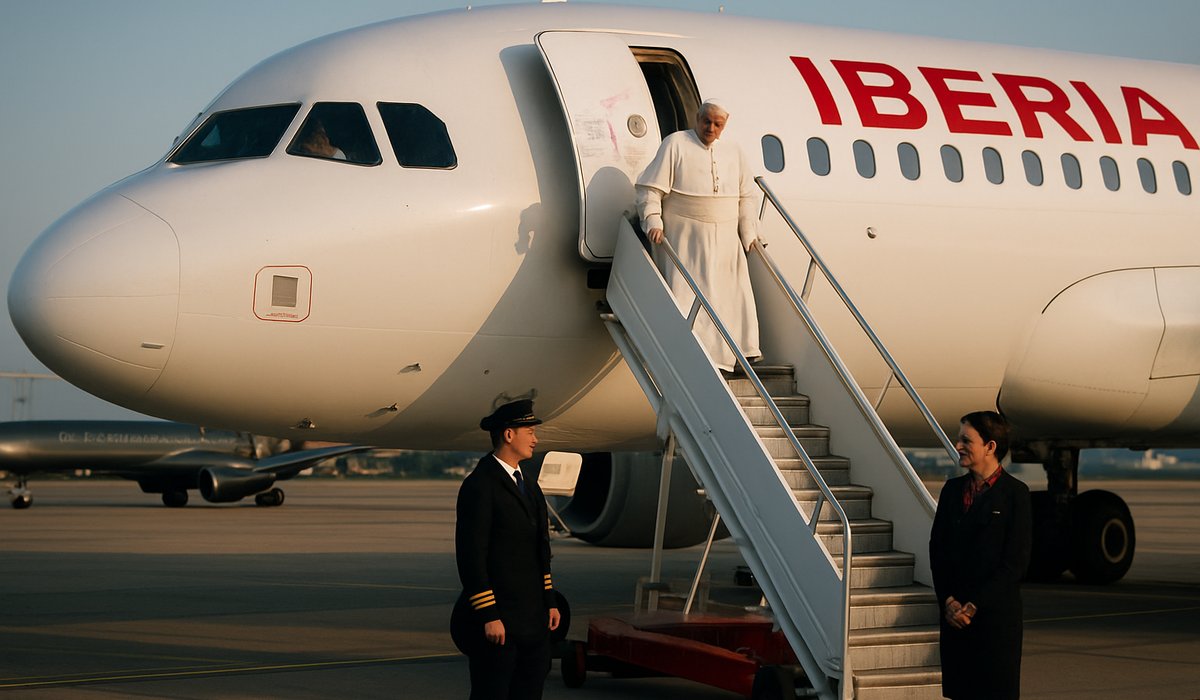
Image generated by AI
Papal Flight Disrupted: Pope Leo XIV Forced Off Iberia A320 After Engine Fails to Start in Tenerife
Technical malfunction grounds commercial carrier; pontiff completes journey aboard Spanish royal aircraft
Unexpected Technical Crisis Forces Mid-Flight Evacuation
Pope Leo XIV and his accompanying delegation were compelled to exit an Iberia Airbus A320 at Tenerife Norte Airport on Friday following a critical engine failure that prevented the aircraft from departing. The incident occurred after passengers had already settled aboard the aircraft, when the flight crew detected that one of the twin engines would not initiate startup procedures—a complication attributed to challenging wind conditions affecting the Canary Islands airport.
The unscheduled disembarkation marked an unusual operational disruption for Iberia, Spain's flagship carrier, which had arranged the papal transportation. The specific circumstances surrounding the engine malfunction highlighted the technical complexities that modern commercial aviation must navigate, particularly in conditions where atmospheric factors can compromise aircraft systems.
Royal Alternative Resolves Travel Plans
Rather than endure potential delays while Iberia maintenance teams addressed the mechanical issue, the Spanish royal family promptly offered an alternative solution. Pope Leo XIV and his entourage completed their journey aboard a dedicated aircraft provided by the Spanish monarchy, ensuring minimal disruption to the pontiff's schedule and diplomatic commitments.
The deployment of the royal jet underscores the logistical arrangements often coordinated for high-profile state visits and religious figures. Such contingency protocols are standard practice within aviation operations serving prominent dignitaries, where schedule reliability carries particular significance.
Broader Context: Aviation Reliability and Operational Challenges
This incident reflects ongoing operational pressures within the commercial aviation sector. Airlines globally continue managing complex maintenance schedules, weather-related disruptions, and aging fleet infrastructure—challenges that have intensified in post-pandemic recovery phases. Engine startup complications, while uncommon in modern aircraft equipped with redundant systems, remain a recognized technical concern, particularly when environmental factors such as wind velocity interact with engine ignition sequences.
Iberia has maintained operational standards consistent with European Aviation Safety Agency (EASA) protocols, and the decision to ground the aircraft represented appropriate safety prioritization rather than systemic failure.
Impact Assessment
The resolution of this incident without passenger injury or extended delays demonstrates effective crisis management within Europe's aviation ecosystem. However, it serves as a reminder of the technical vulnerabilities that can affect even major carriers' scheduled operations, particularly on routes serving high-altitude island airports prone to challenging meteorological conditions.
Frequently Asked Questions
What causes engine startup failures on commercial aircraft? Engine startup issues stem from multiple sources, including fuel system anomalies, ignition malfunctions, environmental factors like extreme wind conditions, and mechanical wear. Wind can disrupt air intake patterns critical to engine combustion initiation.
How often do Airbus A320 engines fail to start? Modern A320 engines feature redundant ignition and startup systems. Startup failures remain rare—typically fewer than 0.1% of departure attempts—reflecting decades of engineering refinement.
What are airline obligations when technical issues ground flights? Under EU261/2004 regulations, passengers are entitled to meal accommodation, communications access, and potential compensation ranging from €250–€600 depending on flight distance, unless mechanical necessity exempts the carrier.
How do airports handle wind-related technical incidents? Airports monitor wind speeds continuously; when conditions exceed aircraft operational limits, airlines implement ground holds. Wind-induced technical failures trigger enhanced maintenance protocols before reattempts.
Why offer royal aircraft instead of rescheduling? High-profile diplomatic missions prioritize schedule adherence. Royal and government aircraft provide flexibility unavailable through standard commercial rescheduling, particularly for heads of state or religious figures.
Related Travel Guides
-
The Free Zone Revolution: Emirates, Etihad, and Qatar Airways Lead Global Economic Shift
-
Routes United American Airlines Launch 17-Hour Nonstop Flights in 2026
External Resources
Disclaimer
This article is for informational and educational purposes only. It does not constitute legal, financial, or professional advice. While we strive to provide accurate and up-to-date information, travel policies, regulations, and conditions change rapidly. Always verify information with official sources before making travel decisions. Nomad Lawyer makes no representations about the accuracy, reliability, completeness, or suitability of the information provided. Readers should consult qualified professionals for advice specific to their circumstances. The views expressed in this article are those of the author and do not necessarily reflect the views of Nomad Lawyer.
Preeti Gunjan
Contributor & Community Manager
A passionate traveller and community builder. Preeti helps grow the Nomad Lawyer community, fostering engagement and bringing the reader experience to life.
Learn more about our team →