
Phoenix Sky Harbor Tops 30.8 Million Passengers in 2026: Surge in Spring Traffic and Asian Routes Drive Arizona Tourism

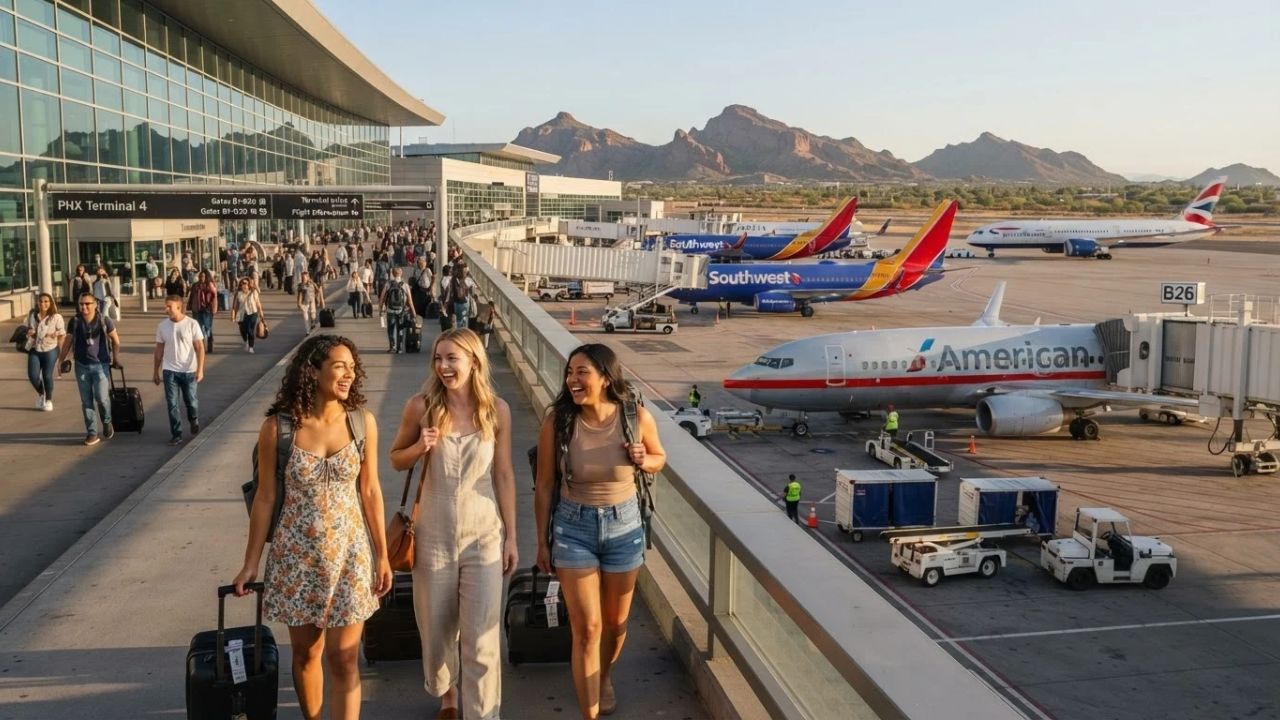
Propelled by an unprecedented spring travel wave and expanding transpacific connectivity, Phoenix Sky Harbor International Airport (PHX) handled 30,846,557 passengers across the first seven months of 2026, marking a 0.8 percent year-on-year increase. The aviation surge—anchored by an all-time monthly record of 5,128,429 travelers in March and newly inaugurated direct links with Taiwan via China Airlines and STARLUX—cements Phoenix's role as the premier economic and leisure springboard for the American Southwest.
Even through the sweltering desert summer, passenger volumes remained remarkably resilient. Official aviation statistics recorded 4,193,673 passengers in July 2026 alone, up 0.4 percent from the 4,178,644 registered during July 2025. With sporting tourism booming and international arrivals accelerating, Arizona’s flagship gateway is successfully transforming from a seasonal winter haven into a year-round intercontinental transit hub.
The Local Trend Revealed: Historic Passenger Records and International Route Diversification
Phoenix’s aviation trajectory demonstrates how infrastructure investment and sports entertainment tourism can reshape airport throughput.
According to official City of Phoenix aviation data released on September 13, 2026, March 2026 became the single busiest operational month in the airport's history. Handling 5,128,429 travelers, March exceeded the previous record set in March 2024 by 1.27 percent. The peak occurred on March 8, 2026, when TSA security checkpoints screened 86,250 passengers in a single 24-hour cycle—surpassing the airport’s previous historic screening record set following Super Bowl LVII in 2023.
Summer operations maintained this momentum. During July 2026, Sky Harbor recorded 2,077,974 enplaned passengers (a 0.9 percent gain) and 2,115,699 deplaned passengers (a slight 0.2 percent dip). Total aircraft operations reached 38,889 movements for the month, climbing 0.7 percent year-on-year.
Crucially, international connectivity registered substantial growth. July international enplanements rose 3.0 percent to 104,983 departing travelers, while international deplanements increased 3.7 percent to 116,822 arriving passengers.
Key Performance Indicators: Phoenix Sky Harbor 2026 Traffic Performance
| Operational Metric | 2026 Recorded Figure | Year-on-Year Comparison | Strategic Tourism Significance |
|---|---|---|---|
| January–July Total Volume | 30,846,557 passengers | +0.8% YoY | Sustained demand across both business and Southwest leisure sectors |
| Busiest Single Month (March) | 5,128,429 passengers | +1.27% vs March 2024 | All-time historical high driven by spring training and major conventions |
| Peak Daily Screening (March 8) | 86,250 screened travelers | Highest day on record | Surpassed previous post-Super Bowl LVII passenger checkpoint benchmark |
| July Total Throughput | 4,193,673 passengers | +0.4% vs July 2025 (4,178,644) | Strong mid-summer baseline despite extreme desert heat |
| July Aircraft Movements | 38,889 operations | +0.7% YoY | Increased flight frequency and widebody aircraft deployments |
| July International Arrivals | 116,822 deplaned travelers | +3.7% YoY | Expanding overseas tourism and cross-border commercial links |
Airline Performance: Legacy Strength, Budget Expansion, and New Asian Links
A detailed examination of carrier metrics highlights a dynamic, evolving airline market at Sky Harbor.
American Airlines retained its position as Phoenix’s dominant hub carrier, transporting 1,886,037 passengers in July 2026—a solid 5.3 percent increase over July 2025. Southwest Airlines held second place with 1,325,990 passengers, despite experiencing a 6.0 percent year-on-year contraction as it recalibrated regional schedules.
Smaller domestic and regional carriers posted remarkable percentage gains:
- Breeze Airways: Surged 54.4 percent to handle 5,280 travelers, reflecting growing consumer appetite for point-to-point secondary market routes.
- Alaska Airlines: Rose 22.8 percent to 159,451 passengers, propelled by increased Pacific Northwest frequencies.
- Volaris: Jumped 41.1 percent to 15,327 travelers, expanding low-cost leisure and family visits between Phoenix and central Mexico.
- United Airlines: Maintained steady connectivity with 226,139 passengers (+0.6%).
Cross-border and transatlantic traffic showed steady performance across established partners:
- WestJet (Canada): Handled 20,863 passengers (+3.5%).
- Air Canada: Transported 22,027 passengers (-4.2%).
- British Airways: Carried 17,473 travelers (+4.0%) on its daily London Heathrow route.
- Aeromexico: Recorded 8,351 travelers (+5.1%).
- Air France: Registered 11,407 passengers (-1.4%) connecting Phoenix to Paris Charles de Gaulle.
The Asian Influx: China Airlines and STARLUX Make Their Mark
The standout development in the 2026 airline roster is the arrival of Taiwan-based premium carriers. Reflecting Arizona's expanding position as a global semiconductor manufacturing hub centered around Taiwan Semiconductor Manufacturing Company (TSMC) facilities in North Phoenix, China Airlines transported 6,143 passengers in July, while STARLUX Airlines carried 7,869 passengers.
Neither carrier operated comparable July flights in 2025. Their inclusion broadens Phoenix’s long-haul map, offering direct transpacific gateways that bypass congested California hubs like Los Angeles (LAX) and San Francisco (SFO).
Terminal Dynamics: Terminal 4 Dominates Passenger Movement
The balance of passenger traffic across Sky Harbor remains heavily concentrated. In July 2026, Terminal 4 processed 3,304,411 passengers—a 0.9 percent gain year-on-year. In contrast, Terminal 3 accommodated 889,262 passengers, representing a 1.6 percent decrease.
Terminal 4's massive volume stems from hosting the airport's two primary carriers, American and Southwest, alongside its major international contingent: British Airways, Air France, Aeromexico, Volaris, China Airlines, and STARLUX. Terminal 3 primarily accommodates Delta Air Lines, United Airlines, Alaska Airlines, and boutique leisure carriers.
Sports Mega-Events and Cultural Tourism Fuel Statewide Growth
Phoenix’s record-breaking passenger numbers align directly with its reputation as one of North America's preeminent sports tourism destinations.
The City of Phoenix confirmed that the 2026 NCAA Women’s Final Four hosted in the Valley drew passionate basketball fans representing 41 US states and seven foreign nations. The tournament generated 360,823 total attendees, while the accompanying downtown fan festival, Tourney Town, drew 25,610 visitors. The city is actively preparing for another massive economic influx when the NBA All-Star Game arrives in Phoenix in spring 2027.
Beyond sporting arenas, international arrivals increasingly branch out to experience Arizona’s dramatic desert settings, including Scottsdale luxury golf resorts, Sedona’s red rock vortexes, and the Grand Canyon.
Cultural & Environmental Value: Indigenous Heritage and Sonoran Conservation
Travelers landing at Sky Harbor enter the northern reaches of the Sonoran Desert, an ecologically unique biome stewarded for millennia by indigenous tribal nations.
Honoring Tribal Sovereignty and Desert Arts
Phoenix rests within the ancestral lands of the Akimel O'odham and Pee Posh peoples. For culturally conscious visitors, understanding this living heritage begins at the world-renowned Heard Museum in central Phoenix. The institution showcases comprehensive collections of Southwest Native American jewelry, handwoven Navajo rugs, Hopi katsina carvings, and contemporary indigenous fine art.
Purchasing artwork directly from authenticated tribal markets and museum gift shops ensures that cultural tourism revenues flow directly into indigenous artisan families and community preservation funds.
Sustainable Desert Stewardship
Conserving the Sonoran Desert’s delicate flora—including the iconic saguaro cactus, which can live for more than two centuries—requires rigorous public education. Organizations such as the Desert Botanical Garden actively lead conservation programs to propagate endangered native succulents and educate visitors on responsible low-impact desert recreation.
Visitor Insider Tips: Terminal Logistics, Extreme Heat Guidelines, and Local Specialties
Navigating the Valley of the Sun requires distinct operational knowledge, particularly regarding the Southwest's intense seasonal climate:
- PHX Sky Train and Terminal Navigation: Avoid expensive terminal parking by utilizing the automated PHX Sky Train. The complimentary electric transit system connects Terminal 3, Terminal 4, the Rental Car Center, and the 44th Street Valley Metro Rail Station 24 hours a day, providing direct, car-free transit to Downtown Phoenix and Tempe.
- Terminal 4 Dining Secrets: Skip generic fast food in Terminal 4 in favor of local Arizona culinary icons located post-security. Sample award-winning Mexican street fare at Barrio Café (Concourse D), enjoy scratch-made breakfast skillets at Matt's Big Breakfast (Concourse B), or sip locally brewed craft ales at Four Peaks Brewing Company (Concourse A).
- Summer Heat Safety and Trail Curfews: Extreme desert heat represents an essential travel consideration. National Weather Service stations in Phoenix recorded 101°F (38°C) as late as September 1, 2026, with summer highs regularly exceeding 115°F (46°C). The City of Phoenix strictly enforces heat-related trail closures on Camelback Mountain (Echo Canyon and Cholla trails) and Piestewa Peak between 9:00 AM and 5:00 PM on days with Excessive Heat Warnings.
- Golden Rule for Hikers: Always begin outdoor desert hikes before 6:00 AM, carry at least one gallon (3.8 liters) of water per person, wear broad-brimmed sun protection, and turn back when your water supply is half-empty.
- Sonoran Culinary Delights to Savor:
- The Sonoran Hot Dog: An Arizona borderlands masterpiece featuring an all-beef frankfurter wrapped in mesquite-smoked bacon, tucked inside a soft, sweet Mexican bolillo roll, and topped with warm pinto beans, grilled onions, fresh diced tomatoes, jalapeño salsa, mustard, and a drizzle of mayonnaise.
- Prickly Pear Specialties: Cool off with iced beverages, glazes, or margaritas infused with sweet, magenta-hued syrup harvested from local prickly pear (nopal) cactus fruit.
- Architectural Escapes: Architecture enthusiasts should venture into the foothills of the McDowell Mountains in Scottsdale to tour Taliesin West, legendary architect Frank Lloyd Wright’s winter home and desert laboratory, recognized as a UNESCO World Heritage Site.
Tourism Outlook: Phoenix’s Ascent as an Intercontinental Southwest Hub
Surpassing 30.8 million travelers in the first seven months of the year positions Phoenix Sky Harbor for a landmark annual performance in 2026.
The successful integration of transpacific carriers China Airlines and STARLUX alongside expanding transatlantic connections from British Airways and Air France demonstrates that Sky Harbor is no longer solely a domestic connector or sunbelt retreat. Supported by major sporting events like the 2026 NCAA Women's Final Four and the upcoming 2027 NBA All-Star Game, Phoenix is carving out a permanent identity as a sophisticated global commercial destination.
By pairing modern terminal infrastructure with deep cultural respect for the Sonoran Desert and thoughtful climate adaptation, Phoenix Sky Harbor offers an efficient, welcoming gateway to the wonders of Arizona and the broader American West.
Related Travel Guides
Miami Travel Guide: Insider Neighborhood Tips, Cultural Etiquette, and Dining Insights
Disclaimer
This article is for informational and educational purposes only. It does not constitute legal, financial, or professional advice. While we strive to provide accurate and up-to-date information, travel policies, regulations, and conditions change rapidly. Always verify information with official sources before making travel decisions. Nomad Lawyer makes no representations about the accuracy, reliability, completeness, or suitability of the information provided. Readers should consult qualified professionals for advice specific to their circumstances. The views expressed in this article are those of the author and do not necessarily reflect the views of Nomad Lawyer.
Raushan Kumar
Founder & Lead Developer
Full-stack developer with 11+ years of experience and a passionate traveller. Raushan built Nomad Lawyer from the ground up with a vision to create the best travel and law experience on the web.
Learn more about our team →