
Philadelphia Terminal Gridlock: American Airlines Network Buckles as 85 Flight Delays and Cancellations Trigger Massive Travel Chaos
As systemic airspace congestion paralyzes Philadelphia International Airport, a sudden wave of 85 flight delays and sudden cancellations violently traps passengers bound for New York, Miami, and Chicago in grueling travel chaos.

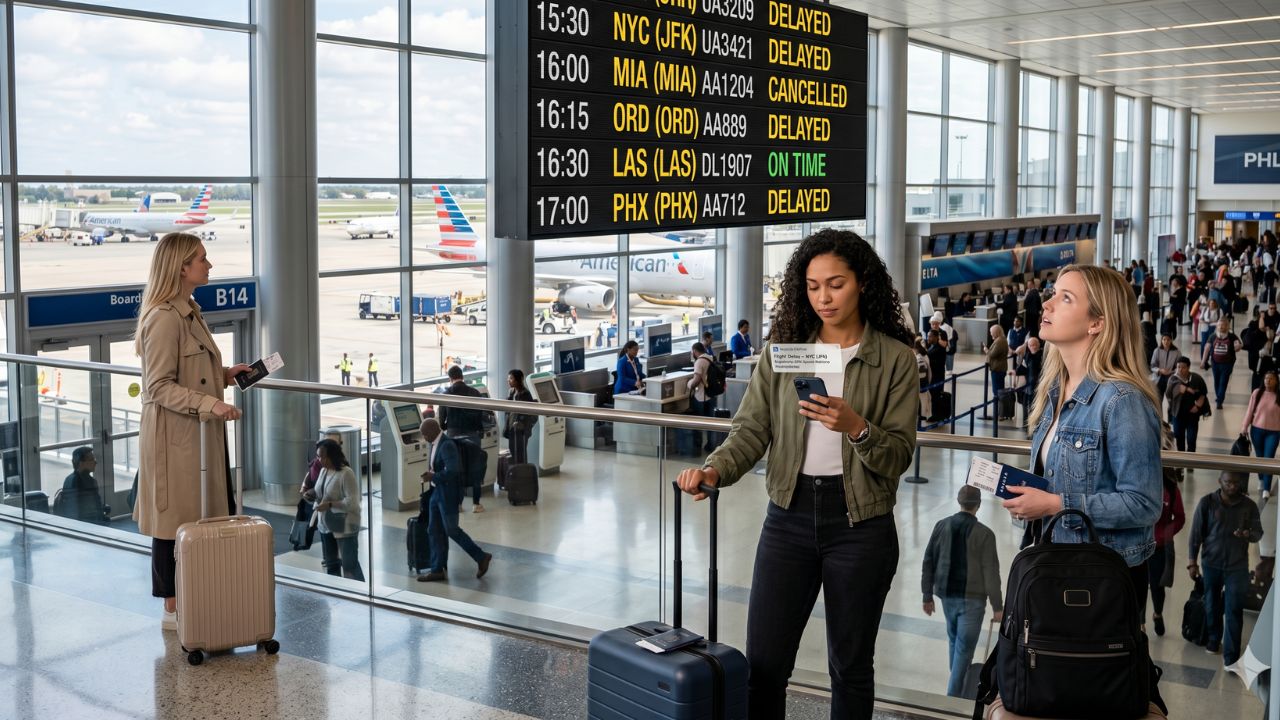
Image generated by AI
A Massive Operational Strain Triggers East Coast Terminal Panic
While massive sectors of the global passenger network frequently battle highly unpredictable extreme weather events, synchronized logistical bottlenecks, and horrific commercial fleet constraints, the sudden, unmanageable collapse of a primary East Coast transit hub remains the absolute most terrifying catalyst for cascading airport disruptions. Delivering highly urgent, breaking airline news, verified U.S. aviation trackers confirm that a massive operational disaster has actively detonated, completely exposing vulnerable domestic commuters and international tourists to severe travel chaos across the highly congested North American aviation network. Today, June 4, 2026, highly alarming operational news forcefully emerged confirming that an unprecedented wave of sudden flight cancellations and agonizing delays has completely paralyzed Philadelphia International Airport (PHL), violently isolating tens of thousands of passengers.
While desperate travelers usually attempt to navigate terrifying terminal gridlock caused by absolute hub failures, these exclusive aviation updates reveal a highly systemic, incredibly dangerous logistical meltdown actively destroying flight schedules connecting Philadelphia to New York, Miami, Chicago, and other major US cities. Official data compiled by aviation analytics platforms confirms that the massive airport violently recorded a staggering total of 85 severe flight delays alongside 3 absolute cancellations. The sheer scale of this disruption immediately plunged PHL’s departure halls into an absolute state of emergency. With massive legacy carriers like American Airlines and United frantically struggling to maintain basic operational integrity, thousands of highly vulnerable passengers are currently trapped inside overflowing terminals, facing totally ruined itineraries and brutal missed connections.
Expanded Overview: The Scale of the Domestic Flight Disruption
The sudden, highly publicized execution of this massive regional operational slowdown serves as an undeniable example of how rapidly complex continental logistics can collapse into extreme transit pressure. Philadelphia International Airport serves as an absolutely critical, high-capacity domestic and transatlantic gateway. When a simultaneous disruption of this magnitude strikes, it completely shatters the entire passenger pipeline. For a massive corporate and leisure corridor heavily reliant on incredibly robust, high-frequency flight schedules, this massive wave of 85 flight delays heavily exposes the entire network to terrifying bottlenecks, severe travel safety concerns, and massive economic damage to the region’s vital tourism cycle.
The terrifying reality of the current transit crisis is found in the sheer volume of high-capacity aircraft abruptly halted on the tarmac across the PHL hub. The massive failure was heavily concentrated within the airport's dominant hub operator. American Airlines showed the absolute worst disruption, violently accounting for all three flight cancellations while suffering a devastating delay rate that poisoned its massive feeder network. For customers, this massive failure to process routine passenger traffic meant incredibly long dwell times in terminals, increased queueing at gates, and highly destructive knock-on effects for onward travel across the entire United States.
Section-Wise Breakdown of the PHL Terminal Gridlock
American Airlines Operations Buckle
The regional operational strain at PHL is currently buckling under massive pressure, primarily concentrated on American Airlines. The dominant carrier reported a devastating 40 delayed flights, suffering a severe delay rate of over 10% of its total operational flights. Furthermore, American Airlines accounted for a total of 3 cancelled flights—the only outright cancellations recorded at the hub today. Because American utilizes Philadelphia as a massive transatlantic and domestic hub, these failures instantly severed vital arteries connecting the East Coast to the rest of the world.
Regional Network Contagion
The contagion aggressively spread to American's regional affiliates and competing domestic carriers, heavily compromising major feeder corridors. Regional affiliates operating under American’s network suffered an absolute operational collapse: Piedmont Airlines recorded a massive 25 delays, and PSA suffered 12 severe delays. This pattern directly mirrors the vulnerability of relying on a singular hub structure. Concurrently, other major carriers and international operators—including British Airways, Frontier, Jazz Aviation, Republic, and United Airlines—could not escape the terminal gridlock, logging severe delays ranging from 1 to 4 flights each.
Systemic Airspace Congestion and Delay Propagation
The root causes of this massive operational meltdown stem from a toxic combination of environmental and structural factors heavily monitored by the U.S. Department of Transportation (DOT). Federal data clearly shows that delays have become the terrifying norm in the U.S. air system, directly attributed to late aircraft rotations, severe congestion, and massive system delays affecting air traffic control. These "delay propagation" effects guarantee that a single localized failure at PHL violently ripples through the national system, cascading into systemic schedule instability nationwide.
Verified Aviation Disruption and Delay Data
To fully comprehend the massive operational scale and strategic deployment dictating this highly destructive capacity crisis, the following table explicitly details the exact flight metrics and the resulting passenger disruptions heavily impacting Philadelphia International Airport today:
PHL Airline-Specific Delay Breakdown
| Affected Airline / Operator | Verified Delayed Flights | Cancelled Flights |
|---|---|---|
| American Airlines | 40 Delayed Flights (>10% rate) | 3 Cancellations |
| Piedmont Airlines | 25 Delayed Flights | 0 Cancellations |
| PSA Airlines | 12 Delayed Flights | 0 Cancellations |
| British Airways | 1 to 4 Delayed Flights | 0 Cancellations |
| Frontier Airlines | 1 to 4 Delayed Flights | 0 Cancellations |
| Jazz Aviation | 1 to 4 Delayed Flights | 0 Cancellations |
| Republic Airways | 1 to 4 Delayed Flights | 0 Cancellations |
| United Airlines | 1 to 4 Delayed Flights | 0 Cancellations |
Note: The DOT defines delays as arrivals that are more than 15 minutes late, while cancellations mean flights are totally skipped. Total disruptions for the hub stood at 85 delays and 3 cancellations.
Passenger Impact: Navigating the Terminal Gridlock
For the modern commuter attempting to navigate this highly volatile East Coast network, the passenger impact of this massive operational meltdown is completely terrifying. Reliable, on-time flights are the absolute backbone of domestic tourism, and this hub collapse completely destroyed that promise.
- Endure Severe Terminal Isolation: Because PHL is severely bottlenecked, tens of thousands of passengers are subjected to intense fear and confusion, physically isolated in holding areas with zero clarity on departure times to New York or Miami.
- The Threat of Ruined Connections: By violently missing original departure windows, passengers suffered totally ruined onward itineraries, missing vital transatlantic connections or critical domestic flights to Chicago.
- Survive the Rebooking Gridlock: Rather than celebrating a smooth journey, corporate executives and leisure travelers are aggressively urged to demand immediate re-accommodation via official airline apps as they battle extreme customer service queues resulting from massive terminal overcrowding.
Conclusion: A Highly Destructive Aviation Meltdown
The massive, highly publicized collapse of flight schedules across Philadelphia International Airport represents a severe, incredibly dangerous wake-up call for the North American aviation sector. By actively demonstrating that deep systemic congestion and air traffic control constraints can instantly overwhelm a primary gateway with 85 severe delays and 3 flight cancellations, this incident completely shatters passenger confidence in hub reliability. As executive leadership across American Airlines, Piedmont, and PSA frantically scramble to diagnose the logistical failures and appease thousands of isolated passengers, East Coast tourists are heavily urged to aggressively monitor their flight status via airline dashboards, actively prepare for sudden flight delays, and fully expect this unprecedented disaster to trigger massive regional travel chaos.
Key Takeaways
- Massive PHL Meltdown: Philadelphia International Airport (PHL) recorded a devastating total of 85 flight delays and 3 flight cancellations on June 4, 2026.
- American Airlines Collapse: The dominant carrier accounted for all 3 cancellations and 40 massive delays (over 10% of its schedule).
- Regional Feeder Friction: Piedmont Airlines (25 delays) and PSA (12 delays) suffered massive operational friction.
- Widespread Carrier Impact: British Airways, Frontier, Jazz Aviation, Republic, and United Airlines all reported delays due to the terminal gridlock.
- Passenger Survival Tactics: Travelers caught in the disruption are aggressively urged to check the FAA tracker constantly, expect massive missed connections at hubs like Miami and Chicago, and review airline compensation policies immediately.
Disclaimer: The specific flight delay metrics, airport operational data, and carrier impact assessments presented in this report are based on verified aviation tracking data from FlightAware and the DOT regarding operations on June 4, 2026. Official airline technical reports, terminal congestion levels, and air traffic control clearances are highly volatile and subject to continuous, real-time update based on active operational shifts. Prospective passengers are urgently advised to fiercely monitor their specific booking status and verify active flight schedules directly via the airline's official portal prior to airport arrival.
Disclaimer
This article is for informational and educational purposes only. It does not constitute legal, financial, or professional advice. While we strive to provide accurate and up-to-date information, travel policies, regulations, and conditions change rapidly. Always verify information with official sources before making travel decisions. Nomad Lawyer makes no representations about the accuracy, reliability, completeness, or suitability of the information provided. Readers should consult qualified professionals for advice specific to their circumstances. The views expressed in this article are those of the author and do not necessarily reflect the views of Nomad Lawyer.
Kunal K Choudhary
Co-Founder & Contributor
A passionate traveller and tech enthusiast. Kunal contributes to the vision and growth of Nomad Lawyer, bringing fresh perspectives and driving the community forward.
Learn more about our team →