
Aviation Updates: Massive Delays at Orlando International Trigger Travel Chaos for Southwest and JetBlue Passengers
As catastrophic logistical bottlenecks severely paralyze massive Florida transit grids, an aggressive wave of 262 delays at Orlando International violently triggers widespread travel chaos.

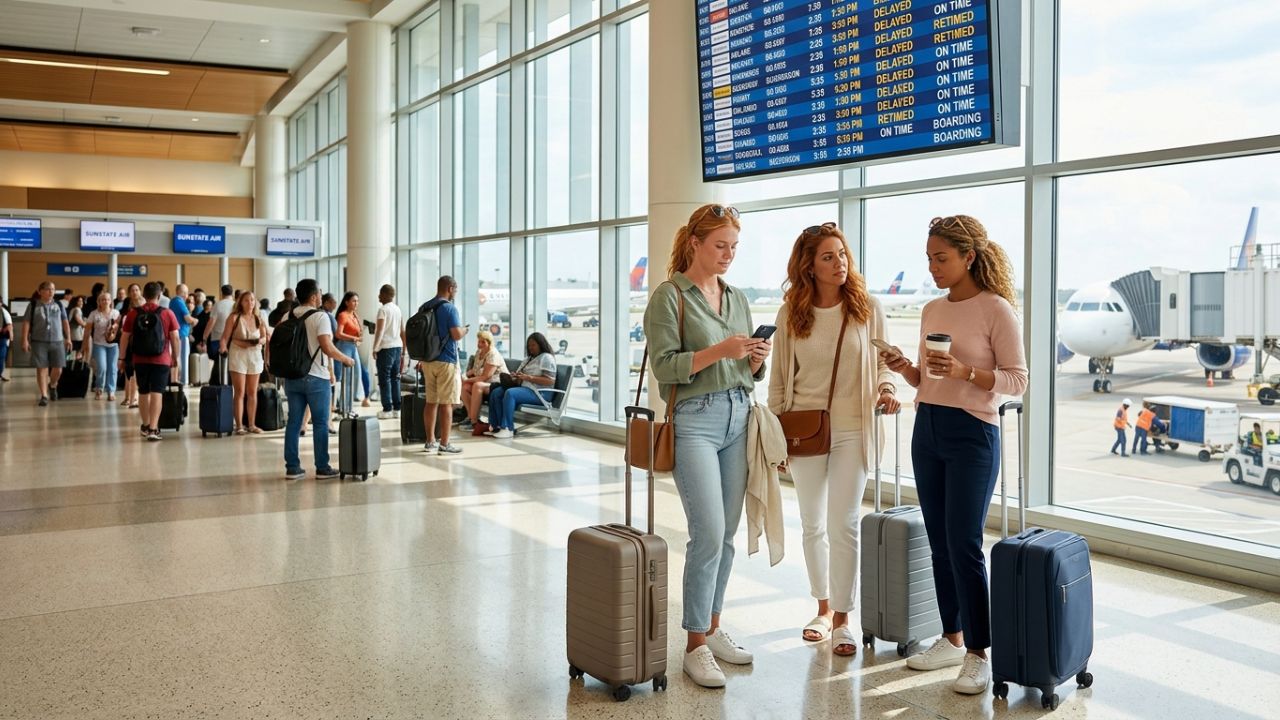
Image generated by AI
Aviation Updates: Massive Delays at Orlando International Trigger Travel Chaos for Southwest and JetBlue Passengers
As extreme operational friction and suddenly compounding infrastructure bottlenecks continue to terrorize standard travel itineraries across Florida, a massive wave of localized delays at Orlando International Airport has violently triggered cascading schedule disruptions across major domestic hubs.
Image generated by AI
As high-impact airline news platforms rapidly issue continuous, grim aviation updates regarding the intense fragility of massively congested primary transit grids, a severe localized operational meltdown is currently striking Central Florida. Amidst widespread rolling travel chaos, severe airport disruptions, and the terrifying threat of devastating flight cancellations severely plaguing heavily overcrowded national corridors linking Atlanta, Boston, Dallas, and New York, Orlando International Airport (MCO) is actively experiencing a massive surge in schedule instability. Visitors aggressively attempting to navigate the massive terminal found serious, entirely unacceptable disruptions today. Verified telemetry confirms that MCO suffered a brutal total of 265 impacted flights, explicitly comprising a massive 262 delayed departures/arrivals and 3 outright cancellations. According to official reports, these aggressive scheduling failures were strictly isolated to flights operating to, from, or within the United States, violently paralyzing both budget and legacy carriers alike.
Expanded Overview: The Slowdown of Central Florida
To fully comprehend the sheer scale of this severe network degradation, aviation analysts must closely examine how rapidly highly localized operational bottlenecks violently reshape domestic hub-and-spoke connectivity.
The massive disruption pattern actively terrorizing Orlando is primarily defined by high-volume scheduling friction affecting absolutely critical domestic tourism routes. While the miraculous avoidance of a massive wave of outright cancellations spared passengers from multi-day rebooking nightmares, the sheer, brutal accumulation of 262 delays aggressively paralyzed terminal operations. Because MCO functions as the absolute primary gateway connecting global travelers to massive theme parks and coastal resorts, an aggressive slowdown in departure sequencing instantly triggers a massive ripple effect, violently disrupting operations and severely punishing heavily utilized carriers like Southwest Airlines and JetBlue.
Section-Wise Breakdown: Airline Performance Under Pressure
Terminal operations are violently degrading as heavily congested carriers furiously attempt to optimize massive backlogs of severely delayed aircraft.
Southwest and JetBlue: As the absolute primary domestic operators directly dominating MCO, budget and commercial giants aggressively bore the brutal brunt of the schedule adjustments. Southwest Airlines heavily recorded the highest massive volume of disruptions with 107 delayed flights, violently representing a staggering 33% of its massive scheduled daily operations alongside a 2% cancellation rate. JetBlue closely followed, aggressively experiencing 34 delayed flights, which violently disrupted 26% of its scheduled service for the day.
Legacy Carrier Gridlock: Major legacy networks also suffered massive, notable friction as terminal congestion compounded. American Airlines violently recorded 32 delays, aggressively choking 27% of its massive daily hub volume. Delta Air Lines suffered 26 delays, effectively disrupting 23% of its scheduled flights. Similarly, United Airlines brutally dealt with 16 delayed departures and arrivals, translating to a massive 20% degradation of its daily MCO service.
Budget and International Operations: Ultra-low-cost and regional carriers were entirely unable to escape the aggressive scheduling slowdowns. Frontier Airlines violently suffered 22 delays (20% of its operational capacity), while Breeze Airways marked a brutal 25% delay rate across 7 flights. Interestingly, international operators—including AeroMéxico, LATAM Colombia, Copa Airlines, and Avianca—reported only minor single-digit delays, heavily signaling that localized domestic airspace constraints were the absolute primary drivers behind the massive bottleneck.
Flight Details: Verified MCO Disruption Matrix
To ensure stranded passengers and commercial aviation analysts can accurately track the incredibly precise operational telemetry of this massive network slowdown, the verified airport data has been consolidated into the exact, mandatory matrix below.
| Operating Carrier | Verified Telemetry (Delays / Cancellations) |
|---|---|
| MCO System Total | 262 Delays / 3 Cancellations |
| Southwest Airlines | 107 Delays (33%) / 2% Cancel Rate |
| JetBlue | 34 Delays (26%) |
| American Airlines | 32 Delays (27%) |
| Delta Air Lines | 26 Delays (23%) |
| Frontier Airlines | 22 Delays (20%) |
| United Airlines | 16 Delays (20%) |
| Breeze Airways | 7 Delays (25%) |
| AeroMéxico / LATAM / Copa | Single-Digit Minor Delays |
(Source: Flightaware and Affected Airlines)
Industry Analysis: The Economic Ripple Effect
Air travel explicitly across the massive Central Florida corridor continues to massively struggle, driven violently by incredibly fragile air traffic flow constraints.
As one of the absolute primary global gateways to major conventions and tourism hubs, massive disruptions at MCO carry brutal, direct economic implications for the highly sensitive regional hospitality market. Delays of this terrifying magnitude violently interrupt strict rental car pickup windows, heavily delay hotel check-ins, and ultimately massively shorten the time tourists spend pouring cash into local attractions. When domestic visitors face extensive, grueling travel friction, the massive local service industry experiences immediate, brutal ripple effects, ranging from completely canceled restaurant reservations to heavily strained hospitality staffing schedules.
Passenger Impact: The Threat of Stranded Itineraries
For the everyday premium domestic traveler and budget-conscious vacationer, the immediate consequence of this massive structural slowdown directly translates to a monumental, highly verified spike in transit anxiety.
The violent, cascading accumulation of delays has left tens of thousands of passengers facing agonizing, extended wait times inside MCO’s severely overcrowded terminals. When massive carriers like Southwest and American violently experience disruptions across a quarter to a third of their massive fleets, terminal gates instantly experience severe gridlock. Passenger groups are dealing with brutal, long lines at customer service counters, catastrophic missed connecting flights, and agonizing baggage claim delays. Because the flight disruptions are aggressively systemic, rebooking options within the same calendar day remain terrifyingly limited, forcing many commuters to secure expensive overnight accommodations.
Conclusion: A Network Tested
Ultimately, the aggressive, massive accumulation of 265 disrupted flights actively marks a massively significant stress test of Orlando International’s aviation reliability. By violently exposing the extreme fragility of domestic airspace sequencing, this crisis heavily alters the immediate booking behavior of inbound passengers.
While airlines fiercely attempt to restore operational balance across the Florida corridor, passengers must proactively rely on verified survival strategies. Travelers are strongly urged to verify their flight profiles directly via the Federal Aviation Administration (FAA) National Airspace System (NAS) Status page before departing for the airport. Furthermore, leveraging airline apps for push notifications, knowing your strict legal rights via the U.S. Department of Transportation (DOT) Airline Customer Service Dashboard, and aggressively utilizing international digital rebooking tools are absolute requirements to survive the increasingly volatile, chaotic reality of modern domestic transit.
Key Takeaways
- Massive System Delay: Orlando International Airport (MCO) aggressively suffered 262 domestic flight delays and 3 cancellations in a single operational day.
- Epicenter Hub Operators: Southwest Airlines violently suffered the highest absolute volume with 107 delayed flights, severely disrupting 33% of its daily operations.
- Legacy Meltdown: American Airlines (32 delays) and Delta Air Lines (26 delays) violently struggled to maintain critical domestic connectivity.
- Gridlock Fallout: The massive slowdown aggressively disrupted time-sensitive rental car pick-ups, hotel check-ins, and massive theme park itineraries.
- Survival Strategy: Passengers must aggressively monitor the FAA Command Center, utilize the DOT Dashboard, and leverage international support hotlines to bypass terminal lines.
FAQ: MCO Flight Disruptions July 2026
Which airlines were most affected at Orlando International? Southwest Airlines and JetBlue bore the absolute highest numerical burden, violently suffering 107 and 34 delays respectively, completely paralyzing massive segments of their daily schedules.
Are international flights affected at Orlando? No. According to official reports, the massive disruptions were strictly isolated to flights operating to, from, or within the United States. International carriers like Avianca and Copa only suffered very minor single-digit delays.
What is the DOT Dashboard? The U.S. Department of Transportation (DOT) Airline Customer Service Dashboard is a vital, government-verified tool that aggressively outlines exactly what each airline is legally committed to provide in the event of a controllable delay or cancellation.
What should I do if my MCO flight is delayed? Passengers must aggressively avoid long terminal lines by immediately utilizing the airline’s in-app chat features, checking the FAA NAS Status page, and proactively calling international customer service numbers where wait times are often significantly shorter.
Related Travel Guides
Brazil Flight Cancellations Sao Paulo Rio Travel Chaos 2026
Seattle Tacoma SEA Airport Delays Travel Chaos 2026
United States Regional Tourism and Transit Survival Guide 2026
Disclaimer: This article is strictly for informational and aviation tracking purposes. The specific flight telemetry (262 delays, 3 cancellations, airline percentages) is based on verified FlightAware data available at the time of publication. National airspace conditions, specific airline scheduling optimizations, local airport ground stops, and FAA air traffic control regulations are highly dynamic and subject to immediate modification by the operating carriers and government authorities. Passengers holding tickets on Southwest, JetBlue, American, or any affected carrier should explicitly verify their exact flight itineraries via official airline platforms, monitor the DOT dashboard, and secure comprehensive travel insurance prior to departure.
Disclaimer
This article is for informational and educational purposes only. It does not constitute legal, financial, or professional advice. While we strive to provide accurate and up-to-date information, travel policies, regulations, and conditions change rapidly. Always verify information with official sources before making travel decisions. Nomad Lawyer makes no representations about the accuracy, reliability, completeness, or suitability of the information provided. Readers should consult qualified professionals for advice specific to their circumstances. The views expressed in this article are those of the author and do not necessarily reflect the views of Nomad Lawyer.
Raushan Kumar
Founder & Lead Developer
Full-stack developer with 11+ years of experience and a passionate traveller. Raushan built Nomad Lawyer from the ground up with a vision to create the best travel and law experience on the web.
Learn more about our team →