
Aviation Updates: Travel Chaos Strikes Orlando International Airport as Southwest and American Airlines Suffer 150 Flight Delays
Severe airport disruptions cripple Orlando International Airport, generating massive travel chaos for tourists headed to Walt Disney World and Universal.

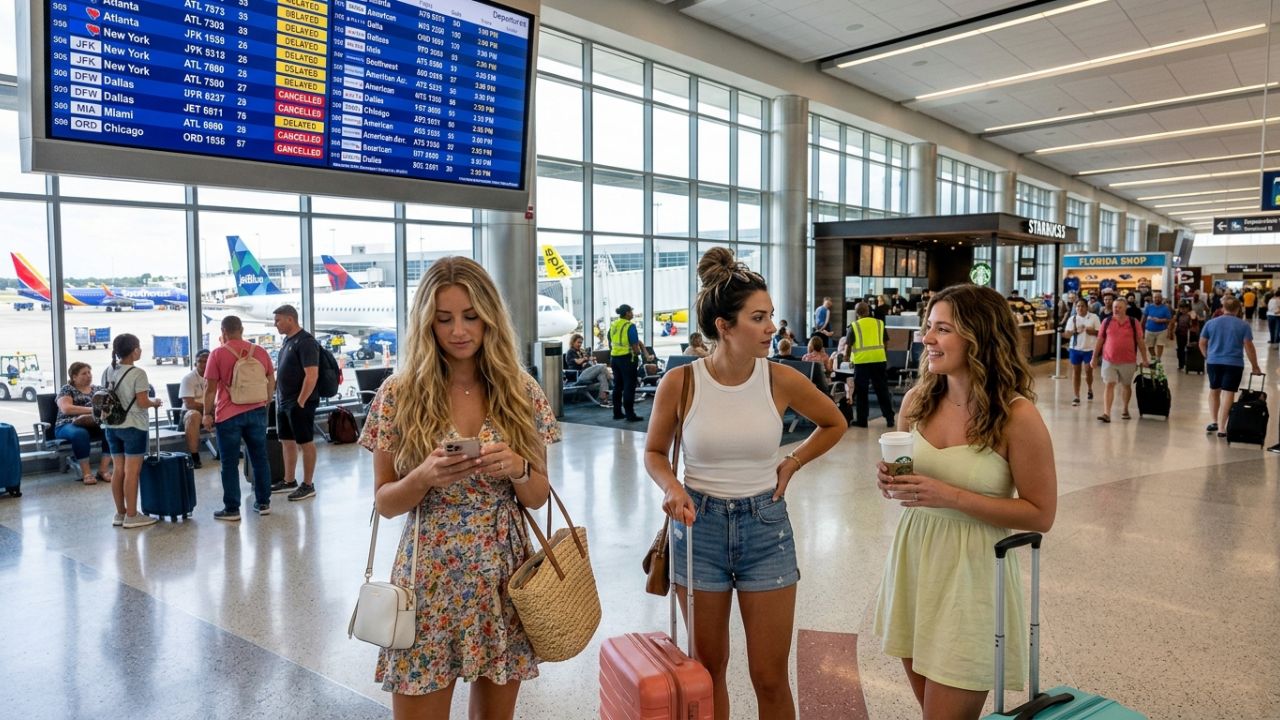
Image generated by AI
Aviation Updates: Travel Chaos Strikes Orlando International Airport as Southwest and American Airlines Suffer 150 Flight Delays
A severe operational breakdown at Florida's primary tourism gateway has triggered a massive wave of delays, devastating itineraries for thousands of domestic and international holidaymakers.
Image generated by AI
Intense airport disruptions have violently stalled operations at one of the busiest tourist gateways in the United States. According to the absolute latest airline news and verified operational tracking systems, Orlando International Airport suffered a sprawling, system-wide collapse, registering a massive 150 flight delays alongside 2 complete flight cancellations in a single operational cycle. This sudden loss of scheduling integrity triggered severe travel chaos, stranding thousands of peak-season passengers directly inside the terminal. Major legacy carriers including American Airlines, Delta Air Lines, and United Airlines, alongside high-frequency operators like Southwest Airlines and JetBlue, bore the absolute brunt of the disruption. As the operational friction spread, it completely corrupted critical domestic corridors linking Orlando to major hubs like Miami, Atlanta, and New York, while simultaneously delaying international arrivals from Europe and Latin America.
Expanded Overview: The Central Florida Tourism Bottleneck
When tracking major aviation updates, a systemic slowdown at a hyper-specialized leisure hub like Orlando carries immediate economic consequences.
The operational breakdown at Orlando International Airport was not an isolated incident affecting a single carrier; it reflects a severe, broad-based infrastructure failure. Because Orlando processes incredibly high volumes of seasonal tourist traffic, the 150 delayed flights were heavily distributed across both arrival and departure flows. The disruption aggressively impacted both low-cost carriers and full-service international operators, indicating a highly destructive combination of localized air traffic flow constraints and downstream delay propagation originating from other congested US hubs. When Orlando slows down, the entire Florida aviation corridor begins to buckle under the strain.
Section-Wise Breakdown: The Domestic Gridlock
The domestic US network absorbed the vast majority of the statistical damage during this disruption cycle, driven by the massive capacity deployed by low-cost and legacy carriers.
Southwest Airlines and American Airlines accounted for a highly significant share of the delayed operations due to their immense route density at the airport. JetBlue and Frontier Airlines also contributed heavily to the passenger congestion, as their high-frequency domestic scheduling quickly deteriorated under the operational pressure. This specific domestic friction completely destroyed onward connections to absolutely critical hub cities. Passengers traveling outbound from Orlando were forced to endure brutally extended departure waiting times, resulting in heavily missed connections in Atlanta, Dallas, Chicago, and New York.
Section-Wise Breakdown: International and Regional Spillover
While the domestic carriers generated the highest volume of delays, the disruption rapidly spilled over to infect the international and regional networks operating out of Orlando.
Long-haul transatlantic operators, specifically British Airways and Virgin Atlantic, experienced highly disruptive, isolated delays that severely impacted European tourists operating on fixed holiday itineraries. Furthermore, regional Latin American and Caribbean connectors suffered immense knock-on effects from the congested US airspace. Carriers including Avianca, LATAM Brasil, and Bahamasair were all caught in the holding patterns. Even cross-border operators like Air Canada Rouge experienced significant scheduling instability as the airport struggled to execute proper arrival sequencing.
Flight Details: Orlando International Airport Disruption Matrix
The exact operational telemetry outlining this sprawling breakdown and the specific airlines caught in the terminal gridlock has been consolidated into the mandatory matrix below.
Orlando International Airport Disruption Matrix
| Disruption Metric | Data / Affected Entities |
|---|---|
| Total Flight Delays | 150 |
| Total Cancellations | 2 |
| Major US Network Carriers | American Airlines, Delta, United |
| Low-Cost / High-Frequency | Southwest, JetBlue, Frontier |
| International Operators | British Airways, Virgin Atlantic, Avianca |
| Americas / Regional Operators | LATAM Brasil, Bahamasair, Air Canada Rouge |
| Key Affected Hubs | Atlanta, Dallas, Chicago, New York, Miami |
Passenger Impact: Theme Parks and Cruise Disruptions
For the thousands of tourists utilizing Orlando as a primary gateway, this delay event caused highly visible and incredibly frustrating disruptions.
The immediate fallout placed massive rebooking pressure on already full, peak-season flights. More critically, the 150 delays actively threatened Florida's tourism economy. Thousands of families bound for Walt Disney World Resort, Universal Orlando Resort, and broader Central Florida leisure destinations suffered delayed arrivals and reduced same-day hotel check-ins. The friction also placed extreme pressure on regional transport services connecting the airport to tourist zones. Furthermore, passengers utilizing Orlando to connect to outbound cruise-linked itineraries departing from nearby coastal ports faced intense anxiety as their tight transfer windows completely evaporated.
Industry Analysis: FAA Sequencing and Capacity Pressure
Aviation strategists monitoring the US regulatory framework note that the severe congestion at Orlando International Airport was likely driven by compounding systemic pressures.
While no single failure point was officially isolated, this specific disruption cluster matches the profile of severe air traffic volume congestion combined with weather-related sequencing delays across interconnected hubs. When the airport experiences extreme capacity pressure during peak departure windows, the US Federal Aviation Administration (FAA) enforces strict air traffic control flow restrictions. While these safety protocols are absolutely necessary to maintain system stability, they rapidly generate rolling, passenger-facing delays that disproportionately impact high-frequency operators like JetBlue and Southwest.
Conclusion: Systemic Strain on a Leisure Gateway
Ultimately, the severe travel chaos recorded at Orlando International Airport proves exactly how fragile peak-season tourism operations truly are. By generating 150 flight delays and 2 flight cancellations, the operational breakdown heavily compromised the schedules of American Airlines, Southwest, and JetBlue, actively stranding passengers bound for Atlanta, New York, and Chicago. While the FAA continues to maintain absolute airspace safety, the resulting terminal gridlock severely degrades the modern travel experience. As Orlando remains one of the most critical global tourism connectors, passengers must actively monitor real-time flight updates and maintain extreme itinerary flexibility when navigating Florida’s heavily congested airspace.
Key Takeaways
- Massive Congestion: Orlando International Airport registered a massive 150 total flight delays and 2 flight cancellations during a single operational cycle.
- Domestic Carriers Hit: High-density operators like Southwest Airlines, American Airlines, JetBlue, and Frontier suffered the highest volume of delays.
- International Friction: British Airways, Virgin Atlantic, Avianca, and LATAM Brasil were all caught in the arrival sequencing delays.
- Hub Disruption: Outbound passengers faced entirely missed connections in critical transfer hubs like Atlanta, Dallas, Chicago, and New York.
- Tourism Impact: The massive delays actively disrupted check-ins at Walt Disney World and threatened cruise-linked itineraries at nearby ports.
FAQ: Orlando Airport Flight Delays 2026
How many flights were disrupted at Orlando International Airport? During this specific operational breakdown, the airport officially recorded 150 total flight delays and 2 outright flight cancellations.
Which airlines experienced the most significant delays at Orlando? High-frequency domestic carriers including Southwest Airlines, American Airlines, and JetBlue accounted for a massive share of the delays due to their dense scheduling at the hub.
What should travelers do if their flight to Orlando is delayed? Passengers must aggressively monitor real-time flight updates through official airline applications. Because Orlando is a peak-season leisure hub, rebooking on alternative flights can be extremely difficult, so maintaining itinerary flexibility is essential.
Related Travel Guides
Toronto Pearson Airport Delays Air Canada WestJet Travel Chaos 2026
Asia Aviation Network Typhoon Travel Chaos Flight Cancellations 2026
Orlando Florida Theme Park Travel Disruption Survival Guide 2026
Disclaimer: This article is strictly for informational purposes. The delay statistics (150 total delays), cancellation figures (2 cancellations), and specific airline operational impacts (American Airlines, Southwest, JetBlue) are based on real-time data sourced from FlightAware at the time of publication. FAA flow restrictions and airline schedules are highly dynamic and subject to continuous modification to maintain airspace safety. Passengers must proactively verify their exact flight status and review their carrier’s rebooking restrictions before arriving at the terminal.
Disclaimer
This article is for informational and educational purposes only. It does not constitute legal, financial, or professional advice. While we strive to provide accurate and up-to-date information, travel policies, regulations, and conditions change rapidly. Always verify information with official sources before making travel decisions. Nomad Lawyer makes no representations about the accuracy, reliability, completeness, or suitability of the information provided. Readers should consult qualified professionals for advice specific to their circumstances. The views expressed in this article are those of the author and do not necessarily reflect the views of Nomad Lawyer.
Preeti Gunjan
Contributor & Community Manager
A passionate traveller and community builder. Preeti helps grow the Nomad Lawyer community, fostering engagement and bringing the reader experience to life.
Learn more about our team →