
Greece Tourism Growth Accelerates as 13.5 Million Travellers Fuel a Remarkable 2026 Surge
Greece Tourism Growth Accelerates as 13.5 Million Travellers Fuel a Remarkable 2026 Surge

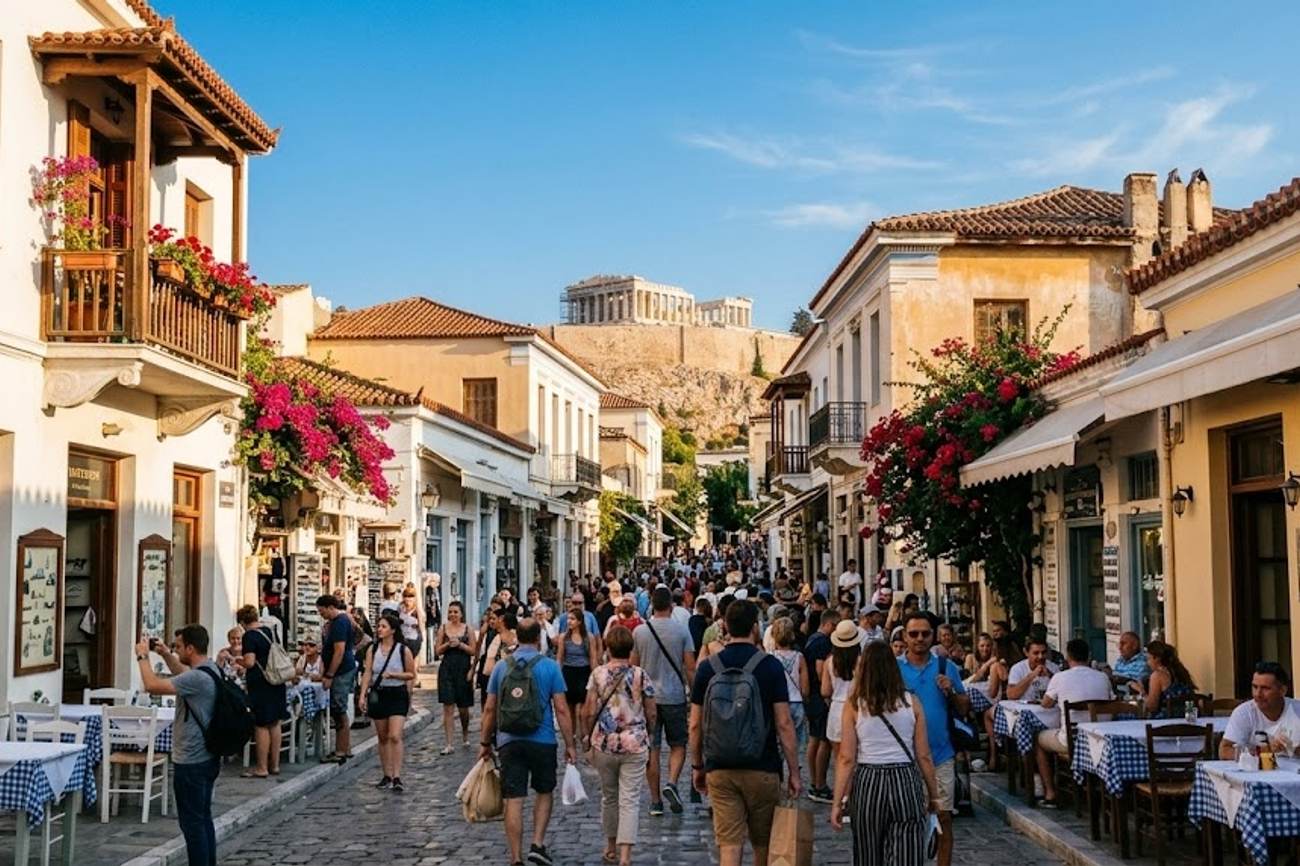
Image generated by AI
Are you planning a trip to Greece during the 2026 peak season? With international arrivals surging by 15.4%, you need a specific logistics strategy to navigate the increased pressure on transport hubs and island infrastructure.
The Mediterranean Shift of 2026
Greece has become a primary beneficiary of a significant realignment in Mediterranean travel patterns. While global tourism growth has stalled at a marginal 0.4%, Greece has seen a sharp divergence from this trend. Between January and June 2026, the country welcomed 13.49 million inbound travellers, a substantial increase from the 11.69 million recorded during the same window in 2025.
This growth is not merely seasonal; it is a result of geopolitical volatility. International arrivals across the Middle East plummeted by 22% in the first half of 2026, driving a wave of travellers toward Southern European alternatives. While Western Europe saw a 1% decline in arrivals, Southern Mediterranean Europe grew by 4%, with Greece leading this regional expansion.
For the traveler, this means that the "standard" booking window is no longer sufficient. The surge in volume—particularly the 49.3% spike in road-border arrivals—indicates that mainland Greece and regional gateways are experiencing unprecedented congestion.
Route and Schedule Details
The current influx of visitors is distributed across different transit modes. While aviation remains a cornerstone, the growth in land-based arrivals suggests a shift in how regional travelers are accessing the Greek mainland.
| Route Type | Growth Rate (Jan-Jun 2026) | Primary Driver | Status |
|---|---|---|---|
| International Air | +7.3% | Long-haul & Hub Connections | High Demand |
| Road-Border | +49.3% | European Regional Mobility | Critical Congestion |
| Overall Inbound | +15.4% | Middle East Diversion | Peak Capacity |
| Global Market | +0.4% | General Stagnation | Stable |
Traveler Logistics Guide
Navigating Greece during a period of 15.4% growth requires a shift from spontaneous planning to a structured logistics approach. To avoid the bottlenecks associated with 13.49 million visitors, follow these operational steps.
1. Airport and Air Transit Strategy With airport arrivals increasing by 7.3%, Athens International Airport is operating at near-maximum capacity.
- Check-in: Use digital check-in systems to bypass queues. If arriving via a major European hub, ensure your baggage is checked through to your final destination to avoid the chaos of the reclaim area during peak hours.
- Ground Transfer: Avoid relying on on-demand taxis at the arrivals hall. Pre-book private transfers or utilize the official Athens Airport transit links to the city center.
2. Land-Border and Road Logistics The 49.3% increase in road-border arrivals is the most critical data point for those driving from the Balkans or Central Europe.
- Border Crossings: Expect significant delays at land borders. Plan for an additional 4-6 hours of transit time during peak summer weekends.
- Rental Cars: Book vehicles at least three months in advance. The surge in road travel has depleted the available fleet of mid-sized and luxury rentals in mainland hubs.
3. Island Hopping and Ferry Connections While air travel is growing, the pressure on the islands is intensified by the overall volume of 13.49 million visitors.
- Booking: Use official ferry booking platforms to secure tickets. Avoid "walk-up" tickets for popular routes (e.g., Athens to Santorini or Mykonos), as these are now frequently sold out days in advance.
- Port Logistics: Arrive at Piraeus or Rafina ports at least two hours before departure. The increased volume has made boarding processes slower and more crowded.
4. Budgeting and Expenditure Interestingly, while visitor numbers rose, the average expenditure per trip actually declined by 0.6%. This suggests a shift toward more budget-conscious travel or a higher volume of short-stay visitors.
- Pricing: Do not expect "budget" options to remain available. While the average spend is down, the high demand for limited infrastructure often drives up the cost of prime accommodation.
Regional Connectivity Impact
The shift in Mediterranean travel has effectively turned Greece into a strategic alternative for those avoiding the Middle East. This has reshaped the connectivity map of the region.
First, there is a noticeable move toward diversification. Travelers are no longer focusing solely on the islands. There is an increased flow toward Athens, mainland cultural sites, and mountain destinations. This is a positive development for logistics, as it spreads the passenger load away from the saturated ferry ports.
Second, the reliance on European road networks has intensified. The massive growth in road-border arrivals indicates that Greece is now more integrated into the European land-transit grid than in previous years. This makes the country more accessible for those utilizing Eurostar or other cross-border rail systems to reach Northern Greece before switching to road transport.
Finally, the travel-services surplus, which reached €6.93 billion in the first half of 2026, provides the Greek government with the capital to potentially upgrade transit infrastructure. However, for the current traveler, the immediate reality is one of high volume and potential bottlenecks.
FAQ: Greece Transit 2026
Do I need a transit visa for Greece in 2026? Visa requirements depend on your nationality. EU citizens do not need one. Non-EU citizens should check the latest Schengen Area regulations via the official Greek consulate or the European Commission portal to determine if a transit or tourist visa is required.
How long should I allow for airport transfers in Athens? Given the 7.3% increase in air arrivals, allow at least 60 to 90 minutes for transfers from the airport to central Athens during peak hours (08:00-11:00 and 16:00-19:00) to account for increased road traffic.
Can I check my bags through to the islands? Generally, no. If you fly into Athens and then take a ferry, you must collect your luggage and transport it to the port. If you use a domestic flight to an island, bags are checked through, but expect longer wait times at baggage carousels.
Are road borders currently congested? Yes. With a 49.3% increase in road arrivals, border crossings are experiencing heavy traffic. It is highly recommended to avoid peak travel dates and use real-time traffic monitoring apps.
Plan for volume, book for certainty, and leave a wider margin for error in your transit schedule.
Related Travel Guides
Disclaimer
This article is for informational and educational purposes only. It does not constitute legal, financial, or professional advice. While we strive to provide accurate and up-to-date information, travel policies, regulations, and conditions change rapidly. Always verify information with official sources before making travel decisions. Nomad Lawyer makes no representations about the accuracy, reliability, completeness, or suitability of the information provided. Readers should consult qualified professionals for advice specific to their circumstances. The views expressed in this article are those of the author and do not necessarily reflect the views of Nomad Lawyer.
Raushan Kumar
Founder & Lead Developer
Full-stack developer with 11+ years of experience and a passionate traveller. Raushan built Nomad Lawyer from the ground up with a vision to create the best travel and law experience on the web.
Learn more about our team →