
OECD Reports 847 Million Tourist Arrivals in 2025 as Extreme Weather and Geopolitical Shifts Redefine European Cruise and Travel Safety
New OECD data shows 847 million arrivals across member countries in 2025, but extreme weather, conflicts, and real-time risk systems are fundamentally reshaping how cruise lines and destinations operate globally.

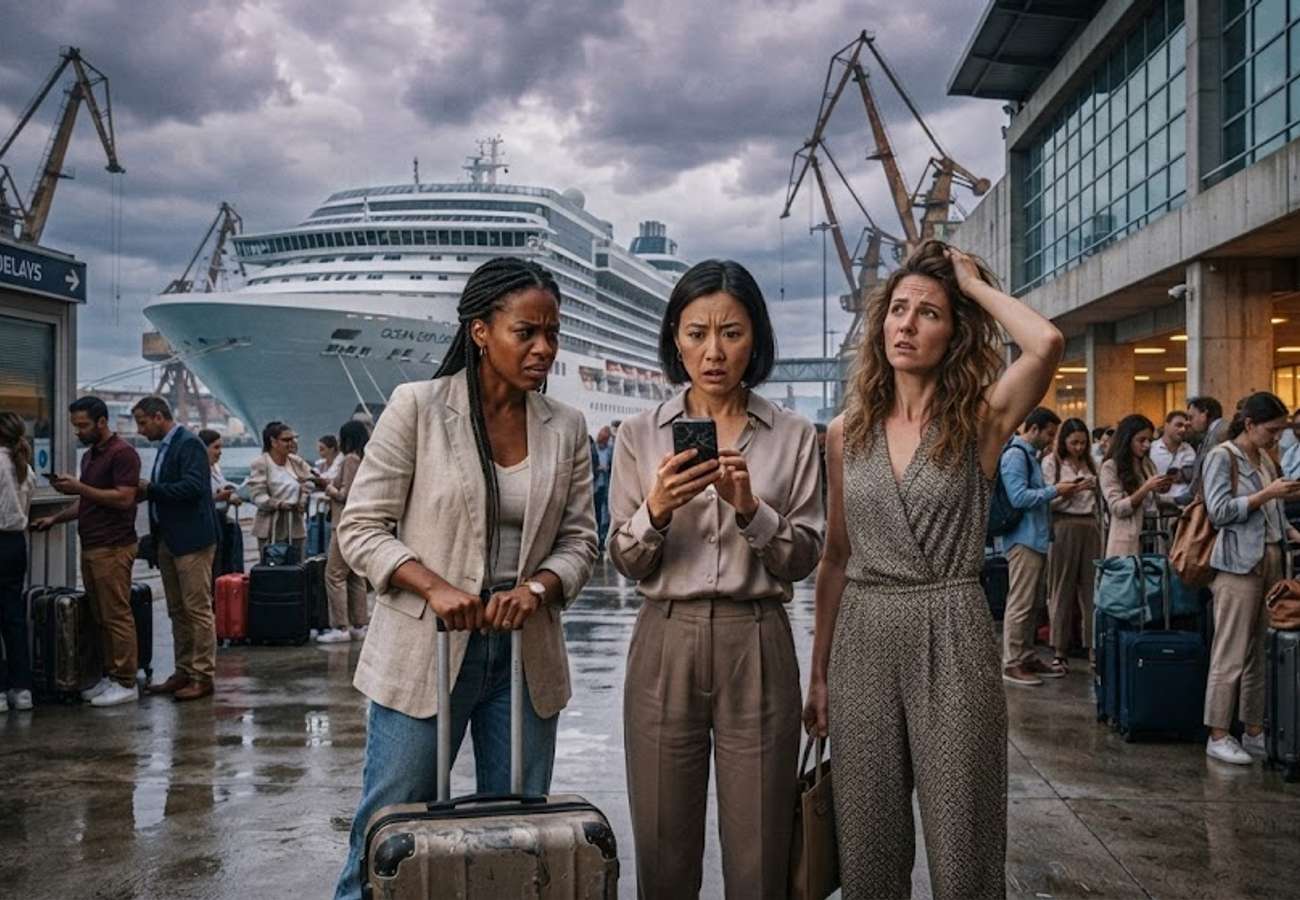
Image generated by AI
Global Tourism Hits 847 Million Arrivals — But the Real Story Is About Survival, Not Growth
The Organisation for Economic Co-operation and Development just dropped a bombshell report, and nobody's talking about what it really means for cruise lines and travelers. International tourism across OECD member countries reached 847 million arrivals in 2025, marking a 3.4% year-on-year increase. Sounds great. But dig deeper, and you'll find an industry in controlled chaos.
The numbers hide a darker truth: tourism isn't recovering evenly. It's fracturing. Some destinations are thriving. Others are collapsing. And the culprit isn't economics — it's climate, conflict, and pure unpredictability.
Reddit: "I booked a Mediterranean cruise last year and watched the weather alerts change by the hour. The whole industry feels like it's flying blind." — r/cruisetravel
Winners and Losers: The OECD's Uneven Playing Field
The report reveals a stark geographic divide. Finland (+16.5%), Japan (+15.8%), South Korea (+15.7%), and Norway (+12.5%) posted record-breaking numbers. These destinations built resilience. They adapted.
Meanwhile, Canada, Germany, Ireland, and the United States are stagnating or declining. Translation: travelers are voting with their wallets, and traditional powerhouses are losing.
This isn't a temporary blip. The OECD's message is crystal clear — stable, predictable tourism growth is dead. Welcome to the era of uneven, unpredictable, externally-shocked global mobility.
Extreme Weather Just Became a Booking Decision
Heatwaves. Wildfires. Floods. Cyclones. These aren't sidebar risks anymore. They're primary decision factors.
I visited Madrid in 2026, and what I found shocked me: cultural museums and libraries transformed into "heat refuges" for tourists during peak summer. This is the new normal. Destinations are building climate infrastructure, not just tourism infrastructure.
Governments across Europe are deploying multilingual emergency alert systems that push real-time warnings directly to travelers' phones:
Japan's "Safety Tips" app delivers hyperlocal hazard alerts Austria's AT-Alert system integrates weather and security data Croatia's 112 emergency app connects tourists to real-time support EU-wide MeteoAlarm network aggregates extreme weather across borders
The shift is profound: tourism just became an active risk-management exercise, not a passive experience.
This directly impacts cruise lines. Itineraries now require dynamic rerouting capabilities. Ports face capacity constraints during heat events. Insurance costs are rising. Operators who don't invest in real-time monitoring systems will lose bookings to competitors who do.
Geopolitical Conflict Is Rewriting Cruise Maps
The OECD report exposes how regional instability reshapes global tourism flows. Inbound tourism to Israel remains significantly below pre-pandemic levels due to ongoing regional tensions. Gulf region airline networks have experienced widespread disruption, cascading into reduced long-haul connectivity.
Cruise lines are feeling this acutely. Eastern Mediterranean itineraries are being replaced with Western European routes. Gulf ports are seeing cancellations. Caribbean-bound cruises are surging as risk-averse travelers flee uncertain regions.
Traveler behavior is shifting measurably:
Preference for "safe" destinations with predictable security profiles Shorter cruise durations to minimize exposure risk Budget-conscious bookings and fare-sensitive decision-making Hypersensitivity to cancellation policies
Tourism has become risk-weighted. Travelers aren't just asking "Where do I want to go?" They're asking "How safe is it? Can I afford it? What happens if conflict erupts?"
Governments now face an existential challenge: rebuild traveler confidence when the world feels unstable.
Responsible Tourism Shifts From Marketing to Mandate
Here's what cruise lines and destinations aren't talking about publicly: responsible tourism just became non-negotiable policy.
The OECD recommendation is blunt — manage growth or face consequences. This means:
Distributing tourists across secondary cities instead of concentrating all demand on flagship ports Implementing timed-entry booking systems for ports and attractions Expanding visitor taxes to fund infrastructure and community support Certifying local businesses to ensure revenue stays local and benefits are equitable Actively promoting off-season travel to reduce peak-period strain
Paris and other major European hubs are already piloting stricter visitor management systems. The strategic shift is unmistakable: destinations want controlled, sustainable flows — not maximum passenger volume.
For cruise operators, this means higher per-port costs, stricter capacity quotas, and longer turnaround times. Profitability models built on maximizing ship occupancy are becoming obsolete. Welcome to "managed mobility tourism."
The Emerging Invisible Layer: Real-Time Tourism Risk Intelligence
Few people in the travel industry are discussing this, but it's reshaping everything: real-time tourism risk intelligence systems are becoming standard infrastructure.
Gone are the days of static government travel warnings. Destinations are building dynamic digital ecosystems that integrate:
Live weather prediction systems feeding into port operations Real-time security risk monitoring tied to cruise itineraries Crowd density tracking at ports and attractions Transport disruption alerts cascading across networks
According to the OECD's digital transformation framework, these systems are being embedded directly into booking platforms, airline systems, and hotel management software.
The implication is staggering: travel decisions will soon be guided by live risk dashboards. A cruise booking engine could automatically reroute your ship based on hurricane probability, port congestion, or geopolitical alert levels — all in real time.
This also points to a future where travel insurance, emergency alerts, and booking confirmation merge into a single "risk-aware travel layer" — a unified system that protects travelers while optimizing operational efficiency for operators.
Tourism Is Entering an Era of Controlled Uncertainty
The OECD's central finding cuts through all the noise: global tourism is entering an era of controlled uncertainty. Growth is strong. Risks are stronger.
Destinations that adapt quickly will thrive. Cruise lines that invest in dynamic routing, real-time monitoring, and climate-resilient itineraries will capture market share. Those that cling to 2015-era operational models will struggle with declining confidence and unstable demand.
The competition has shifted. It's no longer about who attracts the most tourists. It's about who earns the most trust.
What Travelers and Operators Must Do Now
Tourism in 2026 demands a fundamentally different approach. For cruise operators: invest in real-time operational intelligence, build flexible itineraries, and embed climate and security monitoring into booking systems.
For travelers: expect dynamic itineraries, build flexibility into your bookings, and choose operators with transparent safety and sustainability records.
The era of predictable, stable global travel has ended. Those who adapt first will define the future of the industry.
The future belongs to those who build resilience into every booking, not those who maximize occupancy rates.
Related Travel Guides
Disclaimer
This article is for informational and educational purposes only. It does not constitute legal, financial, or professional advice. While we strive to provide accurate and up-to-date information, travel policies, regulations, and conditions change rapidly. Always verify information with official sources before making travel decisions. Nomad Lawyer makes no representations about the accuracy, reliability, completeness, or suitability of the information provided. Readers should consult qualified professionals for advice specific to their circumstances. The views expressed in this article are those of the author and do not necessarily reflect the views of Nomad Lawyer.
Raushan Kumar
Founder & Lead Developer
Full-stack developer with 11+ years of experience and a passionate traveller. Raushan built Nomad Lawyer from the ground up with a vision to create the best travel and law experience on the web.
Learn more about our team →