
Busan Tourism Surge: South Korea's Coastal Hub Sees 901% Spike in Cruise Arrivals for 2026
Busan is disrupting South Korea's travel market with a massive surge in international visitors and a 901% increase in sea-bound arrivals, challenging Seoul's long-term tourism monopoly.

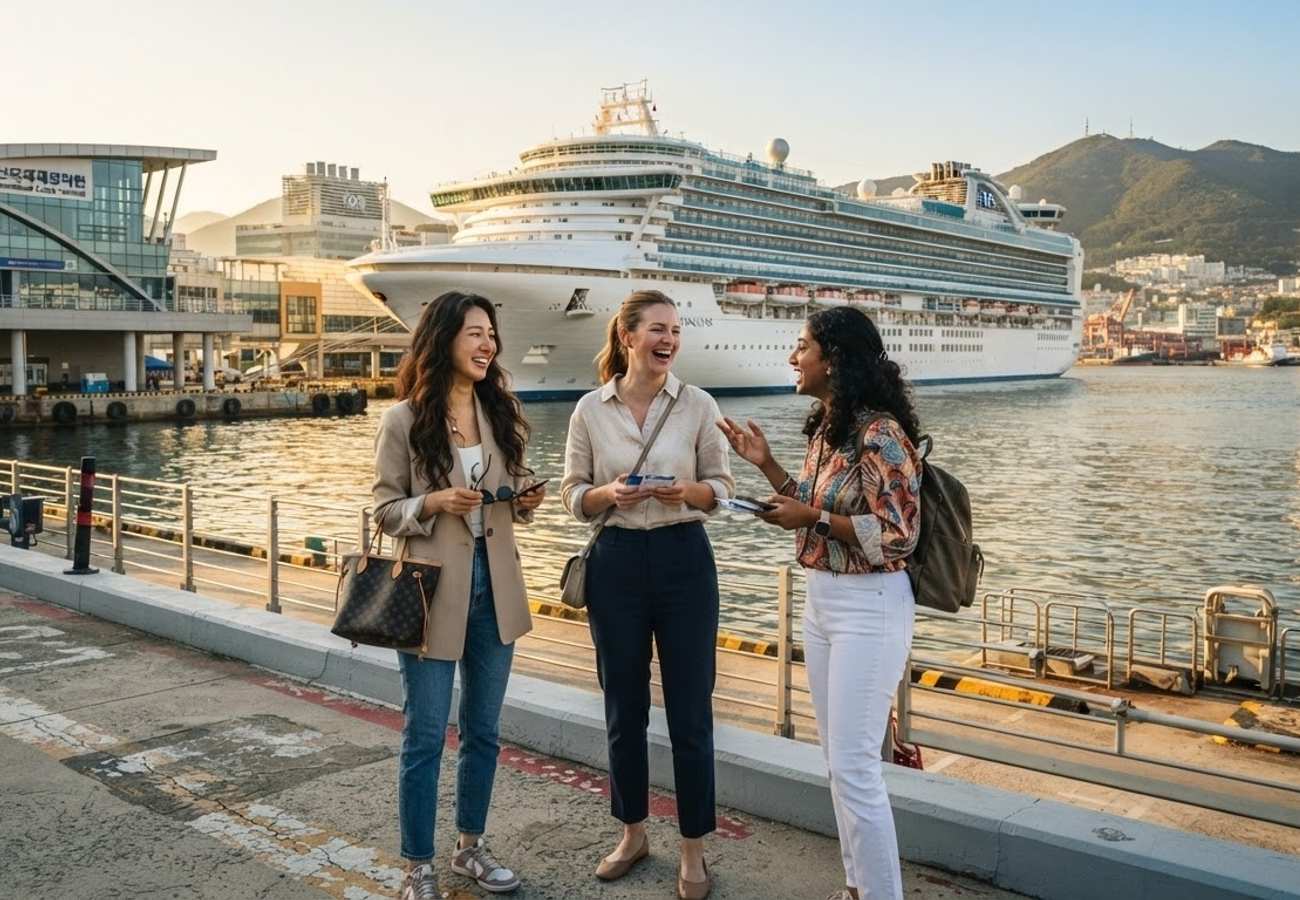
Image generated by AI
South Korea is witnessing a fundamental shift in its tourism distribution as Busan emerges as a primary global gateway. New data indicates the coastal city is successfully breaking Seoul's historical monopoly over international arrivals.
The traditional trend of foreign travelers remaining within the capital is ending. Between January and May 2026, Busan recorded 1,936,572 international visitors. This represents a 40% year-on-year increase, nearly doubling the national average growth rate of 21%.
Market trends suggest this growth is not merely a seasonal spike but a structural decentralization of the South Korean travel market. By positioning itself as a secondary gateway, Busan is diverting significant capital and foot traffic away from overcrowded urban centers in Seoul toward regional coastal economies.
Maritime Infrastructure and the 901% Growth Metric
The most aggressive growth is concentrated in the maritime sector. Busan became the first South Korean destination to implement 24-hour operations at its maritime terminals. This removal of docking curfews allows massive international cruise liners to operate without restrictive time constraints.
The operational result has been a 901% surge in sea-bound tourist arrivals. This strategic infrastructure upgrade has allowed Busan to outpace competing East Asian ports, turning the city into a high-revenue hub for affluent cruise passengers.
Regional Economic Impact and Visitor Demographics
The financial influx from this surge is substantial. Data from the Korea Tourism Data Lab confirms that foreign tourist spending in Busan reached 454.4 billion won (£258 million) over the first five months of the year. For three consecutive months, Busan has held the second-highest level of foreign tourism spending nationwide.
Visitor profiles are diversifying rapidly:
- Chinese Market: Despite a slight national dip, Chinese arrivals in Busan jumped 94% in May alone, driven by optimized port logistics.
- North American Market: U.S. arrivals grew by 80% in May.
- European Market: Significant increases were recorded from visitors from Britain and France.
Shift Toward Authentic Consumption
A June survey conducted at the Busan Eurasia Platform indicates a pivot in consumer behavior. Modern travelers are eschewing luxury malls in favor of traditional experiences.
- Traditional Markets: Nearly 60% of international respondents preferred shopping at local markets over westernized malls.
- Visitor Retention: 46% of respondents were repeat visitors.
- Stay Duration: Over 40% of tourists stayed for four nights or longer.
This trend suggests that the "authenticity" of sites like Jagalchi Market and Gukje Market is a primary driver for long-term visitor retention.
Strategic Expansion and Digital Integration
To sustain this momentum, the Busan Tourism and MICE Bureau is shifting focus toward independent travelers. Director-general Na Yun-bin has outlined a systemic approach to ensure growth remains structural rather than cyclical.
Key initiatives include:
- Visit Busan Pass: A digital access tool for seamless landmark entry.
- Marine Taxi Networks: New water-based transit to connect coastal hubs and reduce land traffic congestion.
- Annual Target: The city is currently on track to reach four million global tourists for the year.
Tourism Performance Metrics (January – May 2026)
| Metric | Data Point | Growth / Value |
|---|---|---|
| Total International Visitors | 1,936,572 | +40% YoY |
| Sea-Bound Arrivals | N/A | +901% |
| Foreign Tourist Expenditure | 454.4 Billion Won | £258 Million |
| May Chinese Arrivals | N/A | +94% YoY |
| May US Arrivals | N/A | +80% YoY |
Why This Matters
The Busan phenomenon represents a critical case study in "tourism decentralization." For years, South Korea struggled with a top-heavy travel economy where Seoul absorbed the vast majority of international spend.
Our analysis indicates that Busan's success is not due to organic growth alone, but specific "bottleneck removal." By implementing 24-hour port operations, the city removed the primary friction point for cruise lines. This proves that infrastructure agility—specifically in the maritime sector—can instantly rewrite a city's economic standing. Furthermore, the preference for traditional markets over luxury malls signals a broader global shift toward "slow travel" and authentic cultural immersion, which regional cities are better equipped to provide than megacities.
Industry Outlook
Expect Busan to aggressively expand its "Smart Transit" initiatives. The introduction of marine taxis will likely serve as a blueprint for other coastal Asian cities looking to bypass urban gridlock. As the city pursues its four-million-visitor target, we anticipate a surge in boutique hotel developments and a rise in niche cultural tours. The ability to attract high-spending Western tourists alongside a resurgent Chinese market provides Busan with a diversified revenue stream that makes it more resilient to regional geopolitical volatility than Seoul.
Busan is no longer a regional alternative; it is a primary destination.
Related Travel Guides
Disclaimer
This article is for informational and educational purposes only. It does not constitute legal, financial, or professional advice. While we strive to provide accurate and up-to-date information, travel policies, regulations, and conditions change rapidly. Always verify information with official sources before making travel decisions. Nomad Lawyer makes no representations about the accuracy, reliability, completeness, or suitability of the information provided. Readers should consult qualified professionals for advice specific to their circumstances. The views expressed in this article are those of the author and do not necessarily reflect the views of Nomad Lawyer.
Preeti Gunjan
Contributor & Community Manager
A passionate traveller and community builder. Preeti helps grow the Nomad Lawyer community, fostering engagement and bringing the reader experience to life.
Learn more about our team →