
Nigerian Passengers Protest at Nairobi Jomo Kenyatta International Airport Amid 2026 Aviation Strike
Nigerian travelers stranded for over 24 hours at Nairobi's JKIA staged protests following mass flight cancellations and delays caused by a widespread aviation staff strike.

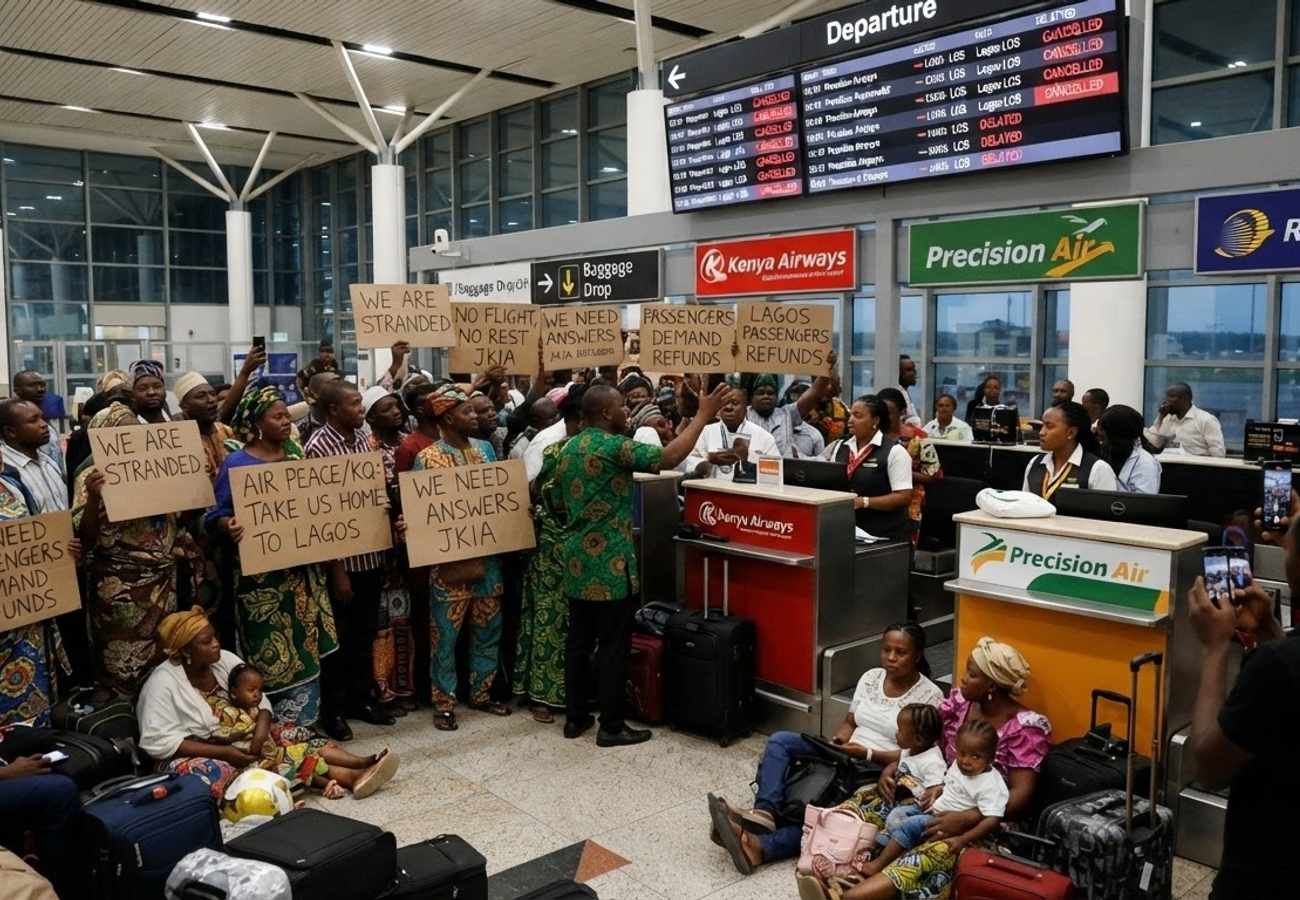
Image generated by AI
Nigerian passengers transiting through Nairobi’s Jomo Kenyatta International Airport (JKIA) have staged protests after flight delays and cancellations exceeded 24 hours. The disruption, triggered by a widespread aviation staff strike, has left hundreds of travelers stranded on onward routes to Lagos.
Breakdown of the JKIA Operational Collapse
The disruption peaked on Monday evening, September 1, 2026, as Nigerian travelers gathering around airline counters demanded transparency regarding their flight statuses. Many passengers reported spending an entire night within the terminal after services to Lagos were repeatedly removed from departure boards or rescheduled and subsequently missed.
Our analysis of the situation indicates that the chaos is not isolated to a single carrier but is a systemic failure resulting from industrial action. The protests were fueled by a lack of communication from airline staff and the absence of basic amenities for families traveling with children and elderly relatives.
Flight and Airport Impact Data
- Primary Hub Affected: Jomo Kenyatta International Airport (JKIA), Nairobi.
- Critical Route Impact: High-volume transit corridors from East and Southern Africa to Lagos, Nigeria.
- Timeline of Disruption: Industrial action intensified between August 30–31, 2026, with peak passenger distress reported September 1.
- Operational Failures:
- Reduced flight frequencies and consolidated schedules.
- Air traffic control (ATC) service interruptions.
- Ground-handling staff work stoppages.
- Systemic backlog of delayed services from Sunday into Monday.
Passenger Rights and Compensation Advisory
For the affected passenger, a strike by airport staff (third-party providers) rather than the airline itself often creates a "grey area" regarding liability. However, under international aviation standards and most national policies, specific obligations remain.
Our analysis of passenger rights suggests the following actions for those stranded at JKIA:
- Duty of Care: Regardless of the cause of the delay (including strikes), airlines are generally required to provide "Duty of Care." This means providing vouchers for meals and refreshments, and providing hotel accommodation and transport if an overnight stay is required.
- Rebooking Rights: Passengers are entitled to be re-routed to their final destination at the earliest opportunity. If the airline cannot provide a flight within a reasonable timeframe, passengers may be entitled to a full refund of the unused portion of the ticket.
- Compensation Claims: While strikes are often classified as "extraordinary circumstances" (which can exempt airlines from paying fixed monetary compensation under frameworks like EU261/2004 for flights departing from Europe), this does not waive the airline's responsibility to provide food and lodging.
- Documentation: Passengers should keep a detailed log of all expenses incurred (food, water, hotels) and take photos of departure boards showing the cancellations to support future reimbursement claims.
Industry Analyst View: The Fragility of the Nairobi Hub
The current crisis highlights a critical vulnerability in African aviation logistics. Nairobi serves as a primary transit node for travelers moving between Southern/Eastern Africa and West African hubs like Lagos. When a single point of failure—such as a labor dispute at JKIA—occurs, the ripple effect is magnified because there are few viable, cost-effective alternative hubs for these specific routes.
The "go-slow" tactics employed by air traffic control and ground staff demonstrate how easily a hub's capacity can be throttled. For the aviation industry, this event underscores the urgent need for better contingency planning and digitized passenger communication systems that can function independently of ground-staff availability.
Travel Risk Mitigation for 2026
Travelers utilizing East African hubs are advised to implement the following safeguards:
- Buffer Zones: Build a minimum of 12–24 hours of buffer time into transit itineraries during known periods of industrial unrest.
- Flexible Fare Classes: Opt for flexible tickets that allow for rerouting through alternative hubs (such as Addis Ababa) without heavy penalties.
- Direct Monitoring: Use independent flight tracking systems like FlightAware to monitor aircraft movements rather than relying solely on airport departure boards, which may lag behind actual operational changes.
The volatility of regional hub operations makes proactive itinerary management a necessity for the modern global traveler.
Related Travel Guides
Disclaimer
This article is for informational and educational purposes only. It does not constitute legal, financial, or professional advice. While we strive to provide accurate and up-to-date information, travel policies, regulations, and conditions change rapidly. Always verify information with official sources before making travel decisions. Nomad Lawyer makes no representations about the accuracy, reliability, completeness, or suitability of the information provided. Readers should consult qualified professionals for advice specific to their circumstances. The views expressed in this article are those of the author and do not necessarily reflect the views of Nomad Lawyer.
Raushan Kumar
Founder & Lead Developer
Full-stack developer with 11+ years of experience and a passionate traveller. Raushan built Nomad Lawyer from the ground up with a vision to create the best travel and law experience on the web.
Learn more about our team →