
Airlines Cancel Nairobi Flights as Jomo Kenyatta International Airport Strike Widens in 2026
Widespread flight cancellations and diversions hit Jomo Kenyatta International Airport (JKIA) as the Kenya Aviation Workers Union launches a full-scale strike over pay and staffing.

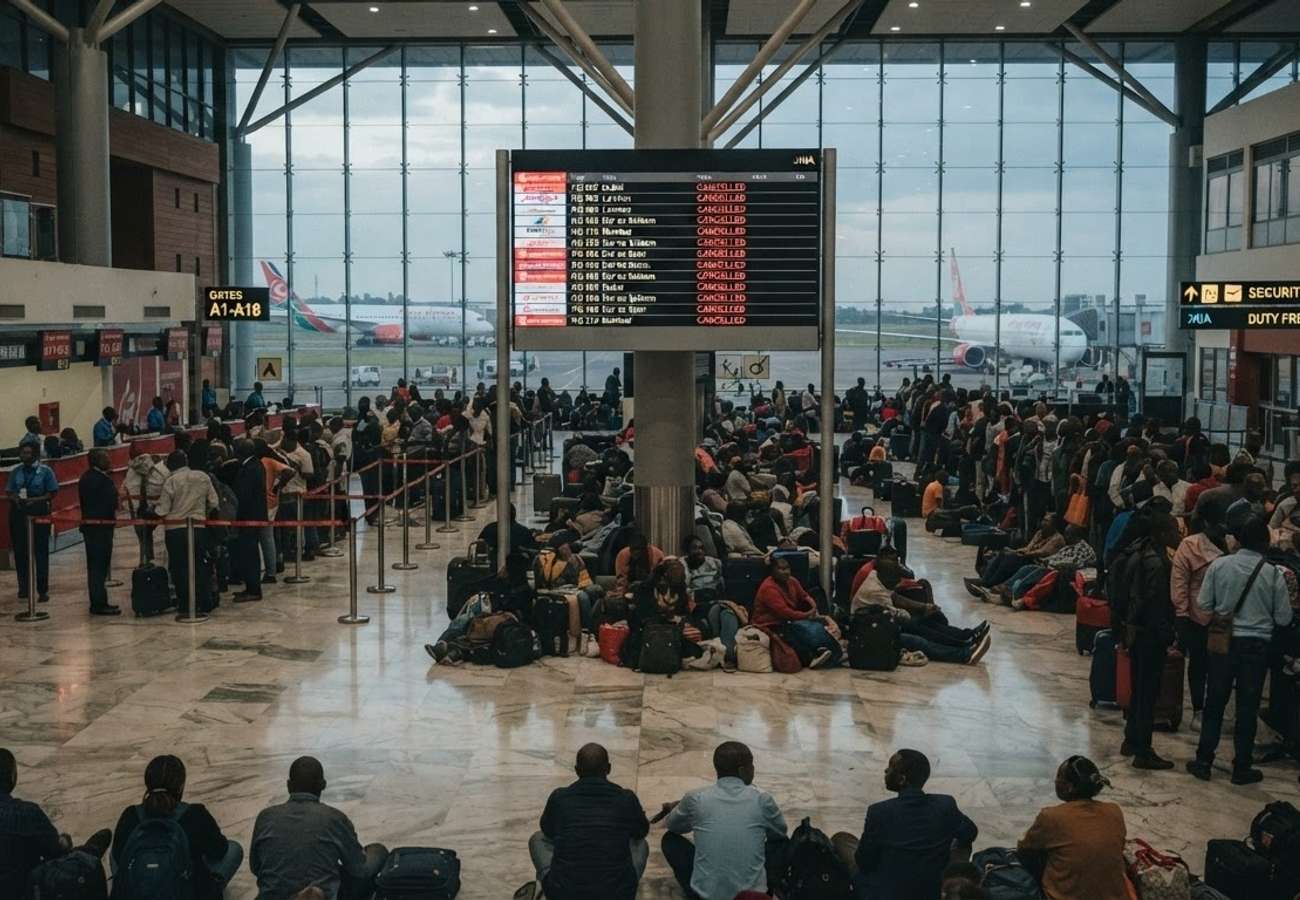
Image generated by AI
A full-scale strike by the Kenya Aviation Workers Union has paralyzed operations at Jomo Kenyatta International Airport (JKIA), forcing major airlines to cancel flights and divert traffic across East Africa.
Aviation Industrial Action Disrupts Nairobi Hub
Operations at Jomo Kenyatta International Airport (JKIA) have entered a state of severe disruption following the escalation of industrial action by the Kenya Aviation Workers Union. What began as a "go slow" on Sunday, 30 August 2026, has transitioned into a comprehensive strike affecting critical airport functions, including air traffic control and ground handling services.
The strike has resulted in significant congestion within terminals, with departure boards showing systemic delays and cancellations. Because JKIA serves as the primary gateway for East Africa, the disruption is not limited to local travel; it has created a ripple effect across long-haul routes connecting Kenya to Europe, the Middle East, and other African capitals.
Operational Impact by Carrier
Airlines have adopted a fragmented approach to managing the crisis, with decisions made on a rolling basis depending on crew duty limits and ground capacity.
- Kenya Airways: As the primary hub operator, Kenya Airways has reported the most significant impact, confirming widespread cancellations and substantial delays across its network.
- Regional Low-Cost Carriers: Several regional operators have consolidated flights or reduced frequencies to manage limited handling capacity.
- International Airlines: Major foreign carriers have restructured multi-sector routings to avoid overnight ground time in Nairobi, with some replacing Nairobi stops with overflights or diverting to alternative regional airports.
Summary of Transit Disruptions
| Impact Area | Status | Primary Effect |
|---|---|---|
| Air Traffic Control | Severely Limited | Flight diversions and extended holding patterns |
| Ground Handling | Critical Shortage | Increased turnaround times and baggage delays |
| Terminal Operations | Congested | Long check-in queues and transit area overcrowding |
| Flight Schedules | Volatile | Rolling cancellations for both regional and long-haul |
Traveler Logistics Guide: Navigating the JKIA Crisis
From a ground-level perspective, the best way to navigate this disruption is to avoid arriving at the airport without a verified, active flight status. The current environment at JKIA is characterized by high passenger volumes and limited information dissemination.
Booking and Connections If you have a complex itinerary involving safari packages or regional connections, be aware that a single cancellation at JKIA often triggers a total collapse of the onward journey. Travelers should prioritize rebooking via alternative African hubs if their tickets allow for flexibility.
Digital Transit & Communication Do not rely on general airport monitors. Use direct airline apps or contact booking agents for real-time updates. Many carriers are currently waiving change fees or offering free date modifications, but these policies vary by booking channel.
Customs and Transit For those stranded in Nairobi, ensure your transit visas are current. If diverted to a third-country transit point, check local entry requirements immediately to avoid secondary immigration issues.
Infrastructure Impact Assessment
The current labor dispute is rooted in long-standing grievances regarding pay, staffing levels, and the failure of state aviation bodies to honor previous collective bargaining agreements. Workers at the Kenya Airports Authority and Kenya Civil Aviation Authority have specifically cited workload concerns and job insecurity.
This volatility exposes a structural vulnerability in East Africa's aviation infrastructure. By relying heavily on a single primary hub (JKIA) without sufficient redundancies or labor stability, the regional economy remains susceptible to total transit paralysis. The strike has reignited a broader debate regarding the governance and investment strategy of Kenya's aviation sector, particularly as it seeks to maintain its status as a global link to the continent.
Transit stability remains uncertain as negotiations between the union and state authorities continue.
Related Travel Guides
Disclaimer
This article is for informational and educational purposes only. It does not constitute legal, financial, or professional advice. While we strive to provide accurate and up-to-date information, travel policies, regulations, and conditions change rapidly. Always verify information with official sources before making travel decisions. Nomad Lawyer makes no representations about the accuracy, reliability, completeness, or suitability of the information provided. Readers should consult qualified professionals for advice specific to their circumstances. The views expressed in this article are those of the author and do not necessarily reflect the views of Nomad Lawyer.
Kunal K Choudhary
Co-Founder & Contributor
A passionate traveller and tech enthusiast. Kunal contributes to the vision and growth of Nomad Lawyer, bringing fresh perspectives and driving the community forward.
Learn more about our team →