
Nairobi Jomo Kenyatta International Airport Strike 2026: Thousands Stranded as KAWU Workers Strike
Aviation workers at Jomo Kenyatta International Airport (JKIA) launched a go-slow strike on August 30, 2026, causing widespread cancellations and stranding thousands of travelers.

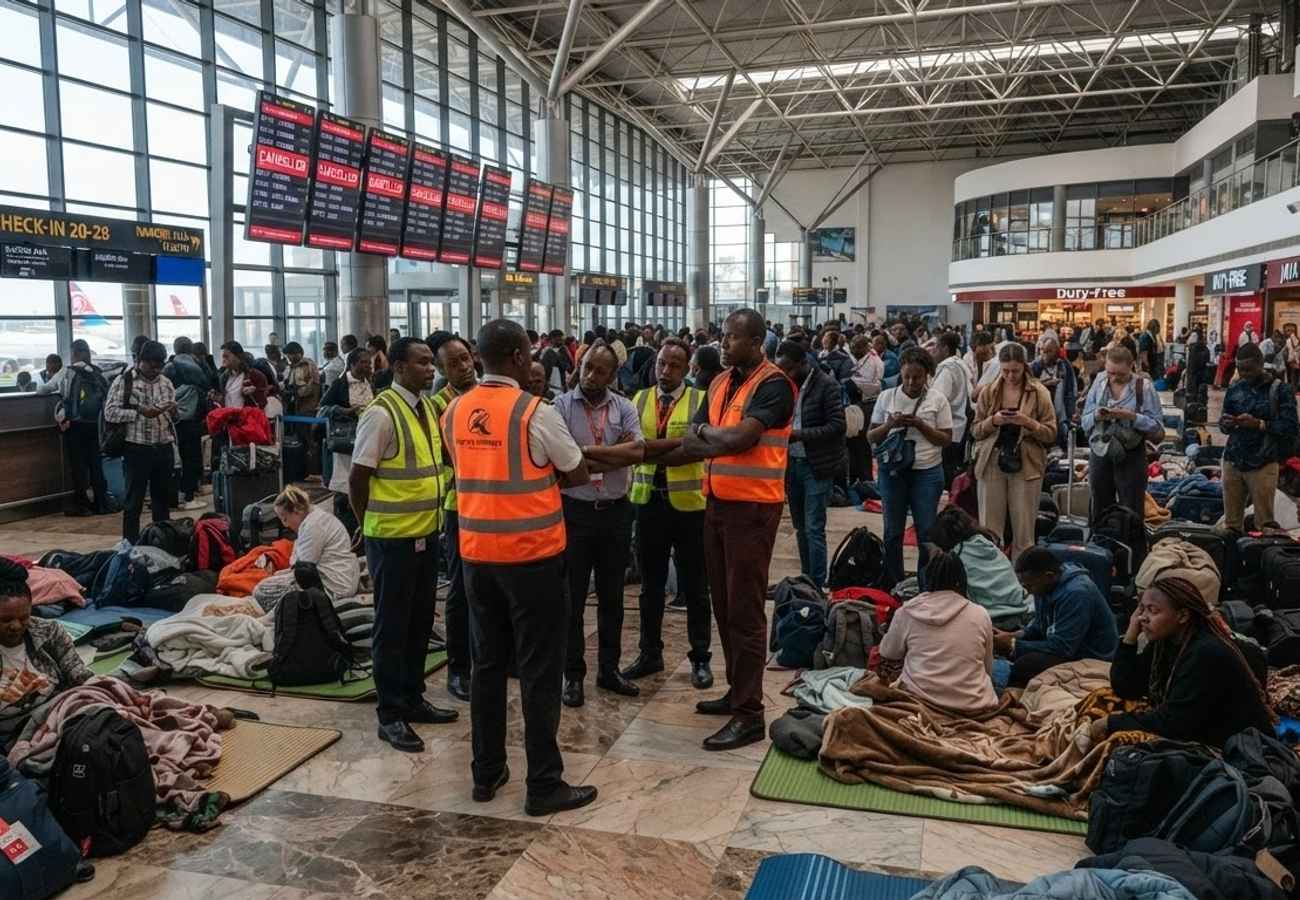
Image generated by AI
Thousands of passengers are currently stranded at Jomo Kenyatta International Airport (JKIA) following a "go-slow" strike by aviation workers that began on August 30, 2026.
The industrial action, led by the Kenya Aviation Workers Union (KAWU), has paralyzed check-in, security screening, and ground handling operations at Kenya's primary international gateway, triggering a ripple effect of cancellations across East Africa.
The Labor Crisis at JKIA
The disruption began on Sunday, August 30, 2026, when KAWU members downed tools, effectively throttling the capacity of one of Africa's most critical transit hubs. By Monday, August 31, the strike entered its second day, leaving hundreds of travelers sleeping on terminal floors and airport seats. While some airlines coordinated hotel transfers on Monday morning, the sheer volume of stranded passengers has overwhelmed available local infrastructure.
The impact extends beyond Nairobi. Operations at Moi International Airport in Mombasa have also faced disruptions, though JKIA remains the epicenter of the crisis due to its role as the primary link for long-haul flights from Europe, North America, and the Middle East.
Root Causes: Pay, Contracts, and Privatization Fears
The current unrest is not an isolated incident but the culmination of grievances that surfaced in the first half of 2026. KAWU leaders have cited three primary catalysts for the strike:
- Unresolved Collective Bargaining: A failure to finalize a collective bargaining agreement with the Kenya Civil Aviation Authority regarding compensation and benefits.
- Working Conditions: Long-standing complaints regarding poor workplace environments and job security.
- Management Shifts: Strong opposition to proposed investment and concession plans involving external partners, which workers fear will lead to restructuring and the erosion of existing employment terms.
Furthermore, the union has condemned the deployment of volunteers and temporary staff to fill gaps, arguing that using untrained personnel undermines the professional standards of aviation safety and security.
Regional Economic and Tourism Impact
For the visitor, the real impact is a breakdown in the "safari pipeline." Nairobi serves as the essential jumping-off point for national parks and regional capitals. The timing of this strike—coinciding with a peak period for safari travel and business conferences—has created a logistical nightmare for those with non-refundable downstream bookings.
Beyond passenger travel, the strike threatens Kenya's horticultural exports. As a major global supplier of fresh flowers, any interruption to freighter schedules at JKIA results in immediate revenue losses and supply chain breaks for perishable goods.
Industry analysts suggest that recurring labor instability may push corporate and leisure travelers toward alternative regional hubs, such as Addis Ababa, Kigali, or Johannesburg, to avoid the volatility associated with Nairobi's aviation sector.
Visitor Insider Tips
For those currently navigating the situation or planning a trip to Kenya, these practical steps are essential:
- Alternative Routing: If your flight is canceled, check for connections via Addis Ababa (ADD) or Kigali (KGL) to reach other East African destinations.
- Documentation for Claims: Keep a meticulous log of all expenses, including meals and unplanned hotel stays. Retain all boarding passes and cancellation notices for insurance reimbursement.
- Airport Transit: If you are forced to wait at JKIA, prioritize the official airport lounges for security and basic amenities, as public terminal areas can become extremely congested during strikes.
- Communication: Monitor the official social media channels of the Kenya Civil Aviation Authority and your specific airline rather than relying on general news reports, as flight status changes are fluid.
Tourism Outlook
The long-term health of Kenya's tourism sector depends on the reliability of JKIA. While government officials and union representatives are currently in talks to reach a return-to-work agreement, the recurring nature of these disputes suggests a deeper structural conflict regarding airport governance.
If a swift resolution is not reached, the perceived instability could deter new airline services and foreign investment in the aviation sector. For now, travelers are urged to maintain flexible bookings and ensure comprehensive travel insurance that specifically covers industrial action.
The stability of East Africa's primary gateway remains the linchpin for the region's economic connectivity.
Related Travel Guides
Disclaimer
This article is for informational and educational purposes only. It does not constitute legal, financial, or professional advice. While we strive to provide accurate and up-to-date information, travel policies, regulations, and conditions change rapidly. Always verify information with official sources before making travel decisions. Nomad Lawyer makes no representations about the accuracy, reliability, completeness, or suitability of the information provided. Readers should consult qualified professionals for advice specific to their circumstances. The views expressed in this article are those of the author and do not necessarily reflect the views of Nomad Lawyer.
Raushan Kumar
Founder & Lead Developer
Full-stack developer with 11+ years of experience and a passionate traveller. Raushan built Nomad Lawyer from the ground up with a vision to create the best travel and law experience on the web.
Learn more about our team →