
Newark flight turbulence disrupts U.S. airlines through 2026
Newark Liberty International Airport's operational crisis is triggering cascading flight disruptions across the U.S. network through late 2026, with 182 delays reported in a single April day affecting major carriers.

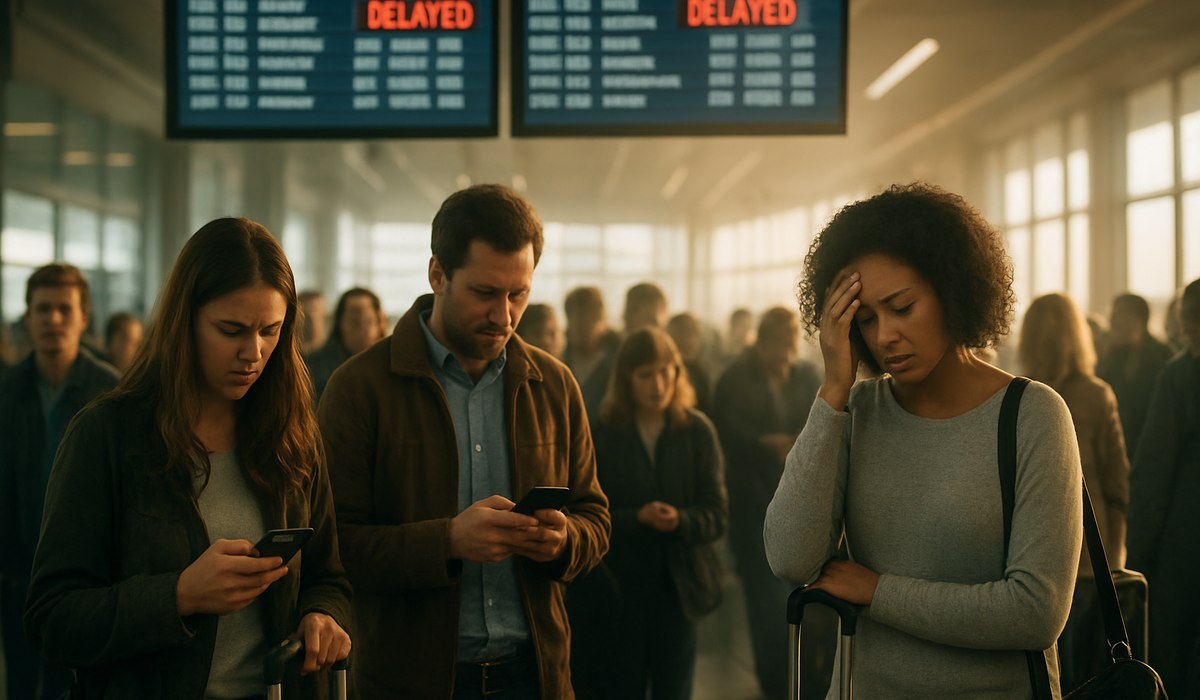
Image generated by AI
Newark Flight Turbulence Cascades Across U.S. Network Through 2026
Newark Liberty International Airport is experiencing unprecedented operational strain that extends far beyond New Jersey. On April 7, 2026, the airport recorded 182 delays and 10 cancellations in a single day, disrupting connections across the entire American airline network. The crisis involves capacity constraints, aging air traffic control systems, and runway configuration vulnerabilities that the Federal Aviation Administration now projects will persist through October 2026. Major carriers including United Airlines, JetBlue Airways, American Airlines, Delta Air Lines, Spirit Airlines, and Frontier Airlines are all managing substantial schedule reductions and route modifications.
Newark's Structural Bottlenecks: From Local Delays to National Cascades
Newark Liberty International Airport sits at a critical juncture in the U.S. air transportation network. The airport's physical layout creates inherent operational vulnerabilities that become catastrophic when traffic approaches peak capacity. Taxiway congestion, restrictive runway crossing patterns, and minimal scheduling buffers leave almost no margin for error during normal operations. When regional air traffic control experiences staffing shortages or technology disruptions, delays multiply rapidly throughout the facility.
The airport's role as both a major transatlantic gateway and dense domestic connecting hub amplifies the cascading effects of localized disruptions. A ground delay program lasting just two hours at Newark triggers missed connections throughout Florida, the Southeast, Midwest, and Mountain West regions. Industry analysis reveals that weather-sensitive operations in the New York metropolitan airspace compound these challenges, with routine conditions sometimes generating triple-digit delay counts. Unlike operations at larger hub airports with more flexible runway configurations, Newark's infrastructure leaves limited recovery options once disruptions begin accumulating.
The April 2026 Breaking Point: 182 Delays in a Single Day
On April 7, 2026, Newark flight turbulence reached a critical threshold when the airport recorded its worst operational day in recent history. One hundred eighty-two individual flight delays and 10 cancellations occurred despite relatively routine weather conditions across the Northeast. This single-day performance revealed the airport's extremely limited capacity cushion and triggered immediate response protocols from the Federal Aviation Administration.
The April performance benchmark became the justification for extended flight caps throughout summer 2026. Industry observers note that similar disruption patterns emerged repeatedly during late 2025 and early 2026, suggesting systematic rather than episodic operational failure. The consistency of triple-digit delay counts under non-severe weather conditions indicates fundamental infrastructure inadequacy rather than temporary staffing fluctuations. For travelers, this April incident signaled that disruptions would likely continue throughout the upcoming high-season travel period.
Why Newark's Layout Creates Systemic Vulnerability
The physical design of Newark Liberty International Airport fundamentally constrains modern airline operations. The airport's two parallel runways operate within extremely narrow spacing parameters, requiring complex coordination of simultaneous arrivals and departures. Taxiway design forces traffic crossing patterns that become bottlenecks during peak banking periods when multiple airlines concentrate arrival and departure waves.
The aging air traffic control infrastructure managing Newark airspace compounds these design limitations. Controllers operating with outdated systems experience reduced situational awareness during periods of high traffic density. Technology glitches affecting these systems—which occurred repeatedly throughout 2025—create cascading delays as ground stops propagate through the regional network. Weather conditions that other major U.S. airports manage routinely become disruptive events at Newark due to the facility's limited operational flexibility and reduced buffer capacity.
Runway rehabilitation work scheduled through late 2026 further constrains capacity while upgrading aging infrastructure. During scheduled maintenance windows on Runway 4L-22R, the FAA has implemented temporary flight caps restricting operations to approximately 28 arrivals and 28 departures per hour. This reduction essentially removes capacity equivalent to an entire banking cycle for hub carriers, forcing difficult network planning decisions across their domestic systems.
What Travelers and Airlines Should Expect Through 2026
The Federal Aviation Administration has extended temporary flight capacity restrictions at Newark Liberty International Airport through at least October 24, 2026. These restrictions, initially introduced as emergency measures, are now permanent planning constraints for airline scheduling and capacity allocation. Airlines must structure their networks assuming significantly reduced Newark capacity through the fall 2026 travel season.
United Airlines, the dominant carrier at Newark, has already implemented substantial schedule reductions. The carrier eliminated approximately 35 roundtrip daily flights during 2025, representing roughly 10 percent of its Newark operations schedule. This reduction specifically addresses air traffic control staffing challenges and recurring technology failures affecting the regional control system. Other carriers have adopted similar strategies by consolidating flights, shifting capacity to neighboring airports like Boston Logan International, Washington Dulles International, Chicago O'Hare International, and Atlanta Hartsfield-Jackson International, or eliminating vulnerable late-evening departures most susceptible to cascading delays.
These schedule adjustments create a system-wide feedback effect across U.S. aviation. Reduced Newark capacity forces passenger displacement toward alternative hubs, increasing load factors and reducing scheduling flexibility at secondary airports. When Newark schedules remain intact but operational delays occur, aircraft and crews frequently end up out of position for onward legs to Midwest and Western destinations. Check FlightAware for real-time tracking of Newark-based disruptions and their network effects.
Key Facts: Newark Flight Turbulence Impact Summary
| Metric | Details |
|---|---|
| Single Worst Day | April 7, 2026: 182 delays, 10 cancellations |
| FAA Flight Caps Extended | Through October 24, 2026 (minimum) |
| Peak Hour Capacity Reduction | Limited to 28 arrivals + 28 departures during runway work |
| United Airlines Schedule Cut | 35 roundtrip daily flights removed (≈10% of Newark schedule) |
| Affected Major Carriers | United, JetBlue, American, Delta, Spirit, Frontier Airlines |
| Network Cascade Radius | Disruptions ripple to Florida, Southeast, Midwest, Mountain West within hours |
| Root Causes | Air traffic control staffing shortages, outdated technology systems, runway configuration constraints, weather sensitivity |
| Projected Duration | Through Q4 2026, with ongoing infrastructure impacts beyond |
Traveler Action Checklist
-
Monitor schedules proactively: Check FlightAware at least 72 hours before any flight connecting through Newark, and refresh tracking 24 hours and 6 hours before departure.
-
Build connection buffers: If traveling through Newark, require minimum 3-hour connection windows for domestic flights and 4+ hours for international connections to accommodate cascading delays.
-
Consider alternative routings: Book connecting flights through Boston, Washington, Chicago, or Atlanta when practical, as these hubs experience fewer newark flight turbulence cascades.
-
Understand passenger rights: Review U.S. Department of Transportation regulations regarding delayed and cancelled flights at US DOT before traveling.
-
Contact airlines immediately: If your Newark flight is delayed beyond 3 hours, request written confirmation of compensation eligibility from your airline carrier.
-
Verify pre-departure conditions: Call your airline directly 6 hours before departure to confirm current ground delay program status rather than relying solely on digital notifications.
-
Document everything: Photograph boarding passes, delay notices, and expense receipts related to travel disruptions for potential reimbursement claims.
-
Request rebooking options: If your Newark flight is cancelled, request airline rebooking on the next available flight or nearby alternative airports immediately.
Frequently Asked Questions
What exactly is causing Newark's flight disruption crisis?
Multiple factors create
Disclaimer
This article is for informational and educational purposes only. It does not constitute legal, financial, or professional advice. While we strive to provide accurate and up-to-date information, travel policies, regulations, and conditions change rapidly. Always verify information with official sources before making travel decisions. Nomad Lawyer makes no representations about the accuracy, reliability, completeness, or suitability of the information provided. Readers should consult qualified professionals for advice specific to their circumstances. The views expressed in this article are those of the author and do not necessarily reflect the views of Nomad Lawyer.
Kunal K Choudhary
Co-Founder & Contributor
A passionate traveller and tech enthusiast. Kunal contributes to the vision and growth of Nomad Lawyer, bringing fresh perspectives and driving the community forward.
Learn more about our team →