
Travelers Face Widespread Flight Disruptions Across Five Major US Hubs April 11
US travelers face widespread disruptions as Delta, United, Spirit and SkyWest ground 79 flights and delay 1,759 more on April 11, 2026. Disruptions concentrated at Chicago, Atlanta, New York, Los Angeles and St. Louis hubs affecting transcontinental and regional connections.

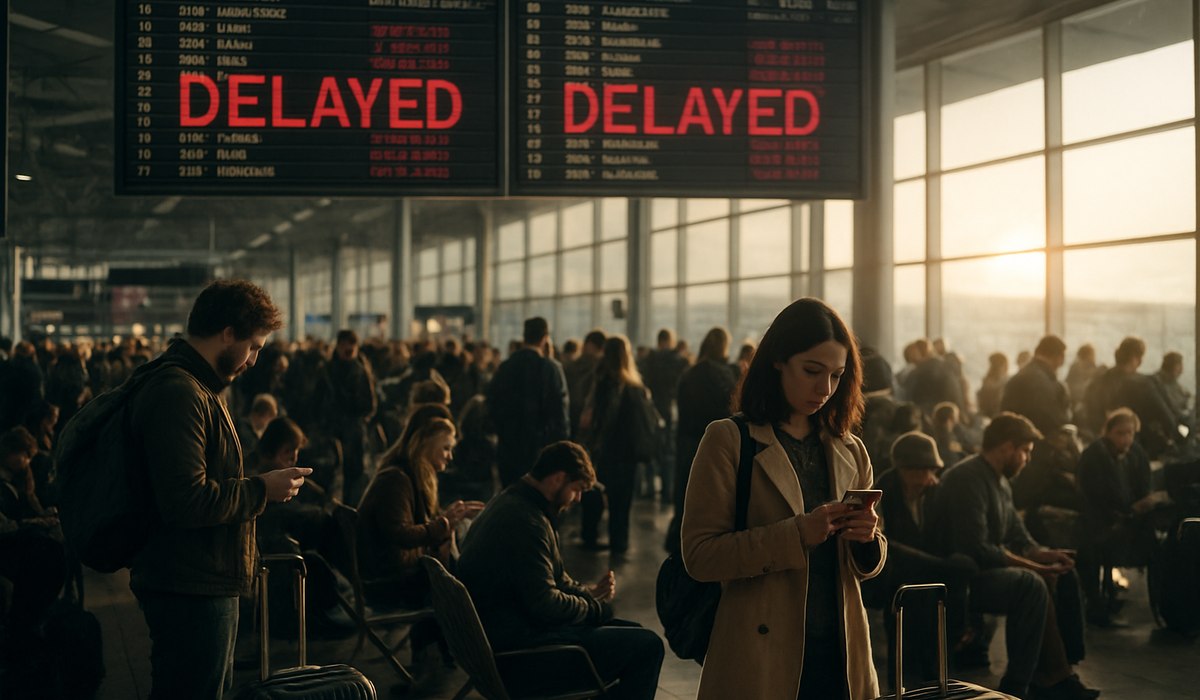
Image generated by AI
Travelers Face Widespread Flight Disruptions Across US Network
Thousands of air travelers endured significant schedule disruptions on April 11, 2026, as major US carriers recorded 79 cancelled flights and 1,759 delays nationwide. The disruptions rippled across the country's five busiest aviation hubs—Chicago, Atlanta, New York, Los Angeles and St. Louis—creating cascading impacts on transcontinental routes and regional connections. Delta Air Lines, United Airlines, Spirit Airlines and SkyWest Airlines bore the brunt of the operational challenges, affecting passengers on everything from cross-country flights to regional feeder routes that funnel traffic into major network hubs.
Disruptions Concentrated at Major US Hubs
While the 79 cancellations represented a manageable number compared to severe weather events, the 1,759 delayed flights proved far more disruptive to passenger operations. Data from flight-tracking services revealed that travelers face widespread consequences when delays cluster at hub airports where multiple airlines funnel connections. Chicago O'Hare, Hartsfield-Jackson Atlanta International, New York's LaGuardia and JFK, Los Angeles International and St. Louis Lambert all reported elevated delay counts that persisted throughout the day.
The ripple effects proved particularly acute for travelers connecting between regions. Transcontinental routes linking the East and West Coasts experienced compounding delays, while shorter regional flights feeding into these hubs faced extended ground holds. SkyWest-operated flights, which carry passengers under Delta and United branding, amplified network-wide impacts given the carrier's critical role connecting smaller markets to major hubs. Visit FlightAware for real-time tracking of affected routes and current delay estimates.
Why Delays Prove More Disruptive Than Cancellations
Industry analysts emphasize that delay-heavy disruption days create greater passenger frustration than outright cancellations. When travelers face widespread delays rather than cancellations, they endure extended uncertainty: terminal congestion, tarmac waits, missed connections and compounding uncertainty about ground transportation timing. Airlines operating at high utilization rates—particularly low-cost carriers like Spirit—struggle to absorb schedule shocks, leaving minimal buffer capacity when morning delays cascade into afternoon and evening flights.
The operational dynamic differs markedly from cancellations. A cancelled flight prompts rebooking and alternative planning. But widespread delays trap passengers in extended limbo, forcing real-time decisions about missed connections, meal vouchers and overnight accommodations. Spring travel demand amplifies this challenge; packed schedules leave little slack when weather or congestion slows operations. Understanding these dynamics helps travelers prepare contingency plans when facing potential disruptions during peak travel seasons.
Ripple Effects Across Regional Airports
Secondary airports connected to major hubs absorbed unexpected disruption spillover on April 11. When capacity constraints develop at Chicago, Atlanta or New York, regional airports across the Southeast, Midwest and Mountain West experience knock-on delays as aircraft fail to arrive for scheduled departures. SkyWest's extensive regional network meant that delays concentrated at Denver, Memphis and Indianapolis hubs cascaded into smaller communities.
The interconnected nature of modern airline networks means that disruptions at one airport quickly propagate across the system. A two-hour ground hold at Atlanta impacts connecting passengers in Nashville, Charlotte and Birmingham. Transcontinental passengers crossing through Los Angeles experience delays that affect arriving passengers in Phoenix, Las Vegas and Sacramento. This network elasticity explains why modest cancellation numbers translate into thousands of affected passengers once delays factor in.
Spring Weather and Operational Challenges
Early April conditions across the United States featured scattered thunderstorms, low cloud ceilings and congestion in busy air corridors—typical constraints during spring transition seasons. While no single severe weather system dominated the day, cumulative weather impacts across multiple regions created air traffic management responses that reduced airport capacity. The Federal Aviation Administration implements flow control procedures during such conditions, limiting takeoff rates at congested airports.
Structural pressures within airline operations compounded weather impacts. High aircraft utilization, tight crew scheduling and packed spring demand leave carriers minimal operational flexibility. Once morning delays accumulate, recovery becomes increasingly difficult throughout the day. Each delayed departure causes subsequent flights to depart slightly late, creating a cascading pattern impossible to recover without schedule recovery buffers that modern airlines rarely maintain.
Key Operational Metrics from April 11
| Metric | Value | Impact |
|---|---|---|
| Total Cancellations Nationwide | 79 flights | 0.5% of daily operations |
| Total Delays Recorded | 1,759 flights | Primary disruption source |
| Most Affected Hub | Chicago O'Hare | Midwest/East Coast connector |
| Secondary Affected Hub | Hartsfield-Jackson Atlanta | Southeast hub congestion |
| Transcontinental Impact | East-West route delays | Cross-country connections affected |
| Regional Carrier Impact | SkyWest operations | Delta/United branded flights delayed |
| Estimated Affected Passengers | 150,000+ | Conservative estimate across network |
| Primary Cause | Spring weather + congestion | Compounding operational factors |
What This Means for Travelers
Travelers facing widespread flight disruptions should take immediate, organized action:
-
Monitor real-time flight status through FlightAware or your airline's mobile app; don't rely solely on airport displays or phone lines.
-
Contact your airline early before long-haul flights depart; proactive rebooking often secures better alternatives than waiting for automated systems.
-
Verify connection timing if traveling through major hubs; add 90-minute buffers on domestic connections and three hours on international transfers.
-
Document delays exceeding three hours for potential Department of Transportation compensation claims; maintain receipts for meals and ground transportation.
-
Understand your airline's delay policy before travel; compensation thresholds vary significantly between carriers and depend on controllability.
-
Consider travel insurance covering airline delays and cancellations, particularly during spring and summer seasons when weather volatility peaks.
-
Arrive early on disruption days to secure standby positions on alternative flights or earlier same-day departures if your flight gets cancelled.
Passenger Rights and DOT Compensation Guidelines
The Department of Transportation enforces specific passenger protections during airline disruptions. Domestic flights cancelled due to controllable factors entitle passengers to rebooking on alternative carriers or refunds. Three-hour domestic delays and six-hour international delays trigger meal and communication voucher eligibility, though these vary by carrier and cause. Visit the US DOT Aviation Consumer Protection division for detailed compensation documentation and filing procedures.
Airlines must provide clear communication about delay causes and passenger rights. Controllable factors—maintenance, crew issues, aircraft rotation problems—differ from weather-related disruptions where compensation obligations differ significantly. Document everything: boarding pass, delay duration, communication attempts and expenses. The FAA maintains detailed operational reporting standards defining which delays and cancellations carriers must report in federal databases.
Frequently Asked Questions
What causes such widespread delays when the cancellation count seems low?
Delays cascade through interconnected networks when aircraft fail to arrive for scheduled departures. A single delayed arrival creates knock-on delays throughout the day. Spring weather, air traffic management restrictions and tight airline schedules eliminate recovery buffers, transforming modest delays into widespread disruption affecting thousands of passengers.
Which airlines performed best during the April 11 disruptions?
While Delta, United, Spirit and SkyWest featured prominently in disruption counts, all major carriers experienced delays on April 11. Network size and schedule density determine disruption prevalence. Carriers like Southwest and American also experienced delays, though industry coverage emphasized the disruption as industry-wide rather
Disclaimer
This article is for informational and educational purposes only. It does not constitute legal, financial, or professional advice. While we strive to provide accurate and up-to-date information, travel policies, regulations, and conditions change rapidly. Always verify information with official sources before making travel decisions. Nomad Lawyer makes no representations about the accuracy, reliability, completeness, or suitability of the information provided. Readers should consult qualified professionals for advice specific to their circumstances. The views expressed in this article are those of the author and do not necessarily reflect the views of Nomad Lawyer.
Raushan Kumar
Founder & Lead Developer
Full-stack developer with 11+ years of experience and a passionate traveller. Raushan built Nomad Lawyer from the ground up with a vision to create the best travel and law experience on the web.
Learn more about our team →