
Nepal's Two-Day Weekly Holiday Sparks Domestic Tourism Boom: Pokhara, Chitwan, Nagarkot See Record Hotel Occupancy in 2026
Nepal's new two-day weekly holiday policy is triggering unprecedented domestic tourism growth across eight major destinations, with hotel occupancy surging 40-50% and rural economies gaining direct economic stimulus from weekend travel.

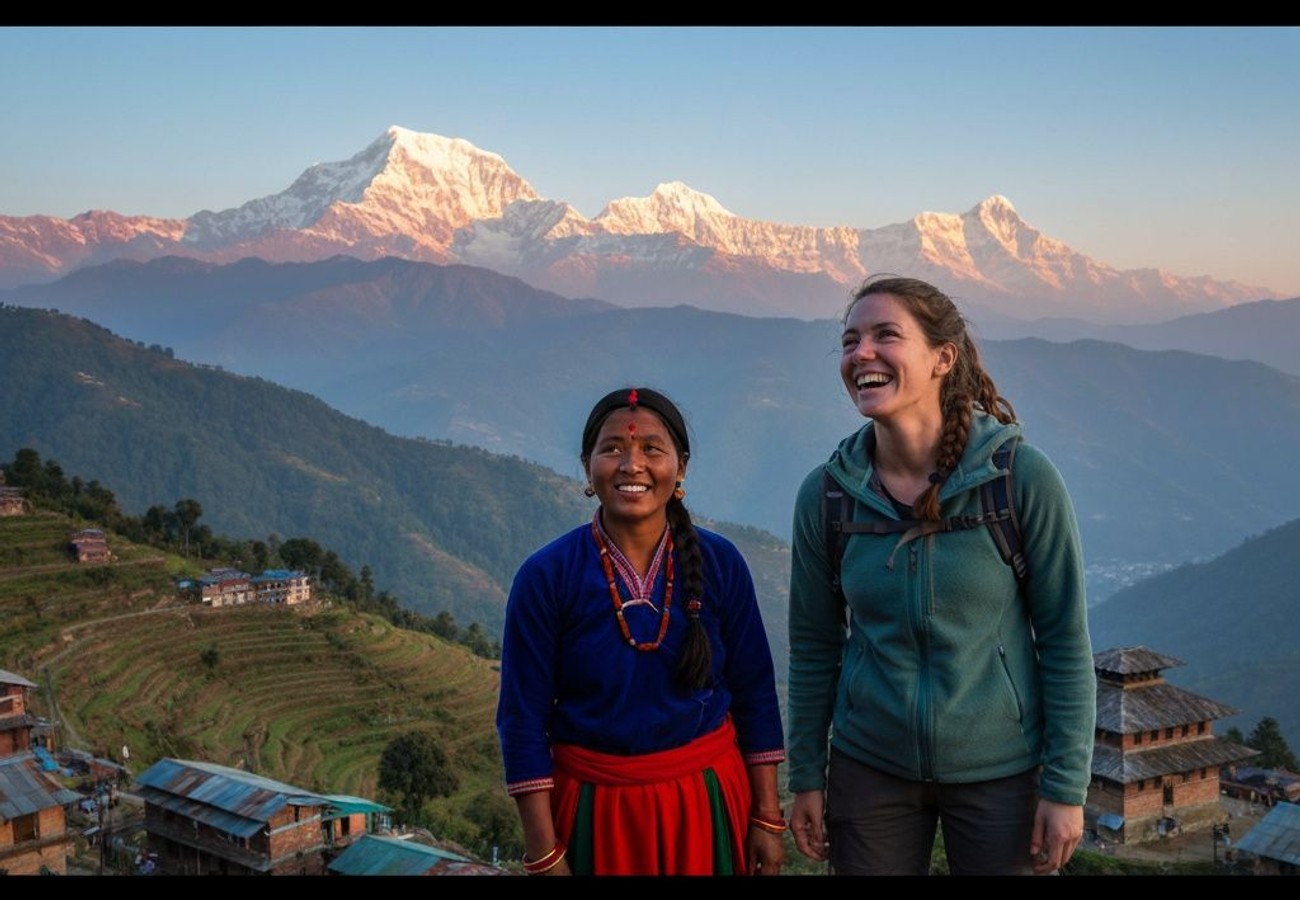
Image generated by AI
A Policy Shift That's Reshaping Nepal's Travel Landscape
Nepal just implemented one of the most consequential travel policies in its recent history—and the results are staggering. A new two-day weekly holiday system, introduced on April 6, 2026, has fundamentally altered how Nepali citizens approach leisure travel. What began as a fuel-conservation measure tied to regional geopolitical pressures has evolved into a genuine economic catalyst for the nation's hospitality and rural tourism sectors.
The numbers tell the story. During the four-day holiday window from May 28 to May 31, domestic tourist movements across Nepal's eight primary destinations—Pokhara, Mustang, Chitwan, Dhulikhel, Nagarkot, Bandipur, Manang, and Sailung—reached unprecedented levels. Hotel rooms became scarce. Local restaurants couldn't keep up with demand. And for the first time in years, rural communities are experiencing consistent, predictable tourism income.
Reddit: "The two-day weekend changed everything. I used to save vacation days for one big trip a year. Now I take my family to Pokhara almost every month." — r/nepal
The Math Behind The Boom: More Time Equals More Travel
With only a single weekly day off, working professionals and families faced a hard choice: spend time recovering at home or undertake an exhausting journey to a distant destination. The new two-day weekend has demolished that constraint.
Friday evening departures from Kathmandu Valley now lead to two full days of destination time before a Sunday evening return. Pokhara, once a three-to-four-day commitment, is now accessible for a proper long weekend. Chitwan National Park and high-altitude experiences in Manang and Mustang have similarly shifted from "once-a-year" events to "quarterly getaways."
The shift in travel behavior is measurable and immediate. Instead of waiting for school holidays or national festivals, Nepali families are distributing their leisure travel across 52 weekends annually. This has created a stable, predictable revenue stream for hospitality operators who previously experienced boom-and-bust seasonal cycles.
Hotel Occupancy Reaches Critical Thresholds Across Eight Destinations
The hospitality sector's response has been swift and unmistakable. Average occupancy rates across tourist destinations have climbed to 40 per cent on normal weekends. Pokhara, the nation's primary leisure destination, is now seeing occupancy rates between 45 to 50 per cent during standard weekends, with rates approaching full capacity during extended holidays.
This performance is particularly notable because Nepal expanded its hotel infrastructure significantly over the past five years. Properties ranging from basic homestays to luxury resorts now operate with stronger year-round demand signals. Small guesthouses in Ghandruk reported hosting more than 30,000 domestic tourists during that single four-day period—a figure that would have seemed impossible just eighteen months ago.
The occupancy surge is not evenly distributed. Nagarkot, accessible within ninety minutes from Kathmandu, benefits from same-day and overnight trips. Bandipur, a heritage village destination with boutique hospitality options, has seen particular strength. Even remote destinations like Sailung are experiencing meaningful traffic increases.
Secondary Markets Are Now Primary Revenue Drivers
Every hotel booking represents far more than room revenue. The multiplier effect ripples outward through entire local economies.
Restaurants purchase vegetables from local farmers. Transport operators gain consistent business ferrying tourists on established routes. Local guides and young people find seasonal employment. Tea shops, souvenir vendors, and small retail businesses see sustained customer flow. Dairy farmers, vegetable growers, and agricultural producers gain reliable market access.
This is particularly transformative for rural areas where agriculture alone cannot generate sufficient household income. Ghandruk's tourism surge directly supports several hundred families whose traditional farming activities are supplemented—and in some cases surpassed—by tourism earnings.
The policy has essentially created a mechanism for wealth redistribution from urban centers to rural communities. Money that previously concentrated in Kathmandu Valley during festival periods now disperses continuously across weekend travel patterns.
Unexpected Tailwinds From Climate and Regional Patterns
The policy's domestic impact is being amplified by external factors. Extreme heat in northern India—particularly in New Delhi, Haryana, and Uttar Pradesh—has driven temperature-sensitive Indian tourists toward cooler Nepali destinations. This cross-border demand surge is overlaying the domestic tourism growth, creating compound benefits for mountain destinations.
According to recent Nepal Tourism Board data, Nepal welcomed 1.15 million foreign tourists during 2025. May 2026 figures suggest the nation is tracking above those levels, with domestic visitors now comprising a more significant percentage of total arrivals than in previous years.
Policy Precedent and Long-Term Sustainability Questions
This isn't Nepal's first attempt at tourism-stimulating labor policy. During fiscal year 2021/22, the government authorized civil servants and public enterprise employees to take 10 days of tourism leave with government-funded remuneration support. The private sector received encouragement to offer similar benefits.
That initiative, however, yielded modest results due to weak implementation guidelines and coordination gaps. The current two-day weekly holiday system works more effectively because it removes planning complexity—workers automatically gain time; they need not apply or negotiate. The policy cascades through behavior without requiring individual decisions.
Adding structural support to this momentum, the latest fiscal year 2026/27 budget includes a salary increase of up to 21 per cent for government employees, with private sector wage pressures likely to follow. Higher household incomes directly correlate with increased spending on leisure travel and hospitality services.
The Tourism Year Opportunity: 2085 B.S. And Wellness Positioning
Nepal has designated 2085 B.S. as Tourism Year and announced 2027 as Nepal Wellness Year—branding initiatives designed to position the nation as a premier destination for nature-based wellness, cultural immersion, rural experiences, and adventure activities.
The current domestic tourism surge provides ideal momentum for these campaigns. As domestic travelers sample destinations across the country, they become informal ambassadors for Nepal's tourism potential to international networks. Rural communities gain experience hosting travelers, improving service delivery and hospitality quality.
The government has committed physical and financial incentives for high-value resort and hotel construction, with plans to diversify tourist source markets and emphasize wellness tourism branding.
Infrastructure Challenges Remain Visible
Success depends on translating policy into actual traveler experience. Road conditions between Kathmandu and primary destinations require immediate attention. Pokhara airport capacity limitations could constrain growth. Digital booking systems, safety infrastructure, and destination facility management demand substantial investment.
Coordination between federal, provincial, and local governments has historically been problematic in Nepal. The current growth momentum could be undermined if administrative silos prevent coordinated development of roads, accommodations, transportation, and safety systems.
Foreign tourist behavior is shifting meaningfully away from the Kathmandu-Lalitpur-Pokhara triangle toward remote landscapes, authentic village experiences, and nature-based activities. Capturing this shift requires infrastructure and service improvements in less-developed regions—areas that often lack government investment and private sector attention.
The Sustainability Question: Will The Policy Persist?
Long-term tourism development requires policy predictability. Tourism entrepreneurs cannot confidently invest in new properties or service improvements if holiday policies remain subject to reversal.
The two-day weekly holiday began as a fuel-conservation measure, linked to regional geopolitical circumstances. As those regional pressures potentially ease, the policy could face discontinuation pressure. Its continuation will depend on the government's willingness to recognize tourism development as a distinct policy objective—separate from its original fuel-management rationale.
If Nepal commits to maintaining this framework, domestic tourism could stabilize at elevated levels, creating consistent employment, infrastructure improvements, and income distribution across rural areas. If the policy reverses, the sector could experience sharp contraction and return to seasonal volatility.
The two-day weekend has turned casual family leisure into a tourism industry engine—but only if Nepal's government treats stability as feature, not accident.
Related Travel Guides
-
Saudi Arabia Restores Hajj Eligibility for Pilgrims Aged 12 and Above
-
Gardens Launches Disney Summer Experiences in Singapore 2026
Disclaimer: This article reports on tourism policy developments and market trends in Nepal. Hotel occupancy figures and tourist movement data derive from government tourism board sources and hospitality industry reporting. Policy continuity and future tourism development remain subject to government decisions and regional circumstances beyond editorial control. Readers planning travel to Nepal should consult official tourism resources and current travel advisories before booking accommodations or itineraries.
Preeti Gunjan
Contributor & Community Manager
A passionate traveller and community builder. Preeti helps grow the Nomad Lawyer community, fostering engagement and bringing the reader experience to life.
Learn more about our team →