
Nepal Travel Alert: 1,200 Tourists Stranded in Khumbu Region After Heavy Snowfall Hits Everest
Extreme snowfall in Nepal's Khumbu region has blocked high-altitude routes, leaving 1,200 tourists under monitoring and forcing emergency rescues near Island Peak.

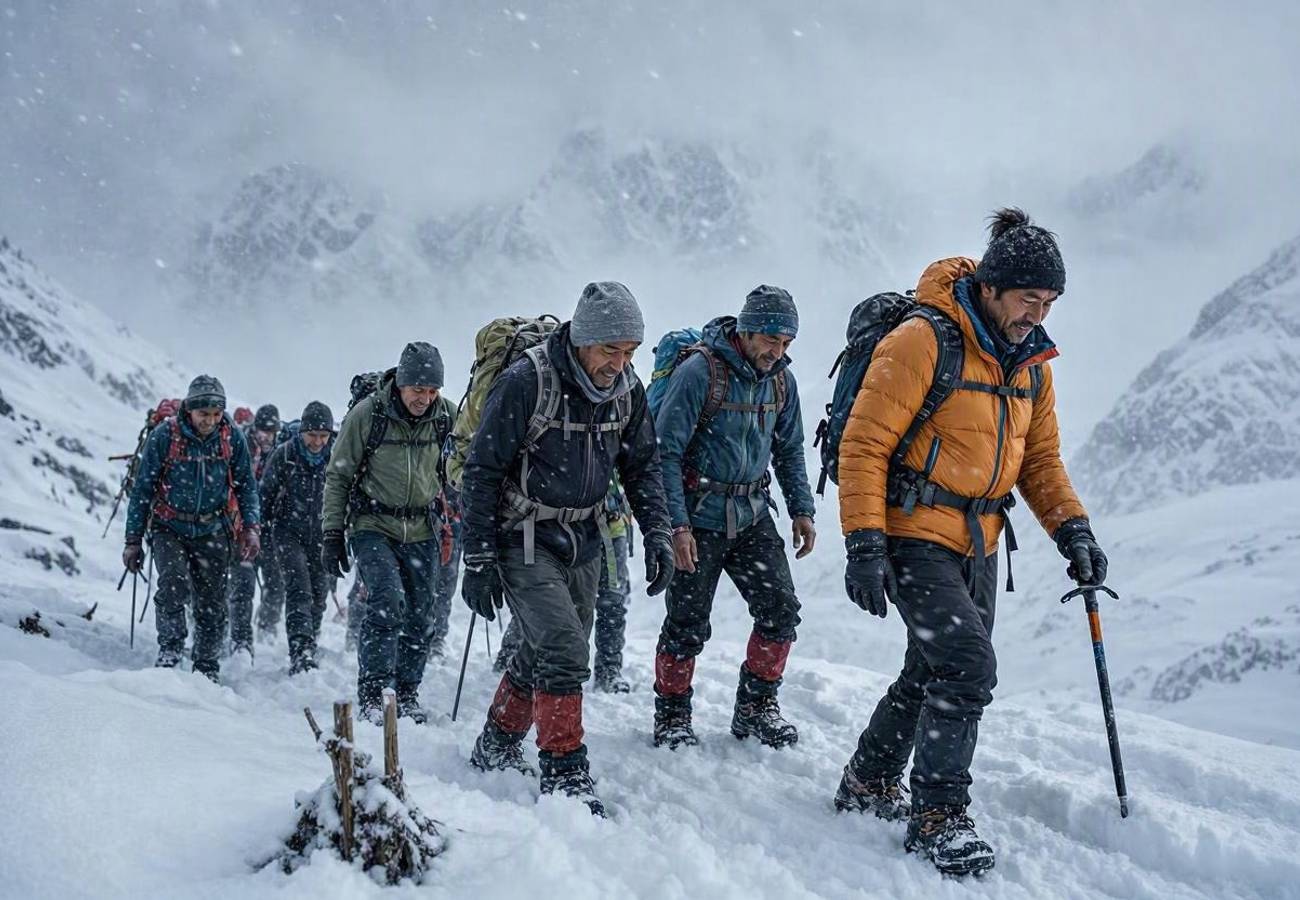
Image generated by AI
Trekkers attempting to reach Everest Base Camp woke to a landscape transformed by sudden, heavy snowfall, finding their primary exit routes blocked by over half a meter of snow. For the 1,200 international visitors currently monitored by local authorities in the Khumbu region, a scenic adventure has shifted into a high-stakes survival and evacuation scenario.
Extreme Weather Disruption in the Khumbu Region
Following several days of intense rainfall, the higher elevations of the Khumbu region experienced a rapid transition to heavy snowfall. This atmospheric shift has resulted in snow accumulations exceeding 0.5 meters in multiple high-altitude zones, rendering many trekking paths impassable.
Local administrations have taken the drastic step of blocking off upper routes and designating specific "danger zones" to prevent further casualties. The disruption has necessitated the deployment of mountain rescue teams and the coordination of local security personnel to track the movement of tourists and mountaineers.
The most critical incident occurred in the Imja Tse area, commonly known as Island Peak (6,165 meters). Seven foreign tourists became stranded as worsening visibility and snow depth made self-evacuation impossible. These individuals were successfully rescued through a joint effort between community representatives and emergency teams, who guided them back to safer, lower-altitude settlements.
Affected Routes and High-Risk Zones
The disruption is concentrated in the upper Khumbu corridor. Travelers should be aware that the following areas are currently under high-alert status:
- Island Peak (Imja Tse): High risk; recent rescue operations conducted here.
- Imja Valley: Severely impacted by snow accumulation.
- Dingboche to Chhukung: Routes linking these villages to the wider Everest Base Camp network are unstable.
- Upper Everest Base Camp Trails: Many segments are currently blocked by administration to prevent accidents.
Your Rights as a Passenger and Trekker
Unlike commercial flights governed by EU261 or US DOT rules, adventure tourism in Nepal operates under a different legal framework. However, travelers have specific protections and obligations:
1. Insurance Obligations: Most permits for the Everest region require comprehensive travel insurance that specifically covers "High Altitude Trekking" and "Heli-evacuation." If you are stranded, your first point of contact should be your insurance provider to authorize emergency rescue costs, which can exceed $5,000 per person.
2. Tour Operator Liability: Under the terms of most trekking contracts, operators are obligated to provide a "Duty of Care." If your guide encouraged movement into a blocked zone despite official warnings from the Khumbu Pasang Lhamu Rural Municipality, you may have grounds for a partial refund or a liability claim for rescue costs.
3. Government Mandates: The Nepal Tourism Board and local municipalities have the legal authority to restrict movement for safety. Following these directives is mandatory; failure to do so may void your insurance coverage for "negligent behavior." For real-time safety updates, check the Nepal Tourism Board or monitor local flight status via Flightradar24 for evacuation sorties.
Rebooking Strategy and Alternatives
For those currently in the region or planning a trip, the following logistical strategies are recommended:
- Descent over Persistence: Do not attempt to "wait out" the storm at high altitudes. Move toward Namche Bazaar or Lukla immediately if the path is clear.
- Flight Coordination: Flights into and out of Lukla (LUA) are highly weather-dependent. Use the Department of Tourism Nepal resources to verify airport operational status.
- Alternative Itineraries: If the Khumbu region remains blocked, consider diverting to the Annapurna Circuit or Manaslu region, provided weather patterns in those districts are stable.
- Refund vs. Credit: If your trek is canceled by the operator due to "Force Majeure" (Act of God), you are typically entitled to a refund of the remaining land package costs, minus non-refundable permit fees.
FAQ: Everest Region Snowfall 2026
Am I entitled to a refund if the trail is blocked? Generally, you can claim a refund for unused services (hotels/guides). However, government permit fees are usually non-refundable. Review your contract's "Force Majeure" clause.
What should I do if I am stranded at high altitude? Immediately notify your trekking agency and the nearest local police post. Do not attempt to traverse snow-blocked passes alone. Contact your insurance provider to trigger emergency evacuation.
Are flights from Lukla still operating? Flights are operating on a case-by-case basis depending on visibility. Check with your airline or the Lukla airport authority for the latest status.
Can I change my permit to another region? Permits are region-specific. You cannot "transfer" a Khumbu permit to Annapurna; you must apply for a new permit through a registered agency.
Safety in the Himalayas is not a guarantee, but a result of preparation and obedience to local warnings.
Related Travel Guides
Disclaimer
This article is for informational and educational purposes only. It does not constitute legal, financial, or professional advice. While we strive to provide accurate and up-to-date information, travel policies, regulations, and conditions change rapidly. Always verify information with official sources before making travel decisions. Nomad Lawyer makes no representations about the accuracy, reliability, completeness, or suitability of the information provided. Readers should consult qualified professionals for advice specific to their circumstances. The views expressed in this article are those of the author and do not necessarily reflect the views of Nomad Lawyer.
Naina Thakur
Contributor & Travel Specialist
Travel enthusiast and legal writer covering visa regulations, responsible tourism, and cultural journeys across global destinations.
Learn more about our team →