
Chitwan National Park Issues Flood Safety Alert: Navigating Nepal's Jungle Safaris and River Corridors in 2026

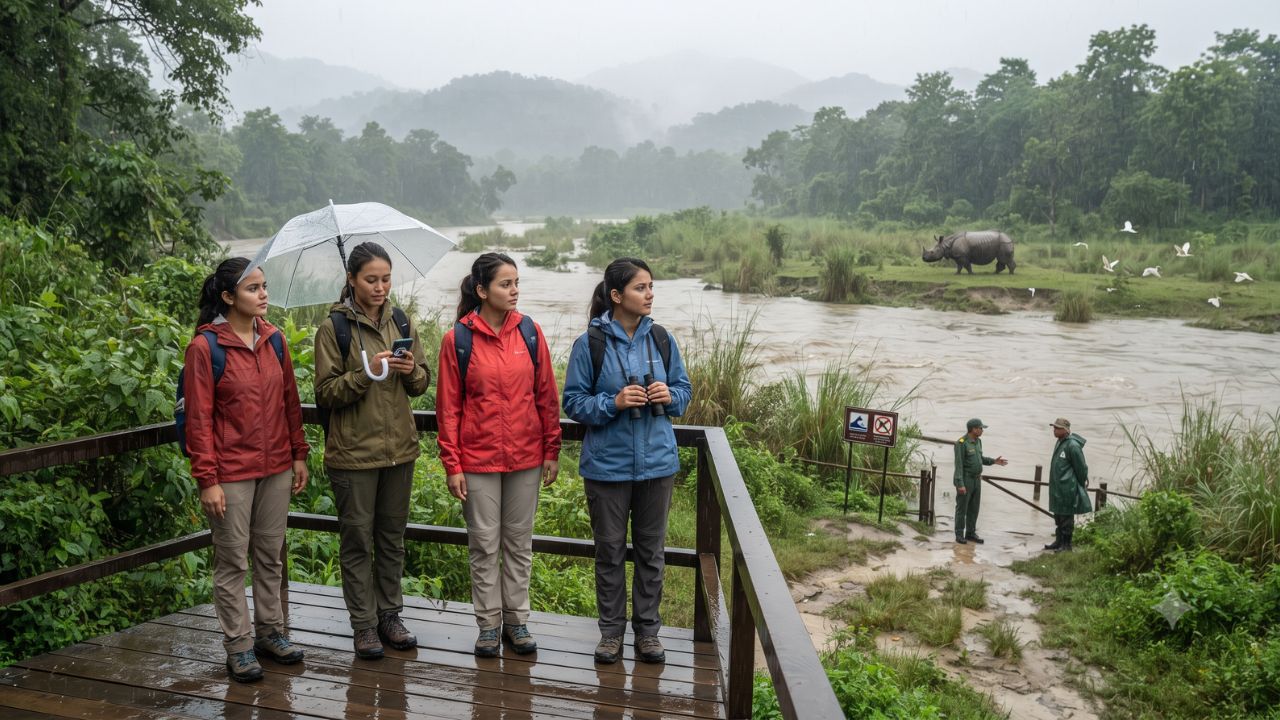
Sustained torrential downpours across central Nepal have pushed the mighty Narayani, Rapti, and Riu rivers beyond their danger thresholds, prompting park authorities to issue an urgent high alert across Chitwan National Park's 952 square kilometers of subtropical wilderness. While thousands of wildlife enthusiasts arrive in the Terai lowlands each season for close encounters with one-horned rhinoceroses and Royal Bengal tigers, shifting river channels and sudden flash floods are forcing safari lodges and local river guides to alter daily safari routes.
Chitwan National Park represents Nepal's premier biodiversity sanctuary, sheltering one of the planet's greatest success stories in megafauna conservation. However, the park's alluvial floodplain ecology is defined by the monsoon season, when Himalayan runoffs transform gentle riverbeds into roaring torrents. As park rangers, conservation teams, and community buffer zone forests coordinate safety operations, travelers must navigate seasonal weather patterns intelligently to enjoy safe and responsible wildlife viewing.
River Inundation and Park Safety Protocols in the Terai Lowlands
The official warning issued by the park administration responds to severe water logging and riverbank erosion along the three main river arteries flowing through the national park basin:
- Narayani River: The largest waterway bordering the park's western and northern frontiers, experiencing rapid swell rates that submerge low-lying sandbanks and riverside viewing platforms.
- Rapti River: The central corridor for traditional wooden dugout canoe safaris, where rising water levels and aggressive currents create safety hazards for river navigation.
- Riu River: Flowing through the southern Madi Valley, where flash flooding can cut off road access between rural villages and park trailheads.
Park authorities, working alongside the Department of National Parks and Wildlife Conservation, have urged all tourism operators, nature guides, and lodge managers to suspend canoe trips in high-risk zones, reroute 4x4 safari vehicles onto higher sal forest tracks, and keep visitors strictly away from unstable riverbanks.
Local buffer zone community forestry user groups—who manage community forests surrounding the park—play a direct role in early warning communications, monitoring upstream water levels to ensure that both tourists and local villagers avoid flood-prone river crossings.
What Makes Chitwan’s Alluvial Ecosystem Distinct
Chitwan was established in 1973 as Nepal's first national park and was designated as a UNESCO World Heritage site in 1984 under the UNESCO World Heritage Centre. The park sits in the Inner Terai valley, framed by the Churia (Siwalik) hills to the south and the Mahabharat range to the north.
This unique geographical depression creates a rich mosaic of elephant grass savannas, moist deciduous riverine forests, and dense sal (Shorea robusta) woodlands that cover over 70% of the park. The seasonal flooding of the Narayani and Rapti river basins, while dangerous during peak deluge events, is ecologically essential. The floodwaters deposit nutrient-rich alluvial silt across the plains, regenerating towering grass beds that can grow up to eight meters high and nourish the world's second-largest population of the greater one-horned rhinoceros (Rhinoceros unicornis).
Beyond rhinos, Chitwan shelters approximately 128 wild Royal Bengal tigers, wild Asian elephants, leopards, sloth bears, and over 540 recorded bird species. The river systems provide critical habitats for two distinct crocodilian species: the fish-eating, critically endangered gharial (Gavialis gangeticus) with its elongated snout, and the marsh mugger crocodile.
Official nature travel guidance from the Nepal Tourism Board highlights that understanding these natural flood cycles is key to appreciating the resilience of Terai wildlife.
Visitor Insider Tips
Experiencing the wildlife of Chitwan during late monsoon or transitional shoulder periods requires careful logistics and safety awareness:
- Choose the Post-Monsoon Window: For optimal wildlife visibility and dry safari tracks, plan visits between mid-October and March. By November, tall elephant grasses are cut and harvested by local villagers, offering clear sightlines across open savannas.
- Stay in Verified Buffer Zone Lodges: Base yourself in Sauraha or Meghauli at certified eco-lodges that maintain high ground elevation and direct communication with park rangers for daily weather bulletins.
- Mandatory Walking Safari Protocols: Never embark on a foot safari inside the national park without two licensed, experienced nature guides armed with bamboo safety staves. In the event of a rhino encounter on foot, guides instruct visitors to climb a sturdy tree or execute a zigzag retreat into the wind.
- Monitor Overland Highway Conditions: Heavy rain frequently causes rockslides along the Narayani Highway (Prithvi Highway) connecting Kathmandu to Chitwan. Consider taking a short 20-minute domestic flight from Kathmandu to Bharatpur Airport, followed by a 30-minute private vehicle transfer to your safari camp.
- Respect Indigenous Tharu Culture: Spend an evening visiting an authentic Tharu village to learn about the indigenous community that has coexisted with Chitwan's wildlife for centuries, enjoying traditional stick dances and fresh ghonghi (freshwater snail delicacies).
Cultural and Environmental Context
The relationship between Chitwan National Park and the local communities living in its surrounding buffer zones is a cornerstone of global conservation practice. Over 30% to 50% of the national park’s total tourism revenue is directly reinvested into community development, funding local schools, healthcare clinics, and solar-powered electric fencing to mitigate human-wildlife conflict.
During severe flood events, this community infrastructure becomes a vital safety net. Village rescue committees assist in directing wildlife—such as displaced deer or stray rhinos seeking higher ground—safely back toward park boundaries, preventing poaching opportunism. By choosing responsible community-owned homestays and employing local indigenous guides, international travelers directly finance the anti-poaching and flood-response capabilities that protect Chitwan's endangered wildlife.
FAQ: Chitwan Safari Travel and Monsoon Safety 2026
Is it safe to visit Chitwan National Park during the monsoon season?
Visits are possible, but travelers must exercise high caution, avoid river canoe trips during flood alerts, and stick to elevated sal forest trails with certified local guides.
What is the fastest way to travel from Kathmandu to Chitwan?
Take a 20-minute domestic flight from Kathmandu Tribhuvan Airport to Bharatpur Airport, followed by a short road transfer to Sauraha or Meghauli.
What wildlife can you spot during a Chitwan safari?
Chitwan is world-renowned for sightings of one-horned rhinoceroses, Bengal tigers, Asian wild elephants, sloth bears, spotted deer, gharial crocodiles, and over 500 bird species.
Are river canoe safaris operating during heavy rainfall?
Canoe safaris along the Rapti and Narayani rivers are temporarily suspended by park authorities whenever water levels cross safety warning markers.
In the wild floodplains of Chitwan, nature writes its own rules, reminding every visitor that true wilderness is defined by the power of its untamed rivers.
Related Travel Guides
Disclaimer
This article is for informational and educational purposes only. It does not constitute legal, financial, or professional advice. While we strive to provide accurate and up-to-date information, travel policies, regulations, and conditions change rapidly. Always verify information with official sources before making travel decisions. Nomad Lawyer makes no representations about the accuracy, reliability, completeness, or suitability of the information provided. Readers should consult qualified professionals for advice specific to their circumstances. The views expressed in this article are those of the author and do not necessarily reflect the views of Nomad Lawyer.
Raushan Kumar
Founder & Lead Developer
Full-stack developer with 11+ years of experience and a passionate traveller. Raushan built Nomad Lawyer from the ground up with a vision to create the best travel and law experience on the web.
Learn more about our team →