
Nepal Tourism Surges as Annapurna Region Welcomes 508,476 Visitors with Growth from US, UK, and Germany
Nepal's tourism sector sees a massive influx of over half a million visitors to the Annapurna Conservation Area, though declining daily spending remains a primary economic challenge.

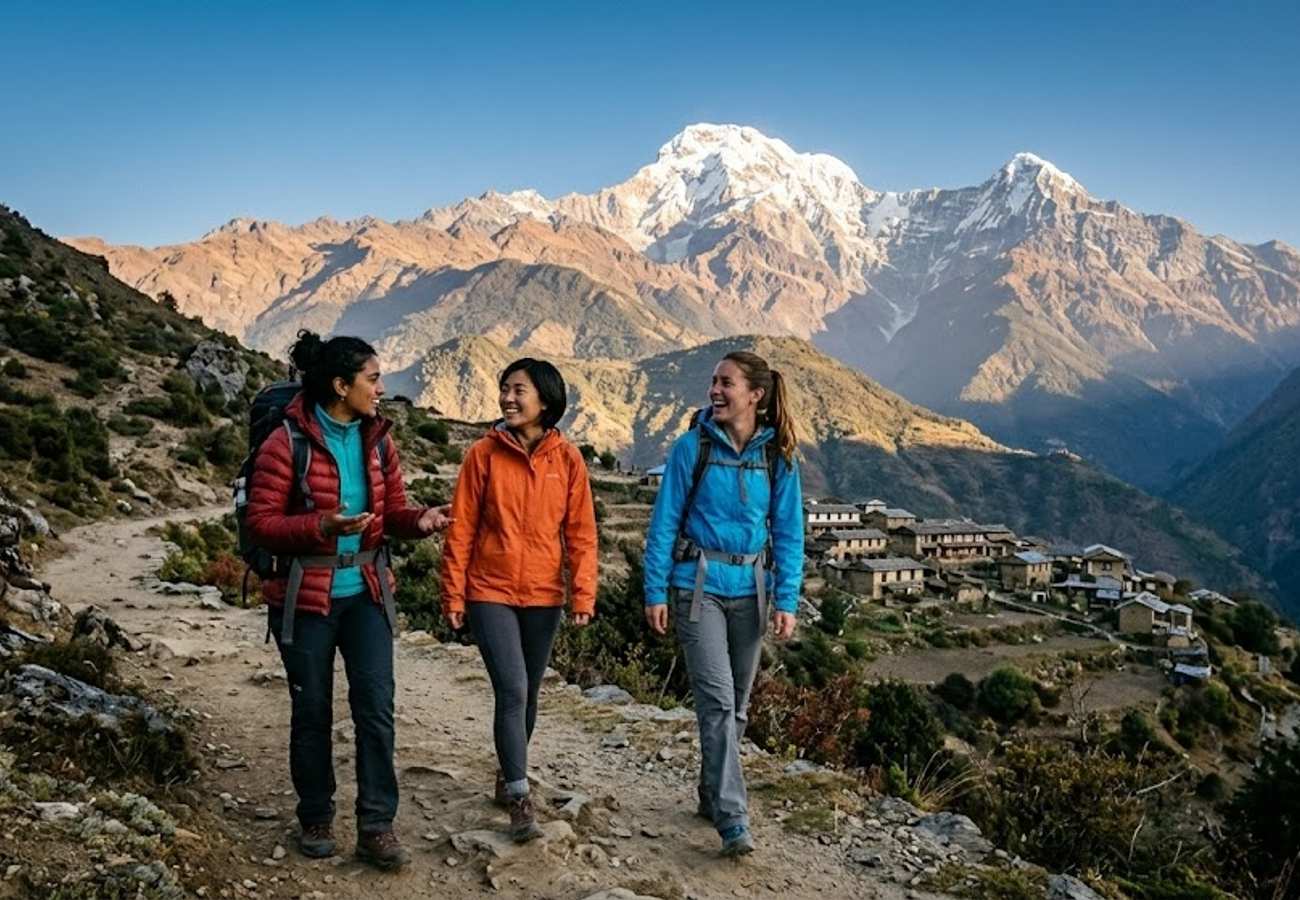
Image generated by AI
[Kathmandu, July 22, 2026] — Nepal is witnessing a significant expansion of its global tourism footprint, driven by a surge in arrivals from the United States, United Kingdom, France, Germany, Malaysia, Australia, and Israel. The Annapurna Conservation Area has become the epicenter of this growth, hosting more than 500,000 international travelers in the most recent fiscal year as global demand for high-altitude adventure and cultural immersion intensifies.
While the volume of arrivals is climbing, industry observers note a complex economic paradox: visitors are staying longer than ever before, yet the average amount spent per day has hit a historic low. This trend suggests that while Nepal's brand appeal is strengthening globally, the transition from high-volume tourism to high-value economic gain remains an ongoing struggle for the national economy.
Record-Breaking Duration of Stay in 2025
Data indicates a shift in how international travelers consume their Nepal experience. In 2025, foreign tourists spent an average of 16.34 days within the country, marking the longest average stay in the history of Nepal's tourism tracking.
This extension is attributed to the nature of the destination. Unlike urban hubs that attract short-term "city-break" visitors, Nepal's primary draws—such as extensive trekking circuits, spiritual pilgrimages, and mountain expeditions—require multi-day commitments. Travelers are increasingly blending their itineraries, combining the urban heritage of Kathmandu with the natural vistas of Pokhara and the religious sanctity of sites like Muktinath.
To better track these movements, the government implemented a centralized electronic tourism management information system in 2025, which has provided authorities with more precise data on visitor behavior and flow.
Economic Disparity and Declining Daily Expenditure
Despite the record-breaking length of visits, the financial return per tourist has diminished. In 2025, the average daily expenditure by international visitors fell to US$33.09, one of the lowest figures ever recorded for the region.
This decline is stark when compared to historical data and regional competitors. Nepal's average daily tourist spending reached a peak of US$79.10 in 2003. Currently, the spending levels in Nepal trail significantly behind other Asian destinations, where international tourists typically spend between US$100 and US$150 per day.
Industry sources point to several factors contributing to this downward trend:
- The rise of budget-centric travel and "backpacker" culture.
- Aggressive price competition among local tour operators.
- Logistical and transport-related inefficiencies.
- Intermittent regional and political instability creating uncertainty.
Annapurna Conservation Area as a Primary Growth Engine
The Annapurna region has solidified its status as the powerhouse of Nepal's tourism industry. Between July 17, 2025, and July 16, 2026, the Annapurna Conservation Area welcomed 508,476 international visitors. This represents a massive increase from the 278,113 visitors recorded in the previous fiscal year.
The area attracted travelers from 169 different nations. While the global reach is expanding, South Asian markets continue to provide the bulk of the volume, with 384,145 visitors originating from South Asia and 124,331 coming from the rest of the world.
International Visitor Breakdown for Annapurna
| Country | Number of Visitors |
|---|---|
| India | 375,797 |
| China | 12,539 |
| United States | 9,884 |
| United Kingdom | 9,859 |
| France | 7,939 |
| Malaysia | 7,848 |
| Germany | 7,634 |
| Bangladesh | 7,448 |
| Australia | 7,095 |
| Israel | 6,398 |
Strategic Role of Pokhara and Muktinath
The city of Pokhara remains the essential gateway for the Annapurna region, leveraging its lakeside appeal and adventure sports to funnel tourists into the mountains. During peak seasons, hotel occupancy in Pokhara has surged to 90%, indicating a tight accommodation market and high demand.
Simultaneously, Muktinath has evolved into a critical node for religious tourism. A significant portion of the Indian demographic utilizes Pokhara as a base before traveling to Muktinath, effectively extending the geographic and economic reach of tourism deeper into the mountain districts.
The Annapurna Conservation Area spans approximately 7,600 square kilometers, covering the districts of Mustang, Manang, Myagdi, Lamjung, and Kaski. Its popularity is sustained by iconic landmarks including:
- Annapurna Base Camp and Mardi Himal
- Ghorepani and Tilicho Lake
- Thorong La Pass and Upper Mustang
- The sacred site of Muktinath
Stagnation in Wildlife Tourism at Bardiya National Park
In contrast to the booming mountain sector, wildlife tourism is experiencing a slower recovery. Bardiya National Park reported 27,025 visitors for the 2025–26 fiscal year, a slight decrease from the 28,068 visitors seen the previous year.
The visitor composition for Bardiya is heavily skewed toward domestic travel, with 18,907 residents visiting. International interest remains modest, with 6,901 tourists from non-SAARC countries and 1,217 from SAARC nations. The park generated roughly Rs32.6 million in entrance fees, though arrivals remain seasonal, plummeting during the monsoon months.
Despite the numbers, Bardiya remains a critical conservation hub, currently supporting a population of 125 tigers, 120 elephants, and 38 one-horned rhinoceroses. The local infrastructure, comprising over 30 hotels and 20 homestays, continues to provide vital income for surrounding communities through safaris and river-based activities in the Babai Valley.
Why This Matters: The Shift from Volume to Value
The current trajectory of Nepal's tourism industry reveals a critical inflection point. The ability to attract over half a million people to a single conservation area like Annapurna proves that the "product"—the Himalayan experience—is in high global demand. However, the decline in daily spending to US$33.09 suggests that Nepal is currently operating as a high-volume, low-yield destination.
For the aviation and travel industry, this indicates a growing market for mid-to-long-haul flights from Europe and North America, but a potential gap in luxury tourism services. If Nepal cannot convert record-breaking stay durations into higher per-capita spending, the environmental pressure of 500,000+ visitors may eventually outweigh the economic benefits. The challenge for 2026 and beyond will be diversifying the "adventure" offering to include premium experiences that incentivize higher spending without compromising the ecological integrity of the Himalayas.
Nepal stands at a crossroads where its global popularity must now be translated into sustainable economic value.
Related Travel Guides
Disclaimer
This article is for informational and educational purposes only. It does not constitute legal, financial, or professional advice. While we strive to provide accurate and up-to-date information, travel policies, regulations, and conditions change rapidly. Always verify information with official sources before making travel decisions. Nomad Lawyer makes no representations about the accuracy, reliability, completeness, or suitability of the information provided. Readers should consult qualified professionals for advice specific to their circumstances. The views expressed in this article are those of the author and do not necessarily reflect the views of Nomad Lawyer.
Raushan Kumar
Founder & Lead Developer
Full-stack developer with 11+ years of experience and a passionate traveller. Raushan built Nomad Lawyer from the ground up with a vision to create the best travel and law experience on the web.
Learn more about our team →